


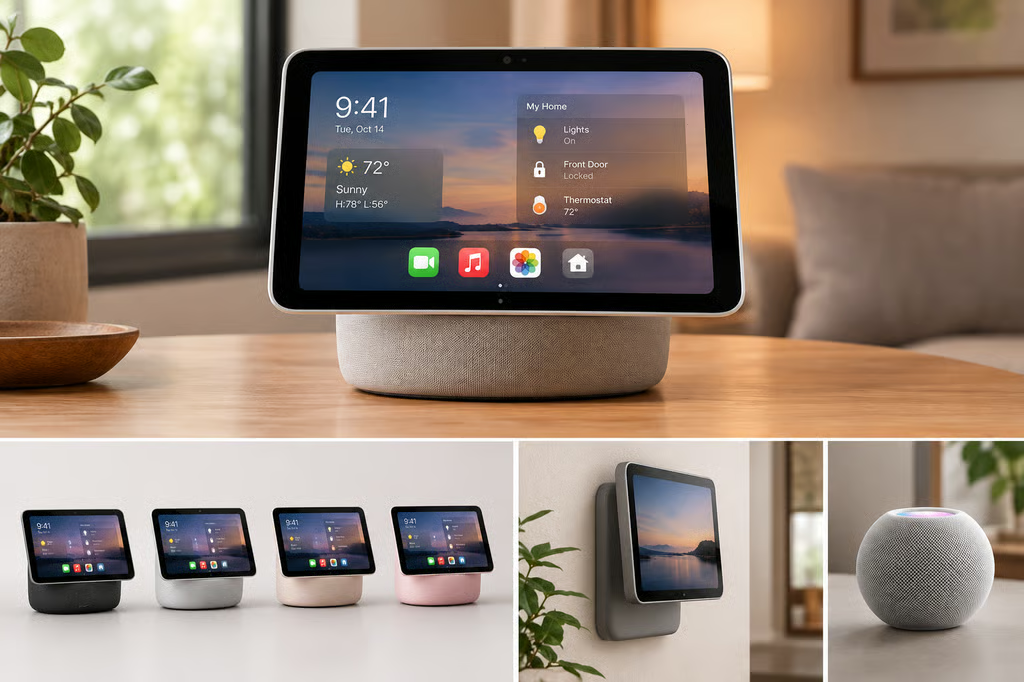
It’s taken more than a decade, but Apple is finally ready to take the smart home seriously.
Apple plans to introduce HomeView at its Oct. 13 “Welcome Home” event, with shipments expected to begin around mid-November, according to Bloomberg’s Mark Gurman. The device will arrive after refreshed Apple TV and HomePod mini models, which are expected to reach customers and stores on Oct. 30.
According to Gurman, HomeView is expected to use Apple’s A18 chip and serve as a central control point for connected home devices. The reported designs include a countertop display with a metal speaker base and a wall-mounted version with a flat, square base.
The countertop model is expected in space gray, silver, starlight and pink. The wall-mounted version is expected in space gray and silver, according to Gurman’s report.
Siri takes center stage
HomeView is reportedly designed as a dedicated home device rather than a general-purpose tablet, with Siri as the primary interface alongside touch input.
The hub is expected to run Apple applications without a dedicated App Store for downloading third-party software. 9to5Mac also reported that users might be able to display widgets from a nearby iPhone, although that capability has not been confirmed.
HomeView is expected to anchor a wider smart home effort that includes accessories developed with LG Electronics. The planned lineup includes doorbells, locks, thermostats, temperature sensors and security cameras. Those accessories are expected to arrive months later, so buyers should check which existing devices HomeView supports at launch.
Apple wants a more connected home
Apple’s HomeKit platform already supports connected-home accessories. HomeView would add a dedicated smart display to compete with devices in Amazon’s Echo and Google’s Nest lineups. The new hub would give Apple a dedicated screen and speaker designed around Siri, rather than relying primarily on iPhones and HomePods to control connected devices.
Matter enables compatible accessories to work across supported smart home ecosystems, while Thread provides networking for some connected devices. Apple Home already supports Matter accessories, but buyers should check HomeView’s confirmed compatibility before assuming their existing equipment will work.
Still, hardware alone will not guarantee success. HomeView’s usefulness will depend on how reliably Siri handles everyday requests, which accessories work with it and whether Apple’s limited software selection meets household needs.
What buyers should check before choosing HomeView
For households already using Apple Home, HomeView’s potential benefit is a shared screen for controlling connected devices without reaching for an individual’s phone. Before buying, users should identify which tasks the hub would make easier and whether their existing setup already handles them adequately.
Compatibility should come before accessory purchases. Check whether HomeView supports the exact lights, locks, thermostats and cameras already installed, including the functions you use most. The reported LG accessory lineup is expected to arrive later, so buyers should assess what the hub can do with available products at launch.
The reported lack of an App Store also matters. Buyers who want particular third-party applications should wait for Apple’s confirmed software list rather than assume HomeView can replace a tablet. The possibility of displaying iPhone widgets remains unconfirmed and should not drive a purchase decision.
Finally, compare the hub’s price with the total cost of any accessories or installation needed for your intended setup. Apple’s Oct. 13 event should clarify pricing, availability and launch features; those details will help buyers decide whether HomeView adds enough convenience to justify the expense.
Read more: Explore what Siri AI can do today and its compatibility limits to understand the assistant expected to underpin HomeView.