


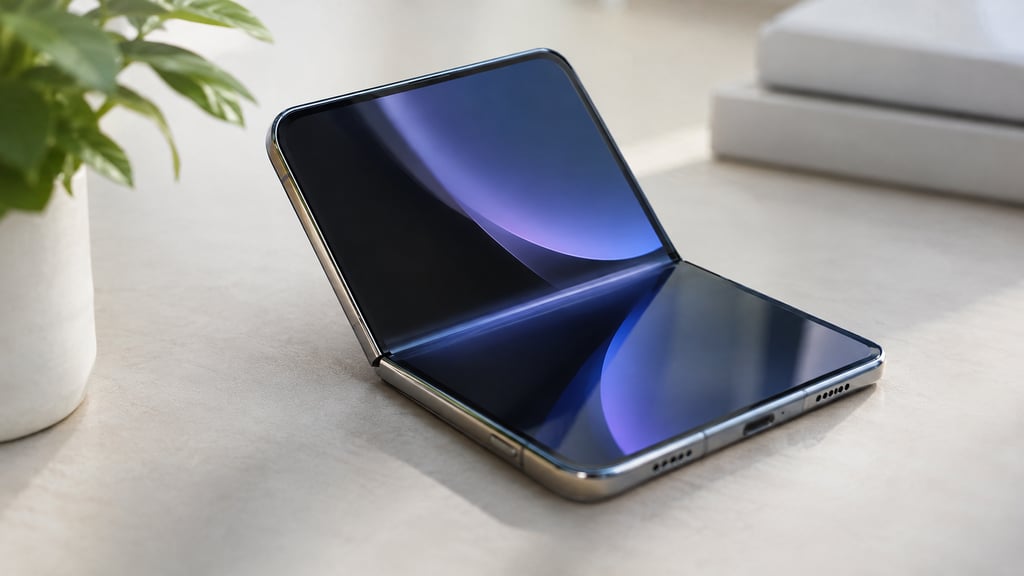
Foldable phones have become remarkably good at bending. Making their delicate screens tough enough for everyday use is proving to be a harder challenge.
The two tech giants are reportedly exploring a new type of ultra-thin glass that could make foldable screens tougher without turning them into expensive pieces of cardboard.
The trick? Keep the glass thin where the screen needs to bend and make it thicker everywhere else. It’s a seemingly simple solution to one of foldable phones’ biggest weaknesses: durability.
According to a Nov. 12 DigiTimes report, citing ZDNet Korea and industry sources, Apple and Samsung are working with suppliers on the technology for possible use in 2028 smartphones.
There’s still a catch, though. Neither company has confirmed plans to use the glass, meaning tougher foldables could be on the horizon, but they’re not quite ready for the rough-and-tumble of everyday life.
New glass design could make foldable screens tougher
Current foldable smartphones generally use ultra-thin glass (UTG) with a uniform thickness across the display.
That allows the screen to bend, but it also limits how thick the protective layer can be.
Apple and Samsung are reportedly considering a different approach: selectively etching the center of the glass while leaving the non-folding sections thicker.
According to TrendForce’s November 6 report, the proposed design has two distinct thicknesses:
| Display area | Proposed thickness | Intended benefit |
|---|---|---|
| Central folding section | Approximately 40 micrometers | Preserve flexibility |
| Non-folding sections | More than 100 micrometers | Improve surface hardness |
For comparison, TrendForce reports that Apple’s iPhone Duo and Samsung’s Galaxy Z Fold8 Ultra use 45-micrometer cover glass, while the Galaxy Z Fold8 uses 60 micrometers.
The thicker sections could provide better protection across much of the display without making the folding area too rigid.
The development follows earlier efforts to address foldable display weaknesses. Apple has already worked to make the iPhone Duo’s screen crease less noticeable, while Samsung introduced Flex Titanium technology to strengthen the display’s underlying support structure.
The proposed glass targets a different component: the protective layer above the display.
However, the reported thickness figures are design specifications under consideration, not proof of improved durability in finished devices.
Why tougher foldable glass is difficult to manufacture
Making glass thicker is relatively straightforward. Making one part thicker while keeping the entire surface smooth and flexible is considerably more complicated.
The proposed process involves removing material from the central folding area and filling the recessed section with another substance.
That filler must closely match the optical properties of the surrounding glass. Otherwise, users could notice differences in reflections or display appearance where the materials meet.
Manufacturers must also ensure the glass can withstand repeated folding without cracking or developing defects.
According to industry sources cited by TrendForce, Apple and Samsung could decide whether to adopt the technology for their 2028 foldables in the fourth quarter of 2027.
That leaves several technical questions unresolved, including:
- Durability: Will the thicker sections offer measurable improvements in scratch and impact resistance?
- Display quality: Can manufacturers prevent visible differences between the glass and filler?
- Crease visibility: Will the design make the folding crease less noticeable?
- Manufacturing: Can suppliers produce the glass reliably and at a commercially viable cost?
Neither company has released test results demonstrating the proposed design’s performance.
What could this mean for foldable phone buyers?
If the technology works as intended, future foldable phones could offer greater resistance to everyday wear across the non-folding portions of their inner displays.
That could make the devices more appealing to consumers concerned about screen damage.
For businesses deploying foldable smartphones, better durability could also reduce repair costs and extend device lifespans, although those benefits remain unproven.
Still, buyers shouldn’t assume the technology will eliminate scratches, creases, or damage from repeated folding.
Those issues depend on multiple components, including the protective layers, hinge, and underlying display structure.
For anyone shopping today, the proposed 2028 technology is unlikely to be a compelling reason to delay a purchase. Durability, repair costs, and software support remain important considerations when choosing a foldable phone, regardless of future display improvements.
Apple and Samsung have not announced products using the new glass, and commercial adoption remains uncertain.
But the reported development highlights an important shift in foldable smartphone engineering.
The next meaningful improvement may not be how thin a foldable phone gets, but how well its screen survives everyday use.
In other tech news, the RedMagic 12 Pro takes on Samsung’s Galaxy S26 Ultra with an 8,400mAh battery, a 185Hz display, and advanced cooling technology, raising the question of whether gaming-focused hardware can compete with Samsung’s premium flagship features.