


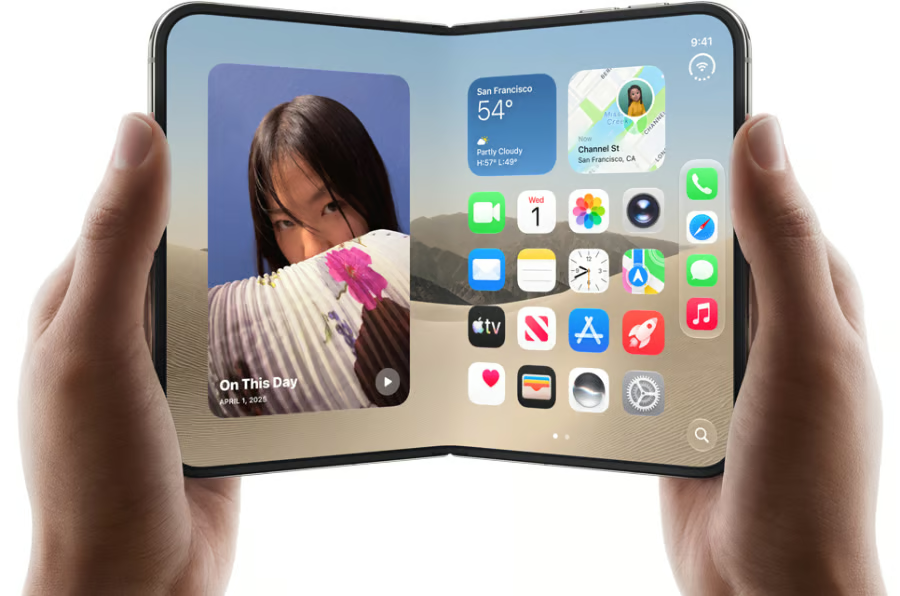
Apple’s first foldable iPhone did not eliminate the crease. But it may have done the next best thing.
The new iPhone Duo has a crease running through the middle of its 7.6-inch inner display, a familiar compromise for anyone who has used a folding phone. But Apple has taken several approaches to make that line harder to see and feel, from a nano-texture display finish to a hinge designed to support the screen when fully opened.
Early hands-on impressions suggest the approach works surprisingly well, although the crease has not vanished completely. That distinction matters for buyers considering spending at least $1,999 on Apple’s first attempt at a category where competitors have spent years refining their displays.
Apple designed the iPhone Duo around the crease
Rather than claiming it eliminated the crease, Apple says the iPhone Duo’s inner display uses a premium nano-texture finish that reduces glare and reflections while helping to “minimize crease visibility.” Apple’s iPhone Duo announcement also says the precision hinge supports the center of the display when the phone is fully opened.
The matte surface is only part of the design. The inner display uses a multilayer construction that includes high-strength glass, a titanium plate, custom adhesives, and a polymer cover layer. Together, those components are designed to allow the display layers to move as the phone folds, helping to relieve stress on the screen.
Those details add context to TechRepublic’s overview of Apple’s 2026 product lineup, which highlighted the Duo’s 7.6-inch inner screen, compact 5.4-inch outer display, and $1,999 starting price. The result appears to be a crease that is still technically present but may fade into the background during normal use.
In The Verge’s first hands-on experience, the crease was described as nearly invisible during normal use. MacRumors similarly found that the crease remained visible in some lighting but that Apple’s display treatment made it less obvious and difficult to feel.
That is an important distinction. Foldable screens bend, and the question for the Duo may be less about whether a crease exists than about whether users notice it enough to interfere with the experience.
A better crease does not eliminate the trade-offs
Apple’s approach also deserves some caution.
These are initial impressions of brand-new demonstration devices, not phones that have endured months of opening, closing, pocket lint, drops, temperature changes, and everyday wear. The iPhone Duo will not reach customers until Oct. 23, meaning its long-term display and hinge durability have yet to be independently tested.
Apple says the inner display is designed to withstand everyday wear and uses a custom polymer cover layer with up to 40% higher stiffness than other materials used in the industry. However, Apple’s launch materials do not specify the number of folding cycles the hinge or display is rated to withstand.
Apple also enters a foldable market where competitors are hardly standing still. Samsung has spent multiple generations refining its Galaxy Z Fold line, making the crease only one part of a much broader competition around thickness, weight, durability, cameras, and software.
TechRepublic’s coverage of Samsung’s latest foldables shows just how mature the category has become, setting an unusually high bar for a first-generation product.
The Duo therefore needs to justify more than its crease. With a $1,999 starting price, it sits well above Apple’s conventional iPhones, and buyers are accepting a first-generation Apple product in exchange for a screen that can transform from a compact phone into something closer to a small tablet.
There are other compromises, too. Apple’s 48MP Dual Fusion camera system offers up to 2x optical-quality zoom, while the iPhone 18 Pro models include a dedicated telephoto camera with greater optical-quality zoom reach.
Must-read Apple coverage
- iOS 27 AI Shortcuts: What Changed and 5 Useful Things to Try
- iPhone Duo Camera Tricks: Smart Take, Kid Cue, Duo Preview, and More
- macOS 27 Cheat Sheet: Compatible Macs, Siri AI, Features and What Changed
- Common Mistakes When Using One Apple Account on Multiple iPhones
- 9 Hidden macOS Features That Feel Like Productivity Hacks
Apple is also using software to make the fold less distracting
Apple has an advantage that goes beyond the physical display: it controls the software around it.
Apple describes the Duo as having a reimagined iOS 27 experience built to take advantage of the folding screen. Interfaces adapt as the device opens and closes, apps can run side by side, and content can shift across the larger display depending on how the device is positioned.
That software approach adds another layer to Apple’s attempt to make the fold less intrusive. Rather than relying solely on display engineering, Apple can also design the interface so that the crease is less likely to appear beneath important controls or content.
That fits into TechRepublic’s broader coverage of iOS 27, which has focused on how Apple’s latest software changes reshape the experience across its devices.
The hardware-software combination may ultimately be Apple’s more consequential answer to the fold. A line down the center is easier to forgive if the extra screen space meaningfully improves multitasking, video, documents, and other everyday tasks.
What the iPhone Duo crease means for buyers
For prospective buyers, the crease itself probably should not be the deciding factor. Early impressions suggest Apple has made it subtle enough that many users may stop noticing it during normal use, especially when viewing content straight on.
The bigger questions are whether the display remains that unobtrusive after months of folding and whether the larger inner screen is useful enough to justify the Duo’s $1,999 starting price. Buyers who regularly multitask, read documents, watch video, or work across two apps may find the expanded display worth the trade-off. Anyone primarily looking for a conventional iPhone experience may have less reason to accept the added cost and uncertainty of a first-generation foldable.
That makes the smartest approach fairly simple: don’t judge the iPhone Duo solely by showroom photos of its crease. Once the device reaches customers on Oct. 23, pay closer attention to long-term durability testing, real-world visibility of the fold, and whether the larger screen genuinely changes how people use their phones.
Apple appears to have made the crease easier to ignore. Whether the rest of the Duo gives buyers enough reason to do so is the more important question.
More news: Considering Apple’s latest iPhone lineup? See whether the iPhone 18 Pro’s new camera, A20 Pro chip, and longer battery life make the $1,199 upgrade worthwhile.