
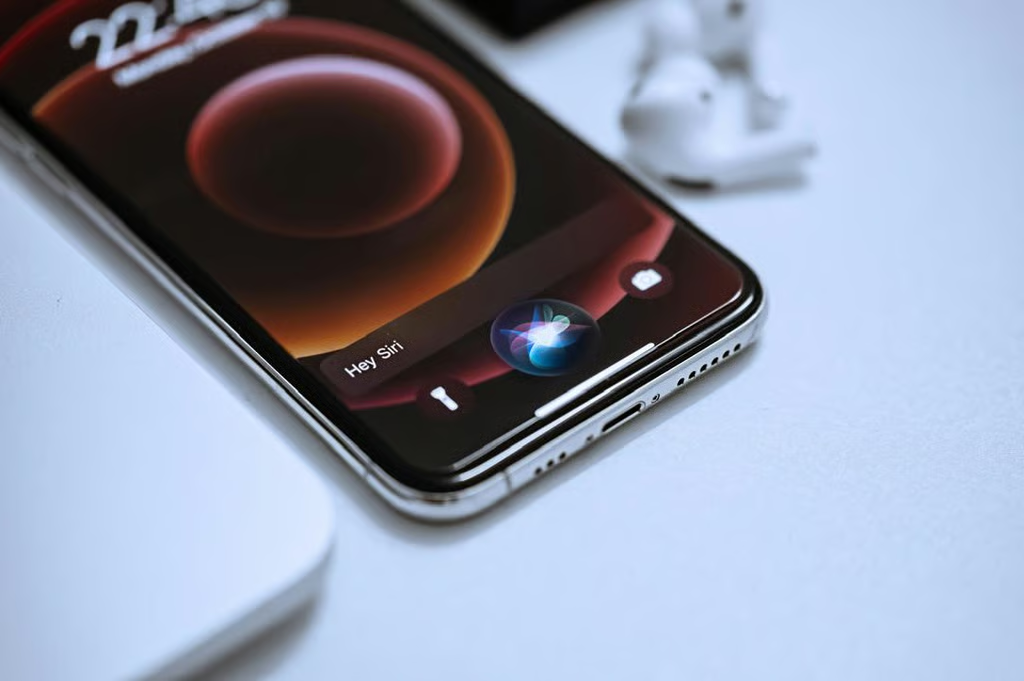


Apple has finally begun paying up for the Siri eavesdropping scandal.
After a long-running legal battle, Apple has not only agreed to pay a $95 million settlement but has also begun payouts.
According to reports on social media cited by USA Today, many Apple users have begun seeing the funds credited to their accounts. While official figures cap at $20 per device, some users who filed for more than one device reported receiving as low as $8.
The reduction, according to CBS News, indicates that Apple, which agreed to cap the number of devices eligible to file a claim at five, won’t pay the same amount if the claimed devices are up to five.
The settlement comes from a 2021 lawsuit filed against Apple for eavesdropping on private conversations via Siri. The plaintiffs further claimed that Apple subsequently sold this data for advertising purposes.
Historic breakdown: From breach of privacy to lawsuit
Siri, being Apple’s assistant, requires microphone permission to work. Many people use it as a hands-free tool when they are unable to use the phone physically. Activated with a simple “Hey Siri” command or the power button, it allows users to send instructions by voice.
However, in 2019, The Guardian publicized some big secrets. It reported that Apple outsourced some of Siri’s recordings to subcontractors. An anonymous source from the contractor told The Guardian that they often overhear personal and sometimes incriminating conversations during Siri’s oversight.
One part of the report by The Guardian reads:
“Ask the personal assistant, ‘ Are you always listening?’ for instance, and it will respond with: ‘I only listen when you’re talking to me.”
That is patently false, the contractor said. They argued that accidental triggers are too regular for such a lighthearted response.”
The Guardian’s revelation prompted an initial lawsuit filed in California on March 17, 2021. The complaint raised multiple claims against Apple, which the company denied.
MacRumors further revealed that Apple denied any wrongdoing and stated that its agreement to the settlement was to avoid further legal proceedings.
Must-read Apple coverage
- Nearly 7 in 10 iPhone Owners Plan iPhone 17 Upgrade
- Apple Prepares AI-Powered Siri Upgrade With Google Search Integration
- Apple’s Xcode 26 Beta Now Supports GPT-5 and Claude
- Apple’s Vision Pro Adoption Stalled As Content Released ‘Drip by Drip’
Eligibility for claiming the funds
Each user is eligible to receive up to five devices. Although each claimant gets $20 per device, the amount may decrease for each additional device.
You may be eligible for the settlement if you owned a Siri-enabled device between September 17, 2014, and December 31, 2024. The lawsuit includes claims for the following Apple products:
- iPhones
- iPads
- Apple Watches
- MacBooks
- iMacs
- Apple TV streaming boxes
- HomePod speakers
- iPod Touch devices
The report also noted that the deadline to file as an eligible claimant expired on July 2, 2025. The expiration means that users who didn’t file a claim but used eligible devices during those years are excluded from payments.
Further details about the matter
The payment labeled “Lopez v. Apple” began appearing in claimants’ accounts on January 23, USA Today further revealed. More users are expected to receive theirs as the payments rollout continues.
In the past year, several big tech companies have had to pay millions in settlements for unethical conduct.
Recent events indicate rising pressure on big tech and its data policies. Even Google isn’t left out of these. They, too, had to pay $68 million for a recorded Google Assistant conversation.