


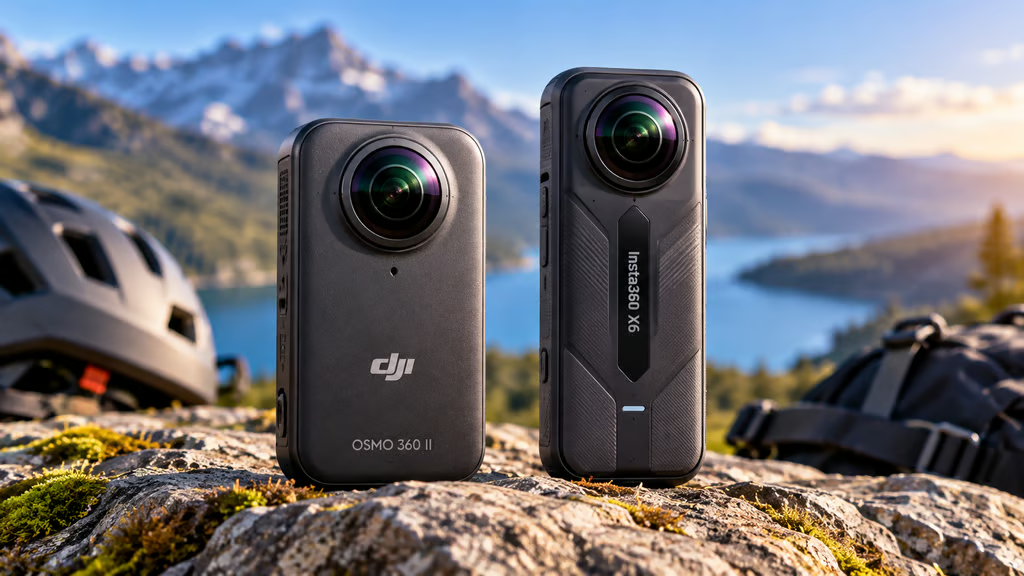
The DJI Osmo 360 II and Insta360 X6 are closely matched flagship 360 cameras, but they pull ahead in different areas.
DJI gives you 8K/60fps recording, more built-in storage, and a lower price. The Insta360 X6 comes out ahead in current side-by-side image testing and also offers longer rated battery life, deeper waterproofing, and ProRes export through its desktop software.
- DJI Osmo 360 II vs Insta360 X6 at a glance
- How we compared
- Image quality: Insta360 X6 wins
- Battery and heat: X6 lasts longer
- Durability: X6 goes deeper
- Storage and editing: DJI holds more, Insta360 offers ProRes
- Price and availability: DJI costs less in the UK
- DJI Osmo 360 II vs Insta360 X6: Which should you buy?
DJI Osmo 360 II vs Insta360 X6 at a glance
| Feature | DJI Osmo 360 II | Insta360 X6 |
|---|---|---|
| Current UK price | £509 | £619 |
| Maximum 360 video | 8K/60fps | 8K/50fps |
| Built-in usable storage | 105GB | 47GB |
| Rated 8K/30 battery life | Up to 100 minutes | Up to 140 minutes |
| Waterproof without case | 10m | 20m |
| With waterproof case | 50m | 60m |
| Weight | 183g | 196g |
| User-replaceable lenses | ✔ | ✔ |
| Best for | Higher 8K frame rate, storage, DJI ecosystem, lower UK price | Image quality, endurance, waterproofing, ProRes workflow |
UK prices checked Oct. 5, 2026. Retailer prices may differ.
How we compared
We used DJI and Insta360’s official specifications and stores for recording modes, storage, waterproofing, battery ratings, weight, and current UK pricing.
For image quality and heat management, we relied on TechRadar’s side-by-side testing. The reviewer mounted both cameras together and shot matching footage in daylight and at night, which gives the image comparison a common test environment rather than relying on specifications alone.
We gave the most weight to image quality, maximum recording modes, battery life, thermal behavior, waterproofing, storage, editing options, price, and regional availability. Manufacturer battery ratings are kept separate from independent heat testing because runtime can change significantly with resolution, frame rate, ambient temperature, and airflow.
Image quality: Insta360 X6 wins
The DJI Osmo 360 II records native 8K 360 video at up to 60fps, while the Insta360 X6 tops out at 8K/50fps in standard 360 mode.
DJI’s higher frame rate gives it more flexibility for fast action and footage that may be slowed down later.
The X6 had the advantage in TechRadar’s direct image comparison. With both cameras mounted together and using matched settings, the reviewer preferred the X6’s overall output in daylight and gave it a smaller edge after dark.
Low-light modes offer a different tradeoff. Insta360’s PureVideo mode reaches 8K/30fps, while DJI’s SuperNight 2.0 supports up to 8K/60fps.
That makes DJI especially interesting for sports or other moving subjects at night. For buyers who care most about overall image quality from the testing available today, the X6 still comes out ahead.
Battery and heat: X6 lasts longer
The X6 has a 2,600mAh battery and is rated for up to 140 minutes of 8K/30fps recording. DJI uses a smaller 2,150mAh battery and rates the Osmo 360 II for up to 100 minutes at 8K/30fps.
Those are manufacturer figures, but TechRadar’s heat test also favored the X6.
In a room at about 22°C, both cameras recorded at their respective maximum 8K frame rates. The Osmo 360 II shut down to cool after roughly 34 minutes at 8K/60fps, while the X6 lasted about 40 minutes at 8K/50fps.
Neither result represents a guaranteed recording limit outdoors. Airflow, ambient temperature, frame rate, and other settings can all affect heat buildup, but the test gives the X6 a modest advantage for longer high-resolution sessions.
Durability: X6 goes deeper
Both cameras use replaceable lenses, which is especially useful on 360 cameras with exposed fisheye glass.
The Osmo 360 II is rated to 10 meters underwater without a case. The X6 doubles that to 20 meters.
Add their dedicated waterproof cases and DJI rates the Osmo 360 II to 50 meters, while Insta360’s Invisible Dive Case Pro takes the X6 to 60 meters.
For rain, snorkeling, and most surface-level action, either camera offers plenty of protection. The X6 gives swimmers, divers, and frequent water-sports shooters more flexibility before an additional case becomes necessary.
Storage and editing: DJI holds more, Insta360 offers ProRes
DJI has the clear storage advantage.
The Osmo 360 II includes 105GB of built-in usable storage, while the X6 offers 47GB. Both cameras also support microSD cards.
That extra internal capacity is useful with 8K footage, particularly if a card fills unexpectedly or you need to start recording without swapping media.
The editing advantage moves the other way.
TechRadar found that Insta360 Studio supports ProRes export, while DJI Studio did not at the time of testing. That gives the X6 an easier fit for editors who already use ProRes in a larger desktop workflow.
DJI Studio still handles the core 360 workflow, including reframing and export, while DJI Mimo covers mobile editing and sharing.
Both cameras can also connect directly to their manufacturers’ wireless microphones for 24-bit audio. DJI has the broader Mic lineup, which may appeal to buyers already using its audio or Osmo gear.
Price and availability: DJI costs less in the UK
DJI currently lists the Osmo 360 II Standard Combo at £509 in the UK. Insta360 lists the X6 Standard Bundle at £619.
That puts DJI £110 lower when comparing the standard bundles in the same market.
US buyers do not currently have the same choice through the manufacturers’ official channels.
The Insta360 X6 is available in the US for $699.99. As of Oct. 5, DJI has not published an official US price or listed the Osmo 360 II for sale through its US store.
That makes the X6 the straightforward option for US buyers who want official domestic availability. An imported Osmo 360 II may still be available through third-party sellers, but warranty coverage, returns, and regional support should be checked before buying.
DJI Osmo 360 II vs Insta360 X6: Which should you buy?
Buy the DJI Osmo 360 II if you want:
- 8K/60fps 360 recording.
- 105GB of built-in usable storage.
- A lower price in the UK.
- Strong integration with DJI microphones and Osmo accessories.
- Replaceable lenses and 50-meter waterproofing with a case.
Buy the Insta360 X6 if you want:
- Better image quality in current side-by-side testing.
- Longer rated 8K battery life.
- Better thermal performance in the matched test.
- 20-meter waterproofing without a case.
- ProRes export through Insta360 Studio.
- Official US availability.
The Insta360 X6 is the stronger all-rounder right now. Its image-quality edge, longer endurance, deeper waterproofing, and ProRes support give it meaningful advantages for buyers who care most about finished footage and a smoother editing workflow.
The Osmo 360 II makes a strong case on value where it is officially sold. It costs £110 less in the UK, records 8K at a higher frame rate, and gives you more than twice the built-in usable storage. Buyers already invested in DJI microphones and accessories have another reason to choose it.
Also read: The best Android video editing apps for 2026 cover mobile editors for quick social cuts, 4K projects, and more advanced workflows.