


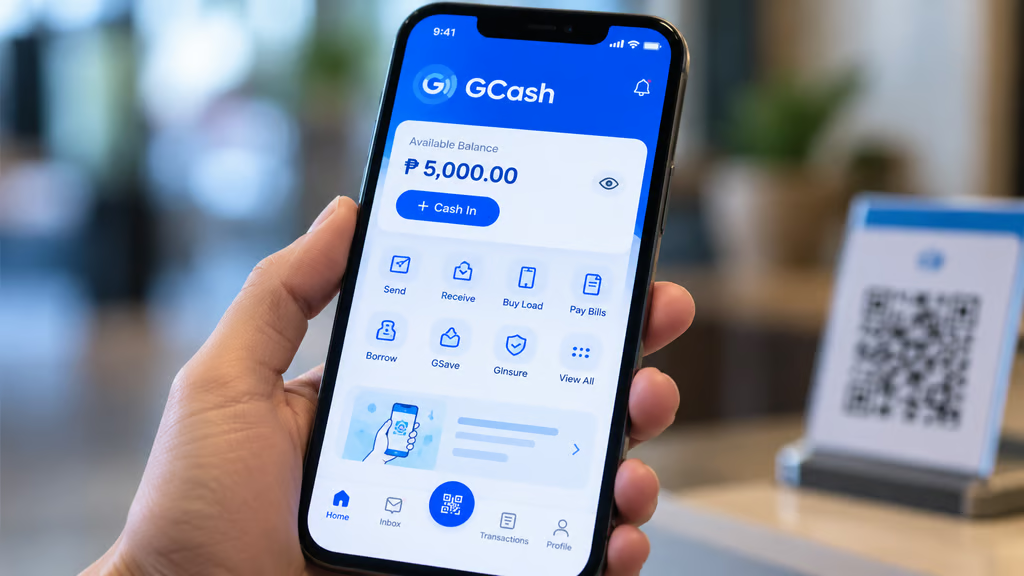
GCash helped make digital payments part of everyday life in the Philippines. Now its parent company, Mynt, has completed the country’s largest initial public offering, a ₱60.9 billion deal that puts digital lending at the center of its next phase.
Mynt debuted on the Philippine Stock Exchange on Oct. 20 under the ticker GCASH, attracting global institutional investors and more than 140,000 GCash users who subscribed through the app. The company plans to direct 60% of the net proceeds from its primary offering toward credit expansion over three years.
But the full ₱60.9 billion is not new funding for Mynt. Much of the transaction involved existing shareholders selling their stakes, making the distinction between the IPO’s headline value and the company’s fresh capital important for understanding what comes next.
The ₱60.9B IPO is not a ₱60.9B expansion budget
Manila Bulletin reported that the deal included a base offer of approximately ₱53 billion plus an overallotment of secondary shares. It surpassed Monde Nissin’s 2021 Philippine IPO record. Meanwhile, 140,725 GCash users invested about ₱1.1 billion through the app.
The distinction between primary and secondary shares matters. Proceeds from newly issued shares go to the company, while money from existing shareholders selling their shares generally goes to those shareholders rather than funding business expansion.
Dealroom estimated that Mynt received approximately ₱10.6 billion in fresh capital, because most of the transaction involved existing shareholders selling shares. The headline amount is therefore not the budget available for new loans, infrastructure, or product development.
GCash puts digital lending and AI in focus
According to Marketing-Interactive, GCash had 41.5 million monthly active users and processed ₱9.8 trillion in payments during the first half of 2026, up 23% year on year. CEO Martha Sazon said the listing could help reach Filipinos “who are still unbanked and underserved.”
The distinction between primary and secondary shares matters. Proceeds from newly issued shares go to the company, while money from existing shareholders selling their shares generally goes to those shareholders rather than funding business expansion.
Tech Times described GScore as an AI-supported credit-assessment system that uses transaction behavior to evaluate borrowers without conventional credit records. The approach could support broader lending access, although Mynt has not announced changes to eligibility requirements, interest rates, or loan terms as part of the IPO.
GCash also operates within the Philippines’ interoperable payments ecosystem, including InstaPay, PESONet, and QR Ph, according to Tech Times. Expanding lending on an existing payments platform raises practical questions about customer data, borrowing terms, and reliable transaction processing.
GCash parent draws global investors as APAC tech IPOs struggle
Reuters noted that Mynt closed its first trading day unchanged at ₱6.60, despite briefly rising to ₱6.76. Investors including BlackRock, Citadel and Fidelity International participated while other regional technology listings faced delays, withdrawals or weak debuts.
With Singapore-linked Ant International among Mynt’s investors, the listing offers a public valuation reference for Southeast Asian fintech companies. It does not, however, establish new GCash launches in neighboring countries.
The listing also gives investors a publicly traded company through which to assess the valuation and performance of a major Southeast Asian digital wallet business. However, Mynt’s success does not necessarily mean other fintech companies will attract similar investor demand or achieve comparable valuations.
What Philippine users and businesses should check next
More lending capital does not automatically mean cheaper credit or better financial products. Before signing up for new offers or changing integrations, readers should examine:
- Borrowers: Compare total credit costs, repayment deadlines, penalties, and data permissions before accepting a loan.
- Merchants: Check financing terms against cash-flow needs, plus settlement schedules, payment fees, refunds, and dispute support.
- IT and compliance teams: Test integration reliability, fraud controls, account access, and payment reconciliation before making GCash essential to a business workflow.
For Philippine businesses that depend on GCash, any new lending service should improve cash flow without adding unexpected costs. A merchant loan may help fund inventory, but fees and repayment dates must fit sales cycles. Before rolling out new payment features, IT teams should test settlement times, fraud controls and customer support, then verify that changes work with existing accounting systems.
Across APAC, Mynt’s listing may encourage investment in digital wallets that also offer lending. Its longer-term value will depend on whether those services remain affordable, reliable and secure as they expand.
As GCash expands its lending services, how customer data is used to assess creditworthiness will also deserve attention. Transaction histories can help lenders evaluate borrowers with limited traditional credit records, but users should understand what information is collected, how it influences lending decisions, and whether they can challenge inaccurate assessments. \
For Mynt, expanding access to credit will also mean maintaining transparency and consumer trust as more financial decisions rely on digital data.
Also read: Before expanding your digital payment setup, see what the BSP’s proposed rules could mean for merchant verification and transaction tracking in the Philippines.