


Google is preparing to make Android app installs a little less anonymous.
The tech giant has confirmed that its Android developer verification system will begin enforcement on Sept. 30, 2026, marking a major shift in how apps are installed on certified Android devices. The first phase will launch in Brazil, Indonesia, Singapore, and Thailand, where only apps registered with verified developers will be allowed to install and receive updates on certified Android devices.
The requirement will apply to apps distributed through Google Play as well as participating third-party app stores. According to Google, the initiative is designed to make Android safer by linking apps to verified identities and making it more difficult for malicious actors to distribute harmful software anonymously.
In support documentation, Google said Android is introducing the protection layer “to make installing apps safer for everyone, to better protect users, and to remove the cover of anonymity from bad actors who operate on Android.”
Under the new system, developers must verify their identities before registering apps. The process requires developers to provide personal information, including their legal name, address, email address, and phone number. Organizations must also submit a D-U-N-S number and verify their website. In some cases, government-issued identification may be required.
Developers must also prove ownership of their apps by submitting APK files signed with their private keys, enabling Google to link app packages to verified developer accounts. Google noted that developers publishing through Google Play have likely already completed much of this process, with Play automatically using existing account information to register apps.
New verification service arrives on devices
Before enforcement begins, Google is deploying a new background system service to Android devices.
The service, called Android Developer Verifier, will be automatically installed on Android 8 and newer devices through Google System Updates. According to Google, the service will validate whether an app is connected to a verified developer account.
The service rollout begins this month, but it will remain inactive until verification requirements take effect in supported regions later this year. The package will appear as “com.google.android.verifier” and will operate in the background once activated.
Major App stores join the program
Google says app verification will initially cover installations coming from several major Android app stores.
Participating stores include Google Play, HONOR App Market, OPPO App Market, Samsung Galaxy Store, Palm Store, vivo V-Appstore, and Xiaomi GetApps. Developers verified through participating storefronts will also benefit from cross-recognition of their verification status, reducing duplicate registration efforts.
More Google coverage
- New Google Search AI Mode is ‘Total Reimagining,’ Says CEO Sundar Pichai
- In Major Ruling, Judge Finds Google ‘Willfully Acquired and Maintained Monopoly Power’ Over Digital Ad Market
- Google’s Big Bet on Nuclear Energy: ‘The Race to Power AI-Driven Data Centers is Accelerating’
- Computer History Museum Releases Original AlexNet Code: Why It Matters
Global expansion planned
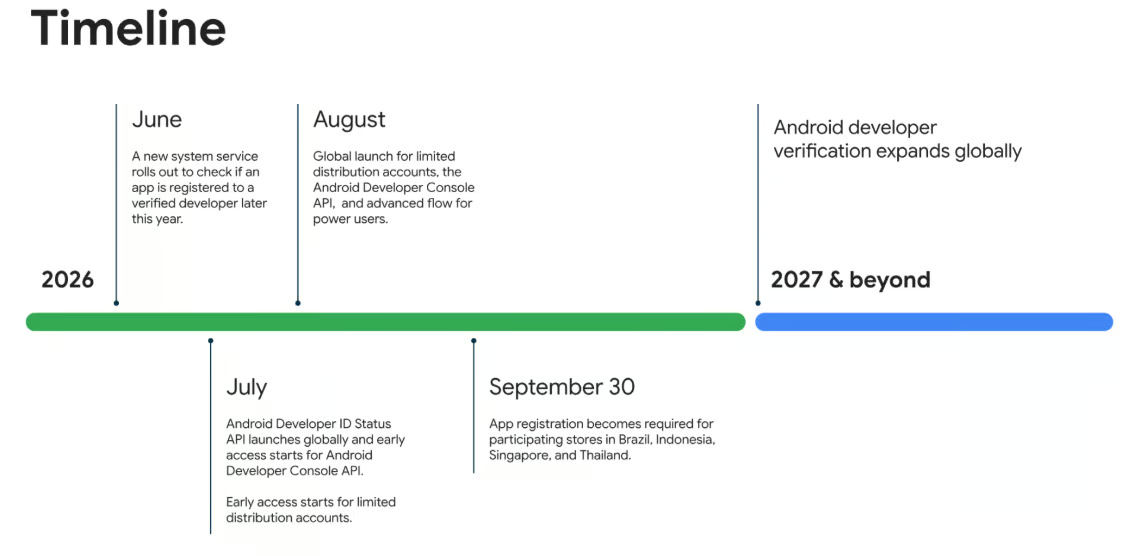
The September launch represents only the first stage of Google’s broader rollout. According to Google’s published timeline, developer verification requirements will continue expanding beyond the initial four countries throughout 2027 and beyond.
The company says it will gather feedback from developers, users, and industry partners before bringing the system to certified Android devices worldwide. For Android users, the changes may be largely invisible at first.
For developers, however, the new rules mark one of the most significant changes to Android app distribution in years, adding identity verification to an ecosystem that has traditionally been more open than many competing platforms.
Also read: Malicious WhatsApp and Slack alerts could manipulate Gemini on Android, showing why mobile AI and app security controls remain tightly linked.