
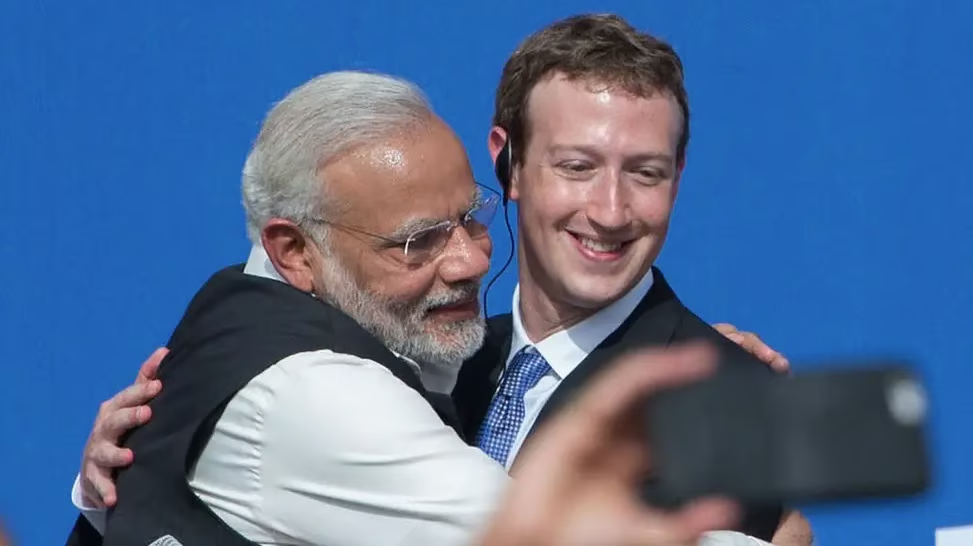


Meta apologizes after blaming the restriction on an operational error.
Meta Platforms Chief Global Affairs Officer Joel Kaplan apologized to India’s Information Technology Minister Ashwini Vaishnaw on Wednesday over the temporary restriction of Modi’s Facebook post in July.
“I apologized to the minister on behalf of Meta for the error restricting PM Modi’s post,” Kaplan said in a statement.
The post, a video message from Modi addressing students during protests over examination paper leaks, was briefly restricted on Facebook before being restored. Meta said the removal happened because of an operational error.
The company’s apology followed meetings between Meta executives and Indian government officials as scrutiny increased over how the platform handles politically sensitive content and harmful material.
Growing tensions between Meta and Indian authorities
The incident added to a wider dispute between Meta and India’s government. Officials have raised concerns about child sexual abuse material (CSAM), deepfake content and other platform failures.
According to Reuters, Moneycontrol and other Indian outlets reported that Meta CEO Mark Zuckerberg separately apologized to the Indian government over child sexual abuse material, deepfakes and other operational lapses involving the company’s platforms. Meta did not respond to Reuters’ request for comment on those reports.
Indian authorities had also questioned Meta over how harmful content could appear on its services. Government officials said the company acknowledged mistakes and discussed corrective measures, according to reports from Indian media.
What's hot at TechRepublic
- Blackpoint Cyber vs. Arctic Wolf: Which MDR Solution is Right for You?
- Why AWS Sellers Choose Deepgram Over Other Voice AI Tools
- SS&C Intralinks DealCentre AI vs. Datasite: Which platform is built for the future of dealmaking?
- SS&C Intralinks FundCentre AI vs. Juniper Square: Which platform better supports modern private markets fund managers?
- Verito vs. Rightworks: Which IT Provider Is Best for Your Firm?
Why this matters for Meta’s India strategy
India is one of Meta’s largest markets, with hundreds of millions of people using Facebook, Instagram and WhatsApp. WhatsApp alone has more than 600 million users in the country, according to Bloomberg.
The dispute highlights the difficult balance global platforms face in India. Companies must maintain content moderation systems that can operate at massive scale while also navigating government expectations around political speech, safety and accountability.
For users, the episode raises questions about how automated moderation tools handle high-profile accounts and whether mistakes involving public figures receive faster attention than similar errors affecting ordinary users.
Meta’s apology may ease immediate tensions, but the broader debate over platform responsibility is unlikely to disappear. Social networks are increasingly being pushed to explain how their moderation systems determine what content remains available to audiences.
Also read: Meta’s moderation controversy in India follows another recent reversal for the company, which removed an Instagram AI image feature after backlash over consent and privacy.