


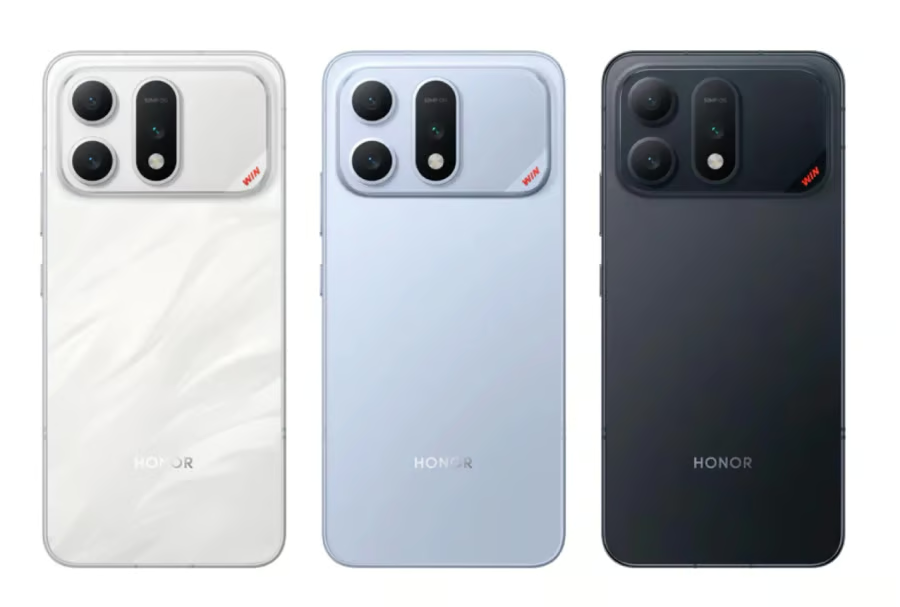
Honor is reportedly testing a smartphone battery so large that users might not need to charge their phones every day.
According to Chinese tipster Digital Chat Station, the company is experimenting with batteries rated between 14,000mAh and 15,000mAh, potentially delivering several days of use on a single charge. The information first appeared on Weibo, and Honor has not confirmed the project or any battery-life estimates.
The rumored capacity would mark another major step in Honor’s push toward larger smartphone batteries, raising questions about how much power manufacturers can fit into a device without making it too heavy or bulky.
Silicon-carbon technology could keep the phone thin and light
Honor has been aggressively pushing battery capacity in recent months. The company’s Win RT 2 and Win Turbo 2 gaming phones, launched in October, already pack 12,070mAh silicon-carbon batteries. Earlier this year, the X80 Pro Max shipped with an 11,000mAh cell.
Moving to 15,000mAh would represent another significant leap. When a reader on Weibo asked whether such a battery would push phone weight past 250 grams, Digital Chat Station replied: “No, it won’t [exceed 250g], and the thickness won’t be exaggerated either – it’s a high-density battery.”
The key technology here is silicon-carbon battery chemistry, which offers higher energy density than traditional lithium-ion cells. This allows manufacturers to cram more capacity into a thinner, lighter package. PhoneArena notes that the Win RT 2 manages its massive battery in a body just 8.5mm thick.
Honor’s strategic gamble
Honor isn’t chasing battery capacity for bragging rights alone. By targeting week-long endurance, the company is positioning itself at the extreme end of a problem that frustrates nearly every smartphone user. While rivals like Samsung and Apple focus on camera upgrades and faster chips, Honor is betting that battery life remains the most tangible daily pain point.
This strategy carries risk. Larger batteries complicate thermal management and can compromise other specifications. The phone may also be limited to the Chinese market, where high-capacity batteries have gained more traction than in the US or Europe. The launch timeline remains unclear, with the device still in testing.
Mobility must-reads
- Big Apple OS Makeover: Here’s What to Expect & When
- MWC 2025: Nothing Shows Off (3A) Phones With AI Organization Tool
- Bad News for App Developers: Most Apps Fail to Hit $1,000 Monthly Revenue Within Two Years
- Mobile Device Computing Policy
What it means for power banks and travelers
A 15,000mAh phone could eliminate the need for portable chargers in many scenarios. According to Andro-News, a standard “20,000mAh” power bank delivers only about 12,000 to 14,000mAh of usable charge after voltage conversion losses, meaning Honor would effectively build an entire power bank into the handset itself.
For international buyers, however, regulatory hurdles may apply. Aviation rules cap single-cell lithium batteries at 20 watt-hours, which previously forced Xiaomi to reduce its European battery capacity. Unless Honor uses a dual-cell architecture, these devices may face shipping restrictions.
Who would benefit from a 15,000mAh phone?
Delivery riders, field workers, frequent travelers, and mobile gamers could benefit most from a phone that lasts several days between charges. For people who spend long hours away from outlets, greater battery capacity could reduce dependence on portable chargers.
However, a larger battery does not guarantee week-long endurance. Screen brightness, mobile connectivity, gaming, and other demanding activities can significantly affect how long a phone lasts.
For now, Honor’s rumored 15,000mAh battery remains an unconfirmed development. The bigger question is whether the company can deliver substantially longer battery life without sacrificing portability, charging speed, or everyday usability.
Other mobile news: OPPO’s Find X10 Pro Max features three 200MP Hasselblad rear cameras, a Dimensity 9600 Pro processor, and a battery rated at up to 8,000mAh, although pricing, battery capacity, and AI features vary by region.