
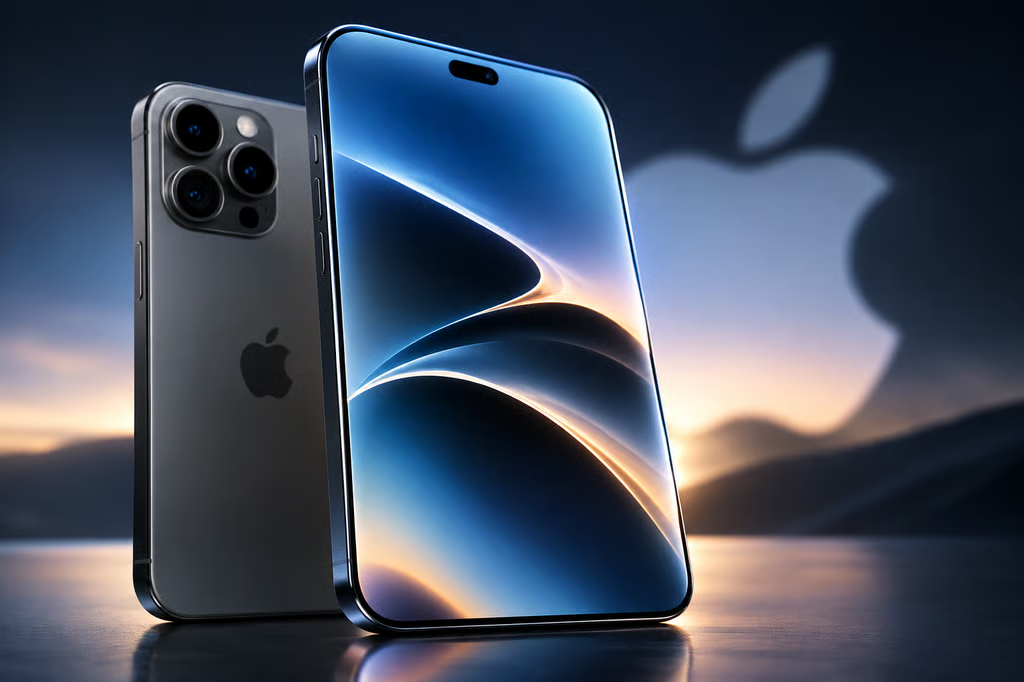


Apple may be making the iPhone screen bigger without making the phone feel much bigger.
A new leak claims Apple is testing 6.41-inch and 6.96-inch displays for the iPhone 20 Pro and Pro Max, respectively. But the more revealing detail may be how Apple plans to fit those screens into its 20th-anniversary iPhones: a borderless design that curves the display toward all four edges.
The latest prototype details suggest Apple’s next major redesign isn’t simply about adding screen size. The company may be trying to make more of the iPhone’s front become the screen.
Apple’s nearly 7-inch display comes into focus
The latest information comes from Chinese leaker Digital Chat Station, who shared alleged specifications for Apple’s iPhone 20 Pro display prototypes.
According to MacRumors’ report on the leak, Apple is testing two configurations:
- iPhone 20 Pro: 6.41-inch display with a resolution of approximately 2,686 x 1,236 pixels.
- iPhone 20 Pro Max: 6.96-inch display with a resolution of approximately 2,912 x 1,340 pixels.
The screens would be slightly larger than the 6.27-inch and 6.86-inch panels used in the iPhone 18 Pro and Pro Max, which Apple markets as 6.3-inch and 6.9-inch.
The Pro Max figure isn’t entirely new. TechRepublic reported in July that Apple was testing a 6.96-inch display that could be marketed as a 7-inch screen if it reaches production.
What has changed is the level of detail surrounding that prototype. The newly leaked resolutions increase roughly in line with the displays’ physical dimensions, potentially leaving pixel density at around 460 pixels per inch. That suggests Apple isn’t necessarily chasing a dramatic increase in screen sharpness.
Instead, the bigger change may be happening around the screen.
Apple could make the bezels nearly disappear
Digital Chat Station claims Apple is testing a “borderless quad-curved” display for its anniversary Pro models, with the screen curving away along all four sides.
If the design reaches production, the curved glass could help create the visual effect of an almost uninterrupted display while making the metal frame less noticeable during normal use.
Apple has reportedly been exploring variations of that idea for some time. TechRepublic reported in August that Apple is still developing a glass-centric 2027 iPhone, despite apparently abandoning an earlier and more ambitious prototype that relied even more heavily on glass.
The version reportedly still in development uses glass on the front and back that curves toward the sides, while retaining a metal band through the middle of the device. That approach points toward a clear objective: reducing the amount of hardware users see around the display without requiring Apple to literally build the entire phone out of glass.
It also matters because a 6.96-inch screen does not necessarily require Apple to build a proportionally larger phone. Apple has previously increased usable screen area by shrinking bezels while making relatively modest changes to the chassis dimensions.
For the iPhone 20 Pro Max, pushing the screen closer to the edges could allow Apple to approach the 7-inch mark without turning the device into a dramatically wider slab.
The Dynamic Island may not disappear yet
One obstacle remains in Apple’s path toward a truly uninterrupted display: the front-facing camera and Face ID hardware.
Previous reports have suggested Apple is developing under-display technology that could eventually hide some of those components beneath the screen.
But the newest leak complicates that picture. Digital Chat Station says Apple is testing a smaller Dynamic Island-style hole-punch design on the iPhone 20 Pro prototypes. If accurate, that would suggest Apple may not be ready to completely hide the front-facing hardware beneath the display.
Other reports disagree about exactly how Apple will handle the cutout, making this one of the least settled parts of the rumored redesign. That uncertainty reflects a larger technical problem with all-screen smartphones. Placing cameras beneath a display means they must capture light through the pixels above them, potentially degrading image quality.
Apple therefore faces a trade-off: preserve camera performance with a visible opening or push further toward the uninterrupted-glass appearance reportedly planned for the anniversary device.
The company may ultimately settle somewhere between the two.
Apple’s 20th-anniversary iPhone is becoming a screen-first redesign
The display changes are part of a much broader redesign reportedly being developed for 2027, the 20th anniversary of the original iPhone.
Apple previously used the iPhone’s 10th anniversary to introduce the iPhone X, replacing the Home button with gesture navigation, dramatically reducing the bezels, and introducing Face ID.
The company appears to be preparing another substantial visual change for the next milestone.
Apple’s recent design language also provides some context. TechRepublic covered Apple’s Liquid Glass interface, which brought translucent, glass-inspired elements throughout the company’s operating systems.
Apple is simultaneously experimenting with larger displays through different hardware designs. Its foldable iPhone Duo features a 7.6-inch inner display, giving the company another way to offer substantially more screen space.
The anniversary iPhone appears to be taking the opposite route: squeezing more display out of the familiar slab-style smartphone.
What the iPhone 20 display leak means for buyers
If you’re worried that a nearly 7-inch iPhone Pro Max would simply mean carrying a much bigger phone, don’t focus too heavily on the 6.96-inch number yet.
The more important details will be the phone’s final dimensions and how much Apple can shrink the borders around the display. If most of the additional screen area comes from thinner bezels and a display that extends farther toward the edges, buyers could get more usable screen space without a substantial increase in the phone’s overall footprint.
There could be trade-offs. A display that curves toward the edges raises questions about accidental touches, cases and screen protectors, durability, and repairability. Apple’s handling of the front-facing camera and Face ID will also determine whether the finished phone delivers the nearly uninterrupted display suggested by earlier reports.
And there’s no reason to delay an upgrade based on this leak alone.
Apple has not announced the iPhone 20 Pro or Pro Max, confirmed the naming of its 2027 lineup, or disclosed its display specifications. These details reportedly come from hardware under testing, so Apple could change the design before production.
For anyone deciding whether to upgrade now or wait, watch the final dimensions, bezel size, camera cutout, and durability rather than the screen measurement alone. Those details will tell us whether Apple’s rumored 6.96-inch display actually gives buyers more usable screen or simply gives them a bigger phone to carry.
Related reading: Considering an iPhone upgrade sooner? See how the iPhone 18 Pro compares with the iPhone 17 Pro and whether the latest changes are worth upgrading for.