


Meta’s latest AI app turns a daily check-in into a conversation with a virtual pet.
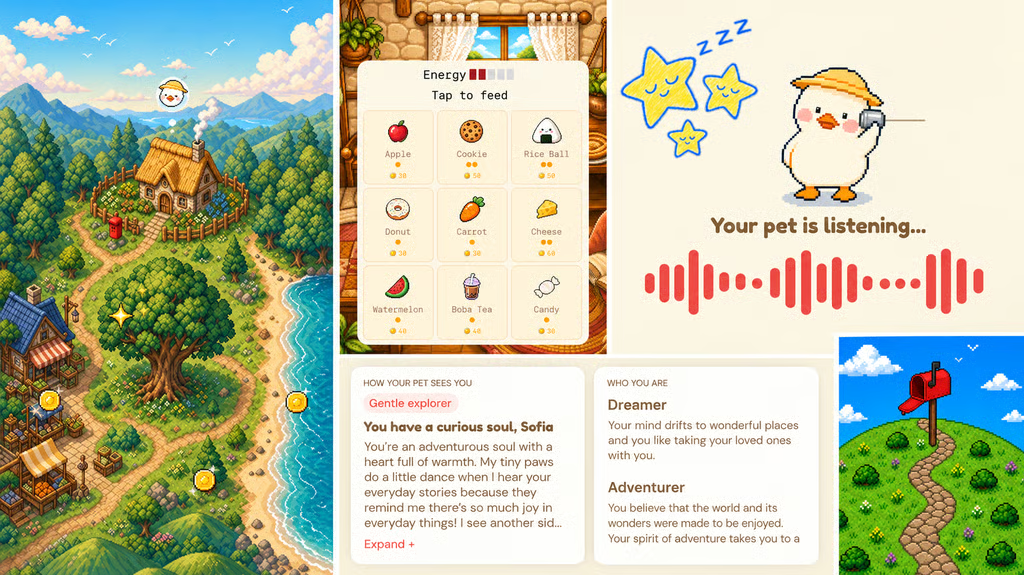
Waddle World, available in the Philippines on iOS and Android, combines pet care, short games, and AI-powered journaling. Meta has not announced when or whether the app will become available in other countries. Users can describe their day by voice or text and receive an illustrated journal entry written from their pet’s perspective.
For people considering an AI journal, the appeal is convenience: recording a few thoughts takes less effort than writing a diary entry. The practical questions are whether the generated account reflects what they meant and how the app handles the personal information they share.
How Waddle World’s journal works
Meta’s official Waddle World website describes a pixel-art world where users hatch and name a pet, visit its cottage, and look after it with food and toys. Activities earn stamps that can be spent inside the app. Meta says there is no subscription and stamps cannot be purchased.
Users can talk or type about their day, and the pet converts those details into a journal entry with a doodle. Meta says the pet becomes more familiar with users over time and sends weekly postcards referencing what they have shared. Short games include catching stars, stacking groceries, and word games.
Like Meta’s standalone AI assistant, Waddle World emphasizes getting to know its users. Here, that personalization centers on a virtual pet and a journal.
Meta explicitly describes Waddle World as a pet experience rather than an assistant or productivity tool. Its published features center on reflection and entertainment, rather than managing work.
Who can use Waddle World
Waddle World’s store descriptions say users must be at least 18. Apple’s Philippines listing displays an 18+ age rating. The Philippines Google Play listing displays a 3+ content rating, but its description also says users must be at least 18. Users should follow the stated eligibility requirement rather than assume the storefront rating makes the app suitable for children.
Meta also promotes the experience as low-pressure, with no competitive leaderboards. Its descriptions are less consistent about habit building: Apple’s listing mentions a journal habit tracker and a tracker streak while also promising no streaks to protect. That makes it premature to describe the app as entirely free of habit-building features.
What “private by default” means for your entries
Meta says journals and pet messages are not shared with other people unless the user chooses to share a postcard. Its website also says users can export their content and account data or delete their account and associated data through Settings.
Those controls are useful, but keeping a journal out of public view does not answer every question about how its contents are processed.
Meta’s Apple privacy disclosure lists data that may be linked to a user’s identity, including contact information, audio, other user content, identifiers, and usage information. Several categories appear under advertising purposes. Apple notes that the developer supplied these disclosures and that it has not verified them. The disclosure does not establish that every journal entry is used for advertising.
Users should also avoid assuming that privacy protections carry across Meta products. Meta AI’s Incognito Chat has specific claims about temporary conversations and protected processing; those claims should not automatically be applied to Waddle World.
The removal of a Muse Image feature after consent concerns also illustrates why sharing and reuse settings deserve attention as Meta introduces new AI experiences. That separate incident does not establish a problem with Waddle World.
Test the journal before trusting it with sensitive details
Waddle World could suit adults who want a casual way to record everyday experiences and enjoy the pet-care format. Start with ordinary details, then compare the generated entry with what you actually said. Because the pet writes in its own voice, check whether it changes the emphasis, omits context, or introduces an interpretation you would not want preserved.
Before making the app a regular diary, locate the export and deletion controls and review what happens when you share a postcard. A journal may include information about colleagues, clients, friends, or family members who have not chosen to use the service. Avoid entering confidential workplace information, credentials, or identifiable details about other people without an appropriate reason and permission.
For IT teams, the relevant issue is what employees might disclose while reflecting on their workday. A personal entertainment app can still receive company information if someone describes a customer problem, an internal discussion, or an unreleased project. Guidance on consumer AI should therefore explain which information employees may share, alongside any restrictions on installing or using particular apps.
The decision to try Waddle World should come down to whether its convenience and entertainment value justify the information you are comfortable providing. A useful AI journal should preserve your meaning and give you understandable control over the record it creates.
Read more: Waddle World invites users to share personal experiences, while other AI tools seek permission to act on their behalf. Explore how OpenAI Dots and Meta Muse change the decisions users face about access, permissions, and oversight.