


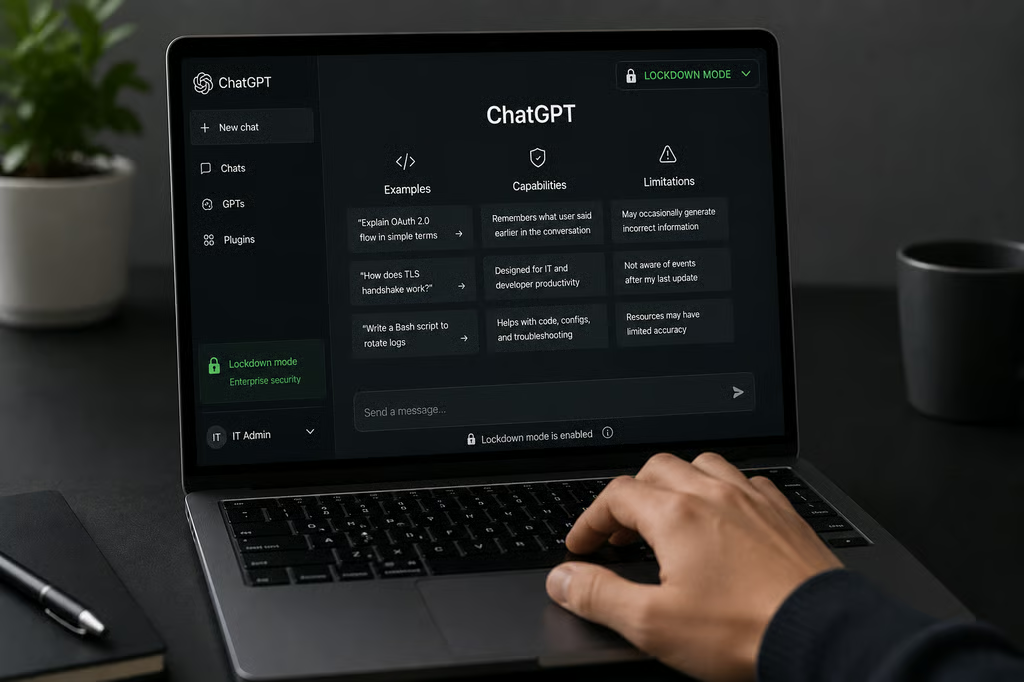
ChatGPT’s stricter security mode is getting a wider release.
OpenAI is making Lockdown Mode, an optional setting in ChatGPT that helps lower the chances of prompt injection and data leaks by restricting access to web tools and external services, available to more users. The feature is now reaching eligible personal and self-serve business accounts, giving IT teams another option for sensitive ChatGPT work.
Lockdown Mode limits connected tools
OpenAI said Lockdown Mode is designed for people and organizations that handle sensitive data and want stricter protection from prompt injection attacks.
“Lockdown Mode is not intended for everyone. It is designed for people and organizations that handle sensitive data and want stricter protection from data exfiltration risks related to prompt injection,” OpenAI said, according to TechCrunch.
Prompt injection attacks can hide harmful instructions in webpages, files, or other content ChatGPT reads. If followed, those instructions could make the chatbot act incorrectly or expose sensitive data.
The Hacker News said that the Lockdown Mode reduces that risk by limiting features that connect to the web or outside systems, including browsing, Deep Research, agent mode, file downloads, some image tools, and Canvas networking. It does not change memory, file uploads, or conversation sharing.
OpenAI says risks remain
OpenAI cautioned that Lockdown Mode reduces risk but does not eliminate it.
“Lockdown Mode is designed to substantially reduce the risk of prompt injection-based data exfiltration in ChatGPT and supported OpenAI products, but it does not guarantee that data exfiltration cannot happen,” the company said, per The Hacker News.
TechCrunch noted that the feature is meant to lower the risk, not remove it. OpenAI stated that malicious instructions in cached web content or uploaded files could still affect ChatGPT’s behavior or accuracy.
OpenAI is rolling out Lockdown Mode to self-serve ChatGPT Business accounts and eligible personal accounts. The feature is available to logged-in users across Free, Go, Plus, Pro, and self-serve ChatGPT Business plans.
What IT leaders should consider
For IT leaders, Lockdown Mode creates a clearer boundary for sensitive ChatGPT work. The setting limits outbound network requests by disabling or restricting tools such as browsing, Deep Research, agent mode, file downloads, some image features, and Canvas networking, according to The Hacker News.
The tradeoff is usability. Lockdown Mode removes features that support research and automation, so organizations may need to define when employees should use it, especially for confidential documents, internal analysis, or work involving regulated data.
Lockdown Mode can reduce some ChatGPT risks, but safer AI use also depends on how people write prompts. These 10 tips can help improve results from ChatGPT, Claude, and Gemini.