


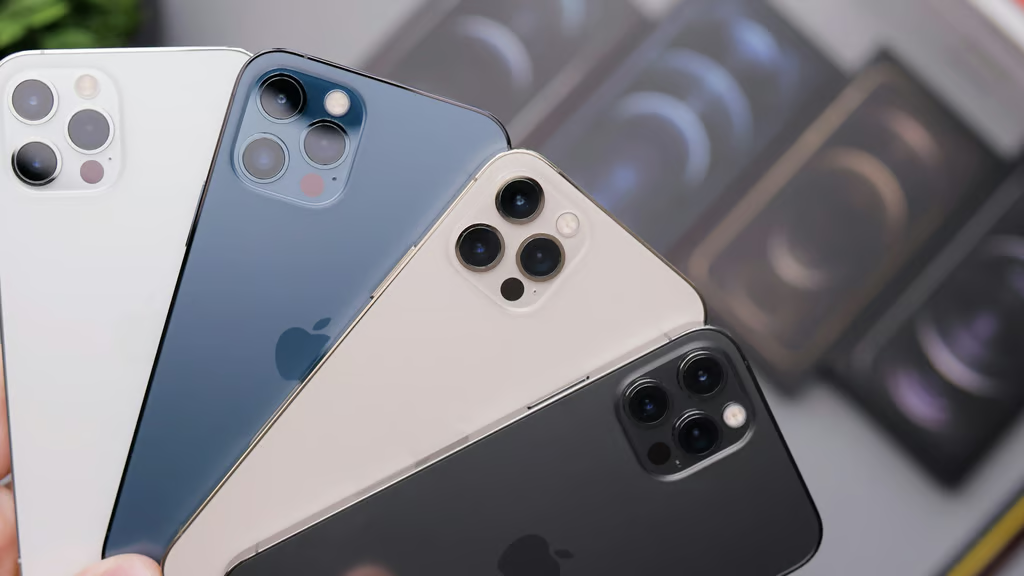
Apple’s latest premium iPhones are facing an early test of buyers’ willingness to pay more.
Apple has asked some suppliers to reduce component production for the iPhone 18 Pro and iPhone 18 Pro Max after demand fell short of expectations, Nikkei Asia reported Oct. 9. For buyers and businesses planning upgrades, the report raises questions about demand at higher prices, but does not establish that discounts are coming.
The report, citing multiple people familiar with the situation, said Apple cut October component orders for the two premium models by 15% to 20% compared with its original requests. The company has reportedly taken a more cautious approach to shipments since early September.
The reductions will affect some suppliers more quickly than others because component production schedules vary. It remains unclear whether Apple will make additional cuts in November.
Higher prices meet a tougher market
In the US, the iPhone 18 Pro starts at $1,199, while the Pro Max begins at $1,299. Both cost $100 more than their predecessors did at launch. Nikkei Asia linked the increases to rising memory chip costs.
The increases come as technology companies compete for memory supplies to support AI data centers, contributing to shortages and higher prices across the electronics industry. Research firm IDC forecasts a 16.7% year-over-year decline in global smartphone shipments in 2026, alongside a 27.6% increase in average selling prices, according to Nikkei Asia.
Apple did not release a standard iPhone 18 alongside the Pro models. Nikkei Asia reported that it is expected in early 2027, delaying the component orders and shipment volumes normally associated with a new lower-priced model.
A warning sign for Apple’s premium strategy
The reported cuts could test Apple’s ability to maintain growth by charging more for its flagship devices. Higher prices could offset some decline in unit sales, but the revenue impact will depend on how many phones Apple sells and which models customers choose.
Nikkei Asia also reported that UBS analysts had observed shorter iPhone 18 Pro delivery wait times across more than 30 markets. The analysts warned that declining waits despite stable supply could indicate weakening demand, particularly following the price increases.
Apple could still benefit from industry-wide pressure on smaller Android manufacturers. Counterpoint Research findings cited by Nikkei Asia suggest Apple and Samsung are better positioned to gain market share as manufacturers focused on lower-priced devices face greater cost pressures. However, gaining market share in a shrinking market does not guarantee stronger sales. Apple must still persuade customers that its latest hardware offers enough value to justify the higher starting prices.
What the iPhone Duo launch could reveal
Apple’s first foldable phone, the iPhone Duo, starts at $1,999 in the US, with availability beginning Oct. 23 in more than 70 countries and regions. Its launch will offer another test of how much consumers are willing to spend on premium hardware.
Nikkei Asia reported that one source familiar with the iPhone business expected the foldable could face similar demand challenges. That remains a prediction, not evidence that orders for the Duo have been reduced. The device also presents a separate manufacturing challenge because its folding screen is more complex to produce. Apple has been working with suppliers to improve production yields, according to Nikkei Asia.
The combination of a high price and manufacturing complexity could make accurate demand forecasts especially important. Producing too many devices risks excess inventory, while overly cautious production could limit availability if interest proves stronger than expected.
What this means for iPhone buyers
For consumers, the reported cuts do not necessarily mean immediate discounts or widespread availability changes. Apple has not confirmed the reductions, and supplier adjustments do not automatically translate into retail price changes.
Buyers considering an upgrade should compare the new models with their current phones and lower-priced alternatives before spending more. Those with functioning devices may find it worthwhile to wait for independent reviews, promotions or more clarity on how much the new hardware improves everyday use.
The larger concern is whether rising component costs will keep pushing smartphone prices higher. If memory shortages persist, manufacturers could face pressure to charge more even as consumers become more selective about upgrades. For Apple, the immediate challenge is balancing higher prices against demand. For buyers and IT teams, the practical takeaway is to compare upgrade costs, software support and the benefits of the new hardware rather than assume reported supplier cuts will lead to cheaper phones.
Read more: Before paying for Apple’s latest Pro models, compare five iPhone 18 Pro alternatives under $1,000 and their trade-offs in performance, battery life and software support.