


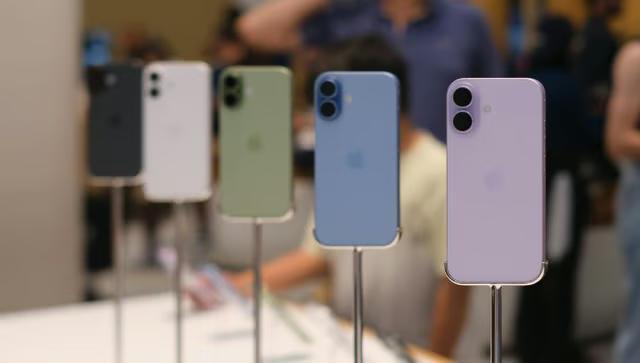
Apple’s latest event was called ‘Surprise and Shine,’ but the real surprise is what happened to the prices of its older iPhones.
Following Wednesday’s announcement of the iPhone 18 Pro and the company’s first foldable, the iPhone Duo, Apple quietly raised prices on every previous-generation iPhone still for sale. Each model now costs $100 more than it did last week.
The iPhone 16, which had been discounted to $699, is back to its 2024 launch price of $799. The budget iPhone 17e jumped from $599 to $699. The standard iPhone 17 now starts at $899, and the iPhone Air climbed to $1,099. The iPhone 17 Pro and Pro Max have been discontinued entirely.
The reversal changes the usual post-launch calculation for budget-conscious buyers. Waiting for Apple’s newest phones would normally make last year’s devices a better deal; this year, it did the opposite.
Why it’s happening
The increases come as Apple faces sharply higher memory costs amid a global DRAM and flash shortage.
Former Apple CEO Tim Cook saw it coming. In a June interview with The Wall Street Journal, he warned about the unavoidable price increase.
“We’re doing our best to mitigate the huge increases that are being passed to us, and we’ve been trying to shield our customers from the increases, but the situation has become unsustainable,” Cook said.
He later compared the situation to a “hundred-year flood.” Apple had already raised Mac and iPad prices before turning to the iPhone.
International buyers could face a larger hit. In India, for example, reported increases are significantly higher than the $100 U.S. increase, with some models rising by roughly 20%, according to Business Today.
This breaks a long-standing ritual. Normally, a new iPhone launch makes older models cheaper — a reward for budget-conscious buyers. This year, patience got punished instead.
Apple’s Upgrade program, which spreads costs into monthly payments, may soften the blow psychologically, but the math is unchanged. Notably, AirPods Pro 3 stayed at $249, likely because they contain no onboard memory.
Must-read Apple coverage
- iOS 27 AI Shortcuts: What Changed and 5 Useful Things to Try
- iPhone Duo Camera Tricks: Smart Take, Kid Cue, Duo Preview, and More
- macOS 27 Cheat Sheet: Compatible Macs, Siri AI, Features and What Changed
- Common Mistakes When Using One Apple Account on Multiple iPhones
- 9 Hidden macOS Features That Feel Like Productivity Hacks
What it means for you
If you were waiting for iPhone 16 or iPhone 17 prices to fall after Apple’s latest launch, that strategy no longer delivers the usual savings. Buyers now face three basic choices: pay the higher price, spread the cost through Apple’s financing or upgrade options, or keep their current phone longer.
The bigger question is whether memory costs ease enough for Apple to reverse course. Until then, the traditional advice to wait for a new iPhone launch before buying last year’s model no longer works as reliably as it once did.
Other Apple news: The company unveiled its 2026 lineup, led by the $1,999 foldable iPhone Duo alongside the iPhone 18 Pro, AirPods 5, and new Apple Watch models.