


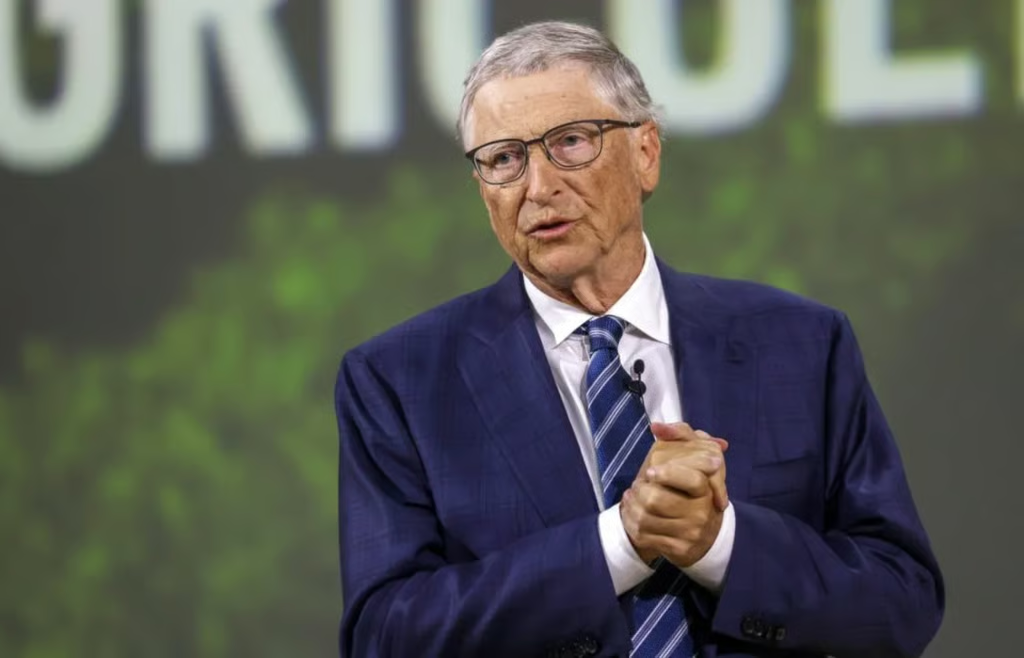
Bill Gates is warning Big Tech that the AI race has a power bill problem.
Speaking on CNBC, the Microsoft co-founder pushed back against massive data center expansion by Amazon, Google, Meta, Microsoft, and other AI players, arguing that ordinary electricity customers should not be left paying for the infrastructure needed to fuel AI growth.
The warning lands as data center projects face growing local resistance, political scrutiny, and questions over whether AI’s economic promise can be separated from its strain on the US power grid.
A $156 billion bottleneck emerging
Behind the political tension is a fast-growing list of stalled projects.
According to The Times of India, 48 data center projects worth $156 billion were blocked or delayed in 2025. Another 20 projects reportedly failed in the first quarter of this year alone. One of the most high-profile setbacks involved investor Kevin O’Leary’s Utah megaproject, which was forced to cut its planned footprint in half after local political pressure.
Gates also pointed to a deeper structural problem in how the US power system has historically worked. The old model, where utilities absorbed infrastructure costs and spread them across ratepayers, is breaking under the pressure of AI-scale demand.
At the center of the tension is a pledge signed earlier this year in Washington. Amazon, Google, Meta, Microsoft, OpenAI, Oracle, and xAI reportedly agreed to the Ratepayer Protection Pledge, committing to cover the costs of new power generation needed to support their data centers.
Gates’ message, as framed in the CNBC remarks, is that signing agreements is not enough if electricity costs still spill over into households.
Public resistance is growing fast
What was once seen as local resistance is now becoming a national political factor.
A Gallup poll cited by The Times of India found that 70% of Americans oppose having a data center near their home. A separate survey across 15 major economies reportedly placed US support at just 26%, the lowest globally.
The backlash has also turned political at the local level. In Missouri, voters removed four city council members shortly after they approved a $6 billion data center project. In another case highlighted in the report, an Indianapolis councilman received a threatening message after approving a data center, underscoring how heated local debates have become.
Despite the pushback, Gates did not dismiss the importance of the AI race itself. He acknowledged the economic opportunity and the strategic pressure created by global competition, especially with China. But he stressed that those realities do not override public accountability or local consent.
Also read: Australia’s AI data center boom is raising grid-risk questions as power demand rises across the APAC region.