


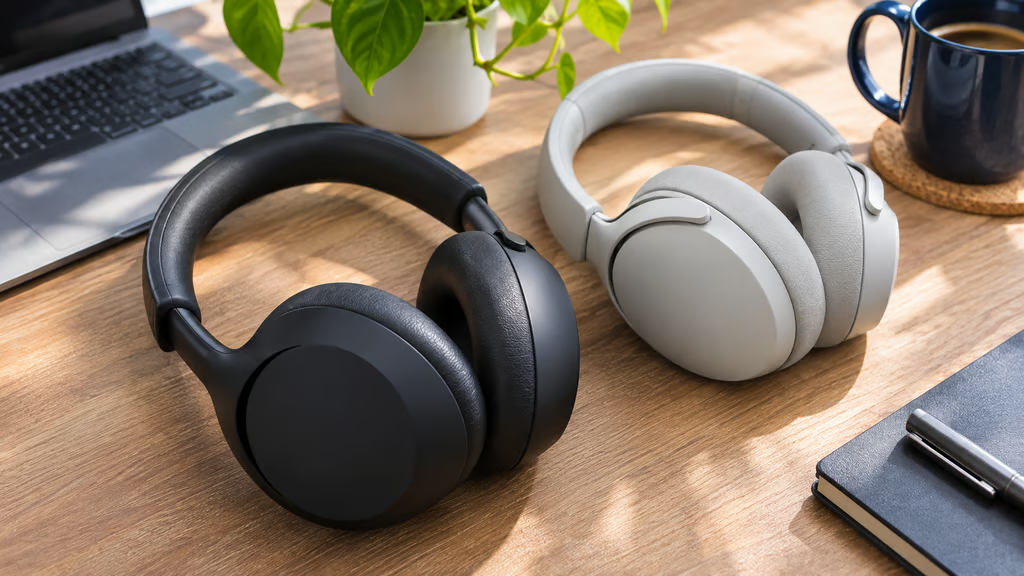
The Sony WH-1000XM6 and Bose QuietComfort Ultra Headphones (2nd Gen) are two of the strongest noise-canceling headphones available, but they excel in different areas. Sony has the advantage in sound detail and customization, while Bose offers exceptional comfort, flexible noise cancellation, and USB-C audio.
The distinction is especially important when shopping for Bose. This comparison covers the QuietComfort Ultra Headphones (2nd Gen) released in 2025, not the original 2023 model, which remains available under a similar name.
At a glance:
- Best for sound quality: Sony WH-1000XM6.
- Best for long-session comfort: Bose QuietComfort Ultra (2nd Gen).
- Best for noise cancellation: Both are excellent; Bose offers more manual control, while Sony has a subtler ANC effect.
- Best for sound customization: Sony, with its 10-band equalizer.
- Best for USB-C wired listening: Bose.
- Best overall: Sony for sound-focused buyers; Bose for comfort and wired flexibility.
- Sony WH-1000XM6 vs Bose QuietComfort Ultra: Specs compared
- How we compared these headphones
- Noise cancellation: Bose has more control, but Sony competes closely
- Sound quality and comfort: Sony wins on detail, Bose on fit
- Battery life, calls, and connectivity
- Sony WH-1000XM6 vs Bose QuietComfort Ultra: Which should you buy?
Sony WH-1000XM6 vs Bose QuietComfort Ultra: Specs compared
| Feature | Sony WH-1000XM6 | Bose QuietComfort Ultra (2nd Gen) |
|---|---|---|
| US list price | $459.99 | $449 |
| Release date | May 2025 | October 2025 |
| Weight | Approximately 254g | Approximately 265g |
| Noise cancellation | Adaptive ANC | Adjustable ANC with ActiveSense |
| Bluetooth | 5.3 | 5.4 |
| Audio codecs | SBC, AAC, LDAC, LC3 | SBC, AAC, aptX Adaptive |
| Battery with ANC | Up to 30 hours | Up to 30 hours |
| Spatial audio | ✔ | ✔ |
| USB-C audio | ✖ | ✔ |
| Analog wired audio | ✔ | ✔ |
| Equalizer | 10-band | 3-band |
| Multipoint Bluetooth | ✔ | ✔ |
| Main advantage | Detailed sound and customization | Comfort and wired versatility |
Prices are US manufacturer list prices, not guaranteed current sale prices. Battery figures are manufacturer ratings and vary with settings.
How we compared these headphones
We evaluated noise cancellation, sound quality, comfort, call performance, battery life, connectivity, and value.
Our comparison uses official specifications from Sony and Bose, alongside independent testing from What Hi-Fi?, SoundGuys, and RTINGS.
These sources include direct listening comparisons and laboratory measurements. We distinguish subjective listening preferences from measurable differences, particularly where reviewers disagree about noise cancellation.
Current discounts can also change the value equation. Compare the exact second-generation Bose model against Sony’s WH-1000XM6 rather than relying on older retail prices.
Noise cancellation: Bose has more control, but Sony competes closely
Both headphones deliver excellent active noise cancellation (ANC), although independent reviewers disagree about which blocks more sound.
What Hi-Fi? favored Bose for maximum isolation during air travel and commuting. Its testing found Bose’s Quiet mode particularly effective against sustained background noise.
However, SoundGuys found no decisive overall ANC winner, while RTINGS measured a slight isolation advantage for Sony.
Those findings make it difficult to declare Bose universally superior. Fit, frequency, and testing conditions can influence the result.
Bose does offer more control over how cancellation behaves. Its Quiet, Aware, and Immersion modes allow listeners to adjust their experience, while ActiveSense automatically responds to sudden loud sounds in Aware mode.
Sony uses adaptive noise cancellation that adjusts automatically to environmental conditions.
The difference is also noticeable in how ANC feels. What Hi-Fi? reported a stronger pressure sensation with Bose, whereas Sony produced a more natural effect.
Verdict: Choose Bose if you want adjustable noise cancellation and maximum isolation is your priority. Consider Sony if you are sensitive to ANC pressure or prefer automatic adjustments.
Sound quality and comfort: Sony wins on detail, Bose on fit
Sony takes the lead for sound quality in several direct comparisons.
What Hi-Fi? found the WH-1000XM6 more natural, detailed, and dynamic than the Bose headphones. SoundGuys also favored Sony’s sound for a broader range of listeners.
Sony’s 10-band equalizer provides more precise control than Bose’s three-band EQ, making it easier to adjust bass, mids, and treble.
Bose retains a smooth, bass-rich presentation that may appeal to listeners who prefer a warmer sound.
Comfort reverses the advantage.
Bose’s roomy earcups and relatively gentle clamping force make the QuietComfort Ultra particularly appealing for long flights and extended office sessions.
Sony provides a more secure fit, but some reviewers found its thinner padding less comfortable over time.
For people wearing headphones throughout the workday, fit deserves as much consideration as sound quality.
Buyers exploring other premium over-ear options can also compare Nothing and AirPods Max before deciding which design and features suit their needs.
Battery life, calls, and connectivity
Both manufacturers advertise up to 30 hours of battery life with ANC enabled.
Bose’s rating drops to approximately 23 hours with Immersive Audio activated. SoundGuys measured roughly 27 hours from the Bose model in independent testing.
Neither manufacturer’s headline figure guarantees identical endurance during calls, high-volume playback, or spatial audio use.
Call quality is less decisive.
Bose advertises improved voice pickup on its second-generation headphones, but independent reviews have been mixed. Trusted Reviews described its outdoor calling performance as average.
The available comparisons do not establish a consistent microphone winner between Sony and Bose. Anyone spending hours in video meetings should test microphone performance in their typical environment.
For readers prioritizing communication rather than music, our guide to wireless earbuds for work calls covers alternatives designed around voice clarity.
Connectivity presents a clearer difference.
Bose supports digital audio over USB-C, allowing compatible computers and phones to play lossless audio through a wired connection. Bose specifies support for 16-bit audio at 44.1kHz or 48kHz through USB-C.
Sony’s USB-C connection is for charging, not audio playback. However, the WH-1000XM6 supports LDAC for higher-bitrate Bluetooth streaming with compatible devices.
Bose instead offers aptX Adaptive on supported devices.
Neither codec guarantees better sound without compatible hardware and an appropriate audio source. Both headphones also support analog wired playback.
Verdict: Bose is more versatile for USB-C listening. Sony offers stronger wireless sound customization and LDAC support.
Sony WH-1000XM6 vs Bose QuietComfort Ultra: Which should you buy?
Choose the Sony WH-1000XM6 if sound quality is your highest priority.
Its detailed presentation, 10-band EQ, and effective ANC make it the stronger all-around choice for music enthusiasts who want extensive control over their listening experience.
Sony is also worth considering if Bose’s stronger ANC pressure sensation feels uncomfortable.
Choose the Bose QuietComfort Ultra Headphones (2nd Gen) if comfort, adjustable noise cancellation, and USB-C audio matter more.
Its spacious earcups are well suited to long flights and work sessions, while digital wired playback gives it an advantage for compatible laptops and phones.
Neither model has an overwhelming advantage in every category. SoundGuys’ comparative testing found their overall performance closely matched, with different strengths across comfort, connectivity, and audio.
Check current prices before buying. Sony and Bose frequently compete through discounts, and a meaningful price difference could outweigh smaller performance distinctions.
Most importantly, verify that the Bose listing specifies 2nd Gen. The original QuietComfort Ultra Headphones are a different product with different battery life and connectivity capabilities.
Also read: Our Beats vs Sony WH-1000XM6 comparison examines another premium headphone matchup for buyers weighing sound quality, features, and price.