


Billionaire pilot. Space explorer. Entrepreneur. Now, Jared Isaacman could soon add NASA administrator to his résumé.
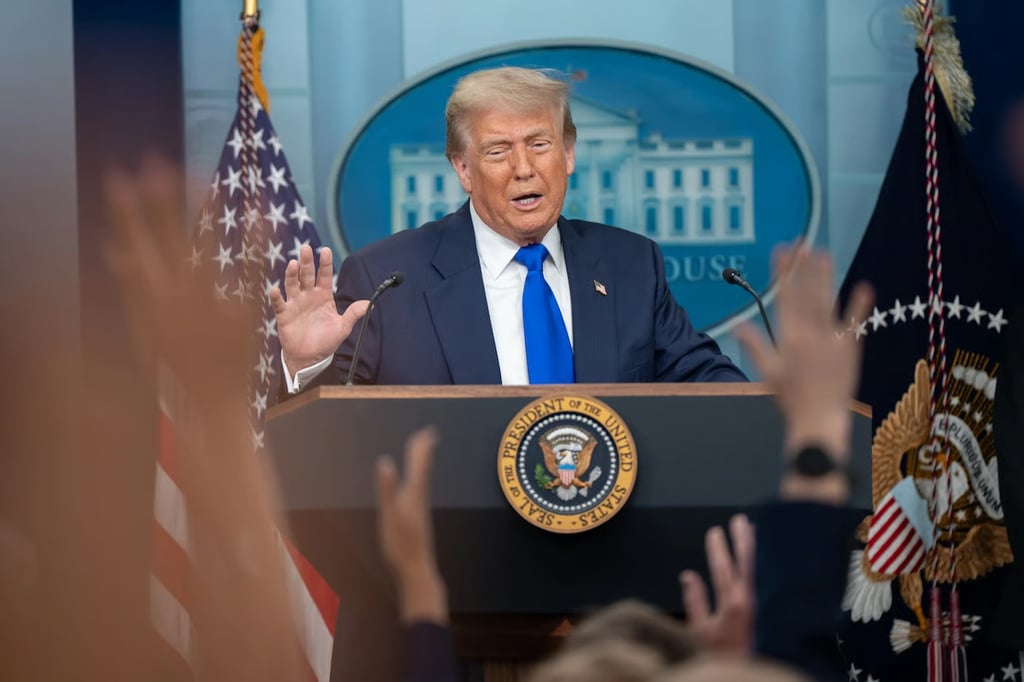
In a move that fuses politics with the private space race, US President Donald Trump has once again nominated the tech mogul and astronaut to lead the nation’s space agency — months after abruptly pulling his earlier nomination.
The choice signals Trump’s renewed faith in Isaacman, whose mix of business success and cosmic ambition embodies the administration’s push to entwine public exploration with private enterprise. If confirmed, Isaacman would become one of the few NASA leaders to come directly from the commercial space world — and arguably the first to have personally orbited Earth.
A Reversal and a renewed mandate
Trump’s first nomination of Isaacman in late 2024 advanced through Senate committees before being withdrawn in May, reportedly over concerns about Isaacman’s political donations and his close ties to SpaceX’s Polaris program. Now, Trump is doubling down, calling Isaacman “an accomplished business leader, philanthropist, pilot, and astronaut” who can “lead NASA into a bold new era.”
For Isaacman, 42, the path to this nomination began far from Washington.
As founder and CEO of Shift4 Payments, he built a multibillion-dollar tech company before funding and commanding Inspiration4, the first all-civilian orbital mission in 2021. Since then, he’s spearheaded a series of private missions designed to push human spaceflight further, faster — all while partnering with SpaceX.
What's hot at TechRepublic
- Blackpoint Cyber vs. Arctic Wolf: Which MDR Solution is Right for You?
- Why AWS Sellers Choose Deepgram Over Other Voice AI Tools
- SS&C Intralinks DealCentre AI vs. Datasite: Which platform is built for the future of dealmaking?
- SS&C Intralinks FundCentre AI vs. Juniper Square: Which platform better supports modern private markets fund managers?
- Verito vs. Rightworks: Which IT Provider Is Best for Your Firm?
A new vision for NASA
Isaacman’s philosophy breaks with bureaucratic tradition.
He argues that NASA doesn’t have to choose between lunar and Martian ambitions — that the agency can achieve both by embracing private-sector efficiency and public-private collaboration. His concept of “science-as-a-service” envisions universities, corporations, and innovators pooling resources to accelerate research and exploration.
Critics question whether his commercial ties could blur lines between NASA’s public mission and corporate interests. Supporters counter that Isaacman’s entrepreneurial energy could revitalize an agency sometimes accused of moving too slowly.
For now, acting administrator Sean P. Duffy continues to lead NASA until the Senate takes up the confirmation. But Trump’s decision to renominate Isaacman makes one thing clear: the White House envisions a NASA that looks more like Silicon Valley than Capitol Hill.
Whether that bold bet redefines America’s place in space — or tests the limits of public-private partnership — will depend on how Isaacman navigates his next launch: the Senate floor.
For more on how tech and politics are colliding, read TechRepublic’s “Trump Says the US Will ‘Referee’ Nvidia’s Chip Talks with China,” exploring Nvidia’s role in the escalating US–China chip standoff.