



Apple is expanding its smart home lineup with a dedicated display, updated entertainment devices, and new connected accessories.
Announced Oct. 13, the lineup includes HomeView, refreshed Apple TV 4K and HomePod mini models, and the Apple Home Collection, developed with LG Electronics and Schneider Electric.
For buyers, the main questions are what these devices cost, which features require newer Apple hardware, and what will actually be available at launch.
HomeView debuts as Apple’s first smart display
The cornerstone of the launch is the Apple HomeView, a dedicated smart home hub equipped with a 7-inch Liquid Retina display. HomeView comes in tabletop and wall-mounted versions. The tabletop model has an aluminum base, a domed speaker system, and a stainless steel hinge that lets users tilt the display.
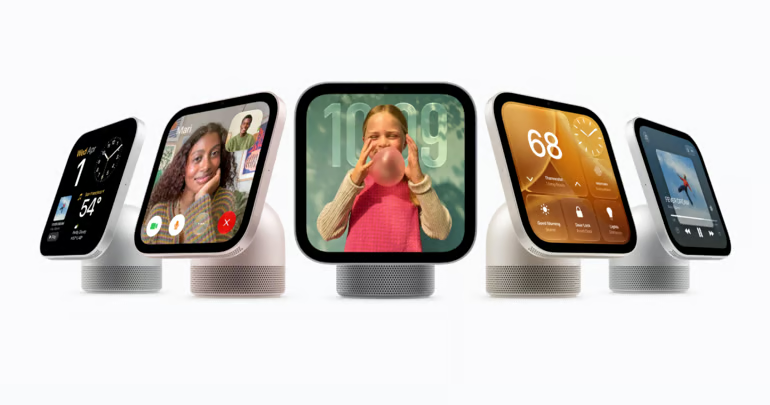
The screen adjusts brightness dynamically from 500 nits down to 0.3 nits for bedside use, scaling interface elements depending on how close a user stands to the display. Internally, the tabletop version packs two full-range audio drivers in the display alongside a down-firing woofer and dual passive radiators in the base, running on Apple’s A18 silicon.
A key software capability of HomeView is multi-user facial recognition. The device can identify up to six individuals in a household, adapting widgets, calendars, and messages for each person without exposing private communications to others in the room.
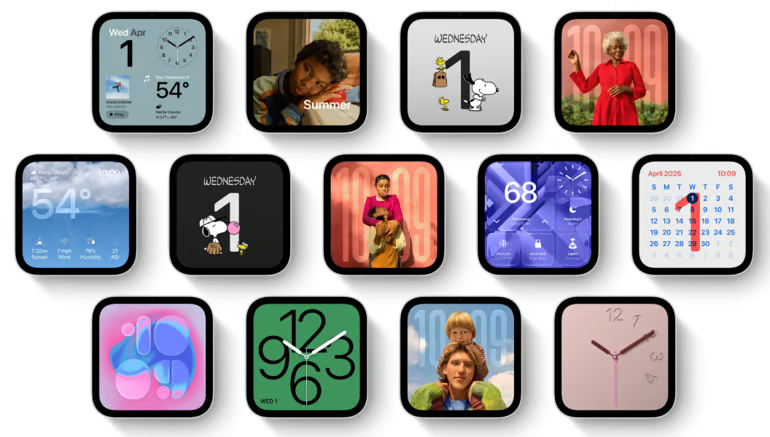
“Apple HomeView is designed to be shared by everyone in the home yet feel completely personal to each user,” said Greg Joswiak, Apple’s senior vice president of Worldwide Marketing. “It recognizes your face to shift from a household screen to your own experience, fills the room with incredible sound, keeps you connected to the people who matter most with FaceTime, and makes it easy to control your smart home. And it’s powered by Apple Intelligence with Siri AI at its core, drawing on personal context from your iPhone to help you find what you need and get more done, all while keeping everyone’s information private and secure.”
Both the tabletop and wall-mounted variants are priced at $299 in the US. Pre-orders begin immediately, with retail availability starting Nov. 13.
Apple TV 4K adds far-field mics and A19 silicon
Apple also updated its living room flagship, the Apple TV 4K (4th generation). Apple says the A19-powered streamer delivers up to 50% faster CPU performance and up to twice the GPU performance of its predecessor. It also includes a dedicated AV1 decoder.
For the first time, Apple TV 4K integrates three far-field microphones with echo cancellation directly into the set-top box, enabling hands-free Siri AI commands from across the couch without touching the remote. The included Siri Remote also adds Apple’s Precision Finding and Find My audio alerts.
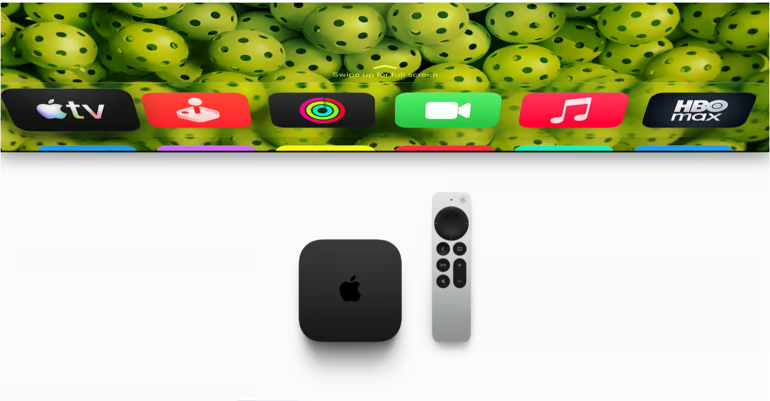
Home theater capabilities have expanded as well: users can now link four HomePod mini 2 speakers or HomePod (2nd generation) units to form a four-speaker surround sound setup that automatically calibrates audio timing and levels to the room layout.
“The new Apple TV 4K is our most immersive home theater experience yet,” said Bob Borchers, Apple’s vice president of Worldwide Product Marketing. “With Siri AI, finding something to watch becomes a full-screen, conversational experience, and with built-in far-field microphones, it’s completely hands-free. Pair it with HomePod for the best surround sound setup we’ve ever offered, and it makes managing your Apple Home accessories easier than ever. Now, alongside HomeView, HomePod mini 2, and Apple Home Collection, it’s part of the most connected Apple Home we’ve ever built.”
The new Apple TV 4K is priced at $299, a notable jump over previous generations, with deliveries starting Nov. 13.
HomePod mini 2 brings sound glow and S10 processing
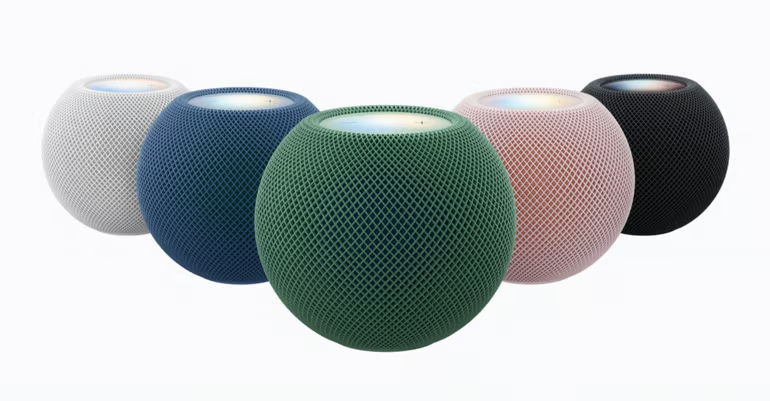
Receiving its first hardware revision since 2020, the second-generation HomePod mini retains its familiar spherical fabric enclosure while updating its internal brain to Apple’s S10 chip.
The refreshed speaker features Sound Glow, an interactive touch surface on top that pulses and shifts color schemes in real time to match the album art and rhythm of playing tracks. The speaker can serve as an audio output for Macs with Wi-Fi 6E or later and as a smart home hub. Its Sound Recognition feature can detect smoke or carbon monoxide alarm sounds and send notifications, although Apple says it should not be relied on in emergencies.
“HomePod mini 2 brings together Siri AI, gorgeous new colors, and incredible audio,” said Kaiann Drance, Apple’s vice president of Worldwide Home Product Marketing. “With Siri AI, it understands you better than ever, drawing on personal context and broad world knowledge to make music discovery even richer. It fills a room with sound on its own, which gets even bigger in a stereo pair or with multiroom audio, and when paired with the new Apple TV 4K, it delivers our most immersive home theater setup yet. And with just your voice, HomePod mini makes it easy to securely control your accessories and run automations across the connected home.”
Priced at $149, the HomePod mini 2 comes in midnight, white, blue, green, and pink. Pre-orders open today, with retail units shipping Oct. 30. Siri AI, however, will not be active out of the box and will arrive in a subsequent software update.
Apple Home Collection: Partnering with LG and Schneider Electric
Moving beyond companion hubs, Apple introduced the Apple Home Collection, marking the company’s direct brand expansion into home security, climate control, and smart locks through co-developed hardware with LG Electronics and Schneider Electric.
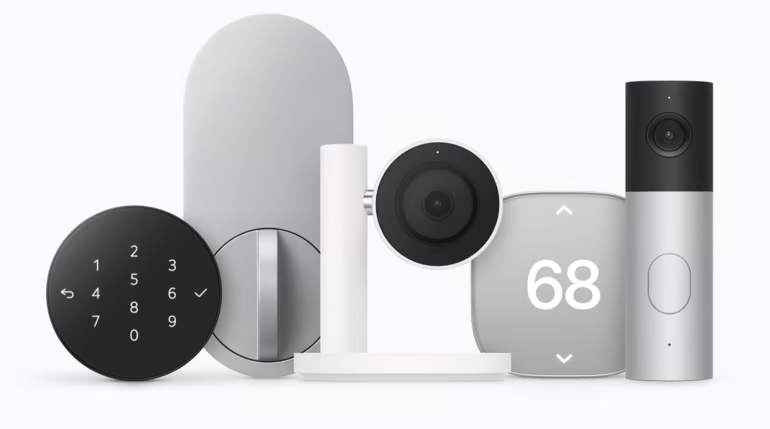
Apple says Home Collection accessories support Thread and can be added to the Apple Home app starting with a single iPhone tap, without a separate app or account. The announcement explicitly lists Matter compatibility for the lock, thermostats, and temperature and humidity sensors.
“Apple Home Collection makes it easy to choose smart home accessories with confidence,” said Matthew Costello, Apple’s vice president of Hardware Engineering. “Working closely with industry leaders LG Electronics and Schneider Electric, we designed every accessory to work seamlessly with Apple Home, so managing your home is simple, reliable, and private.”
Hardware in the collection includes:
- LG Video Doorbell Wired ($249.95): Features dual cameras (a 2.5K primary view and an HD package lens) and direct chime playback over connected HomePod and HomeView hubs.
- LG Floodlight Cam ($399.95) & Outdoor Cam ($299.95): Deliver 2.5K recording with low-light color night vision.
- LG Indoor Cam ($199.95): Physically tilts downward to disable lens visibility whenever a household member returns home.
- LG Smart Deadbolt Lock ($349.95): Employs Ultra Wideband (UWB) technology to automatically unlock hands-free as an authorized iPhone or Apple Watch approaches, backed by Matter, Aliro local offline functionality, and an integrated keypad.
- Smart Thermostats ($199.95 each): Options manufactured by LG and Schneider Home adjust indoor temperatures based on household presence using Adaptive Temperature intelligence, pairing with dedicated $39.95 room sensors.
Products in the collection roll out beginning in December, with select accessories shipping in early 2027. Apple Retail will also introduce professional installation services through ADT in the US.
Apple’s ambient ecosystem play
Apple’s new lineup expands its smart home offering beyond HomePod speakers, Apple TV, and third-party Home accessories. HomeView and the co-developed Home Collection give customers more devices they can manage through the Apple Home app.
Connecting more household devices through Apple Home could give existing Apple users more reasons to stay within its ecosystem. The practical appeal is managing entertainment, security, and climate controls in one place, although personal-context features and some camera capabilities require compatible devices or subscriptions.
For buyers, the question is whether that integration offers enough convenience to justify the hardware costs and device requirements.
Must-read Apple coverage
- Nearly 7 in 10 iPhone Owners Plan iPhone 17 Upgrade
- Apple Prepares AI-Powered Siri Upgrade With Google Search Integration
- Apple’s Xcode 26 Beta Now Supports GPT-5 and Claude
- Apple’s Vision Pro Adoption Stalled As Content Released ‘Drip by Drip’
What this means for everyday households
For everyday consumers, Apple’s home expansion promises simpler setup and control, but device requirements, subscription costs, and regional availability will shape its usefulness.
Frictionless setup and subscriptions
Apple says Home Collection accessories can be set up and managed without separate companion apps or brand accounts. Camera video history requires a supported iCloud+ plan rather than a separate camera subscription, while some AI video features require an eligible tier. Buyers should check whether their existing plan covers the features they want.
The hardware’s ability to maintain operations over Thread, retain local deadbolt authentication during internet outages, and keep encrypted camera feeds out of reach of corporate eyes provides tangible peace of mind.
The price of upgrading
That simplicity comes at a steep financial threshold. With Apple TV 4K priced at $299 and the four listed LG camera models totaling about $1,100 before tax, a broader upgrade can become expensive. Wall-mounted HomeView buyers must also budget for mounting accessories, which start at $59.95, plus any installation costs.
However, the living room theater system is modular: while the new four-speaker surround configuration requires matching pairs for the front and rear channels, users can scale their setup gradually by starting with a traditional stereo pair and adding rear speakers over time.
Device requirements and regional availability
HomeView requires a compatible iPhone or iPad for setup and multiuser support. Siri’s personal-context features require an Apple Intelligence-enabled device, while access to personal content also depends on face recognition and the paired device being present and recently unlocked. Users without an Apple Intelligence-enabled device can still use Siri AI for general questions and conversations.
Geographic availability presents an immediate barrier as well: Apple HomeView will not be sold in the European Union due to ongoing regulatory hurdles regarding Siri AI on iOS. Meanwhile, buyers picking up the HomePod mini 2 on launch day will find its headlining Siri AI intelligence absent until an unspecified future software update arrives. Before buying, households should check regional availability, which features their existing Apple devices support, and whether their iCloud+ plan meets their camera needs. Siri AI also supports Apple TV 4K models from the second generation onward, so some owners may not need new hardware to access the assistant.
Read more: As AI assistants gain control over connected devices, explore what Claude and other AI agents can do through Google Home—and the access restrictions users should understand.