
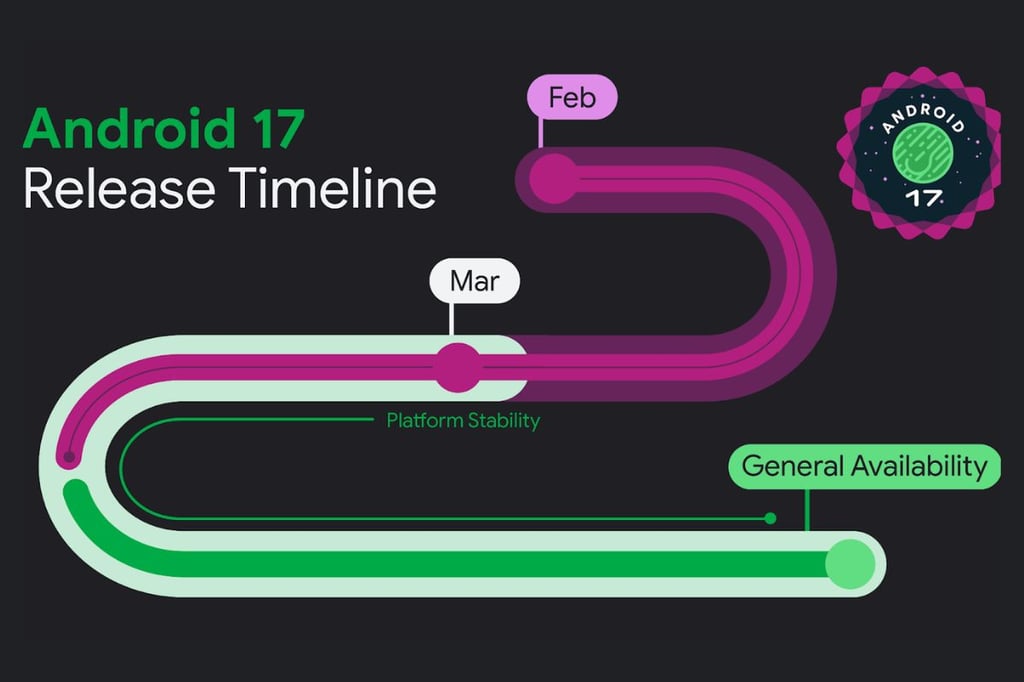


Android 17 Beta 3 is here… and it’s not trying to impress at first glance.
As Google gets closer to the launch of Android 17, it is focusing on polish — refining multitasking, simplifying system controls, and adding tighter privacy protections. The update locks in core behaviors and APIs, enabling developers to build and test Android 17-focused apps with more confidence.
Because the underlying system is largely finalized, developers now have enough time to work on performance tuning and compatibility checks, while preparing updates ahead of the full public release.
Polished, powerful, and almost ready
On Thursday, Mar. 26, Google released Android 17 beta 3, a version that signalled readiness for the full release. Along with several other features revealed in previous beta versions, this version included new features and, more importantly, fixed issues from previous versions.
9to5Google reports that this update focuses on refining existing Android features, including per-app dark mode controls, expanded bubble-based multitasking with a dedicated bar, quick settings UI tweaks, improved screen recording tools, and the option to hide app labels. It also introduces more precise location access controls, allowing users to better determine how apps access and use their location data.
The report also notes that Google has shifted away from emphasizing internal codenames like “Cinnamon Bun” in public-facing updates, replacing them with the actual name, Android 17. This change appears to be more of a branding choice than a clear signal of release readiness.
Aside from feature refinements, the update matures things for developers, as per the same report from Google. With the release of Android 17 beta, developers can now push apps compatible with Android 17 to the Google Play Store.
The update also tightens its focus on large-screen devices, requiring developers to support resizable layouts and flexible orientations. This move is aimed at improving the experience on tablets and foldables.
More Google coverage
- New Google Search AI Mode is ‘Total Reimagining,’ Says CEO Sundar Pichai
- In Major Ruling, Judge Finds Google ‘Willfully Acquired and Maintained Monopoly Power’ Over Digital Ad Market
- Google’s Big Bet on Nuclear Energy: ‘The Race to Power AI-Driven Data Centers is Accelerating’
- Computer History Museum Releases Original AlexNet Code: Why It Matters
Stronger defenses, smoother experience
As with all pre-release Android versions, bugs remain present.
By reaching platform stability, Google not only cleared the way for developers to push their apps to the Play Store but also fixed several bugs from previous versions of Android 17 beta. 9to5Google listed over 20 of these bug fixes in its report, some of which were from the new features introduced in Android 17.
Additionally, the update brings more security to apps, an expected release given Google’s recent focus on app security.
One notable change is the enforcement of read-only restrictions on code loaded at runtime. With this in place, it becomes more difficult for threat actors to remotely trigger malicious behaviors in seemingly harmless apps by modifying the app’s code during runtime.
Enhanced privacy beyond one-time location sharing automatically hides keystrokes when passwords are typed from external keyboards. Beyond app security and privacy, Google is also positioning its phones with Android 17 to showcase futuristic security features.
Android 17’s early groundwork for future cryptographic standards, including post-quantum approaches, reflects Google’s long-term focus on evolving security needs.
Closing in on launch
With all of these, it’s clear that Google is aiming to make Android the most secure, stable, and UX-friendly smartphone in use — a spot Apple is rivaling it for.
For availability, Android 17, which is one step toward that goal, is likely to be announced to the public by June 2026, based on typical Android release timelines and current reports, PCMag reports. As usual, Google’s own Pixel smartphones may get it first before phones from third-party manufacturers.
One thing is apparent: this isn’t the likely end for Android 17; more features, bug fixes, and security updates should come after its main launch, and maybe that update could be more exciting than the first launch.
Also read: Samsung may be bringing AirDrop-style file sharing to Galaxy devices. Here’s what that could mean.