


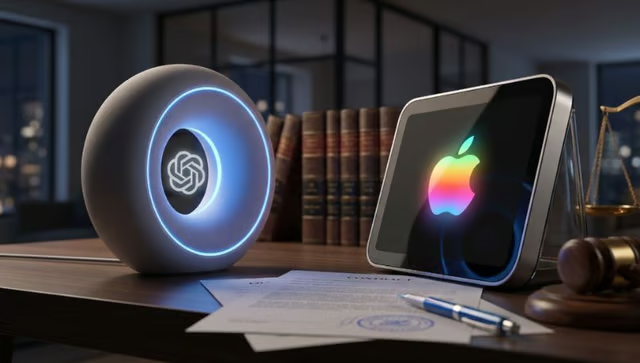
OpenAI has agreed to keep its hands off Apple’s alleged trade secrets while a federal judge made clear it was on the verge of ordering it to do so anyway.
During an Oct. 14 hearing in San Jose, California, OpenAI voluntarily agreed not to use proprietary information Apple claims was taken by former employees, according to Bloomberg.
US District Judge Edward Davila said he was “highly likely” to grant Apple’s request for an injunction. The agreement also requires OpenAI to collect forensic images from devices belonging to 14 employees who may possess Apple’s confidential information, keeping the dispute under judicial oversight.
The agreement gives Apple most a key protection it sought: OpenAI’s commitment not to use its alleged trade secrets. But Davila also signaled that Apple’s broader demands for access to devices and repositories went too far, Bloomberg reported.
Apple’s lawyer, John M. Desmarais, then narrowed the scope, saying the company would target a small group of former employees. “They don’t have 400 bad apples, your Honor, they have a few bad apples and know who they are,” he said.
A two-way street
Hours before the hearing, OpenAI raised allegations of its own in a court filing, claiming that a former employee who joined Apple had transferred more than 100 confidential files related to an unreleased OpenAI device into personal accounts.
“OpenAI is very concerned that its trade secret and confidential information is now circulating inside Apple, where Apple engineers can shape Apple’s upcoming products based on OpenAI’s confidential and innovative work,” the company said in its filing.
Apple pushed back, saying it has policies preventing new hires from using prior employers’ confidential information and has found no evidence to support OpenAI’s claims.
What the standoff signals for OpenAI’s hardware dreams
The legal fight comes as OpenAI prepares to expand beyond software and into consumer hardware, putting it in more direct competition with Apple.
OpenAI is reportedly developing a new AI-powered device, with earlier reports pointing to a smart speaker priced above $300. That makes the dispute particularly sensitive: both companies are pursuing hardware products that could change how consumers interact with AI.
By agreeing not to use Apple’s alleged trade secrets, OpenAI may have avoided a broader court order while allowing its hardware development to continue. But the allegations also underscore the challenges companies face when recruiting employees from direct competitors.
An uncomfortable mirror
The most revealing part of this fight is how quickly the accusations have reversed. Apple says OpenAI built its hardware team by lifting secrets. OpenAI now says Apple may have done the same.
Neither claim has been proven, but the mirror image suggests the problem is structural, not a few bad actors. When two companies compete for the same hardware talent, confidential files travel in both directions. Courts can enforce injunctions, but they cannot easily rewire the habits of an industry where job-hopping is routine and speed matters more than caution.
What's hot at TechRepublic
- Blackpoint Cyber vs. Arctic Wolf: Which MDR Solution is Right for You?
- Why AWS Sellers Choose Deepgram Over Other Voice AI Tools
- SS&C Intralinks DealCentre AI vs. Datasite: Which platform is built for the future of dealmaking?
- SS&C Intralinks FundCentre AI vs. Juniper Square: Which platform better supports modern private markets fund managers?
- Verito vs. Rightworks: Which IT Provider Is Best for Your Firm?
What the hardware rift means for everyday buyers
For consumers, this escalating courtroom dispute signals an end to the seamless software-first honeymoon between Apple and OpenAI.
While everyday users still access ChatGPT inside Apple devices, the physical products running tomorrow’s ambient intelligence will arrive divided. Buyers waiting for novel standalone AI hardware, like OpenAI’s planned smart speaker or Apple’s upcoming HomeView ecosystem face a split market.
Instead of an integrated ecosystem where OpenAI intelligence and Apple industrial design complement each other, consumers will navigate competing, walled gardens.
Whether the legal battle affects future devices, product development, or their broader partnership remains unclear. For now, the immediate stakes are less about what consumers can buy and more about how both companies protect their technology as they compete for the next generation of AI-powered devices.
Other news: Eight US states have filed lawsuits against OpenAI, alleging that ChatGPT endangers children and misleads users about its safety protections.