


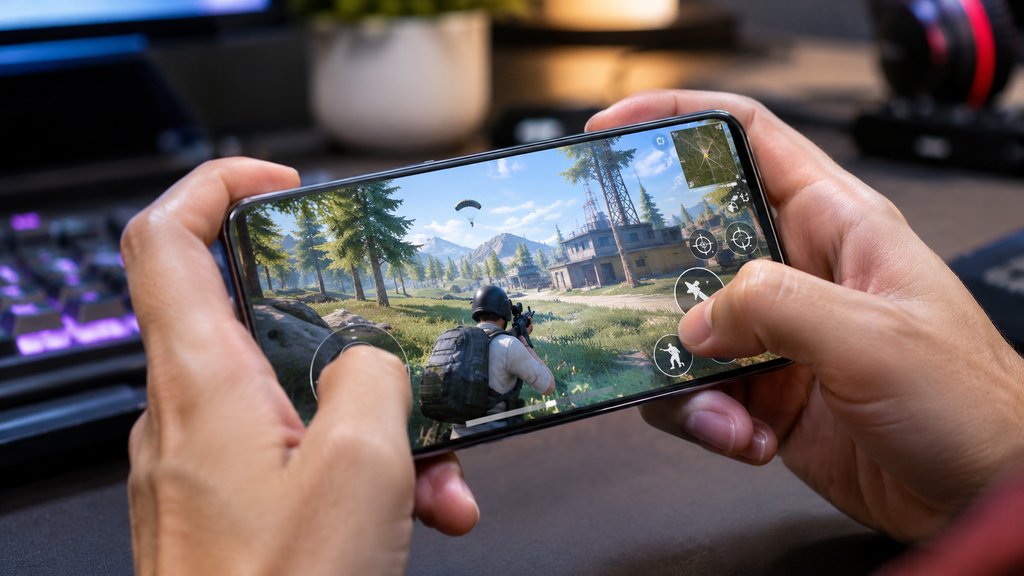
Going from 185Hz to 240Hz would shave just over a millisecond off the time between screen refreshes.
A new report says the OnePlus 17 could pair that higher refresh rate with a wider screen. Its predecessor launched in China with a 185Hz mode for supported games. OnePlus has yet to confirm the new phone’s display specs or launch markets.
Whether that extra speed is worth waiting for depends on which games can use it, how long the phone can sustain it, and whether you can buy the phone with local support.
OnePlus could push beyond 185Hz
Weibo tipster Smart Pikachu said the OnePlus 17 could feature a wider display that reaches 240Hz, Gadgets 360 reported on Nov. 23.
In a separate report from 91mobiles, tipster Digital Chat Station described a 6.89-inch BOE OLED panel with 2K resolution, narrow bezels, and a custom display chip. The tipster did not name the phone.
The OnePlus 16’s official specs list up to 165Hz outside games and 185Hz in supported games. Here’s how that compares with earlier OnePlus phones and the rumored OnePlus 17. Both the OnePlus 15 and OnePlus 16 already offer higher refresh rates in supported games, reaching up to 165Hz and 185Hz, respectively.
What changes from 185Hz to 240Hz
A 120Hz display updates every 8.33 milliseconds. At 240Hz, that interval drops to 4.17 milliseconds, giving the screen twice as many opportunities to display a new image.
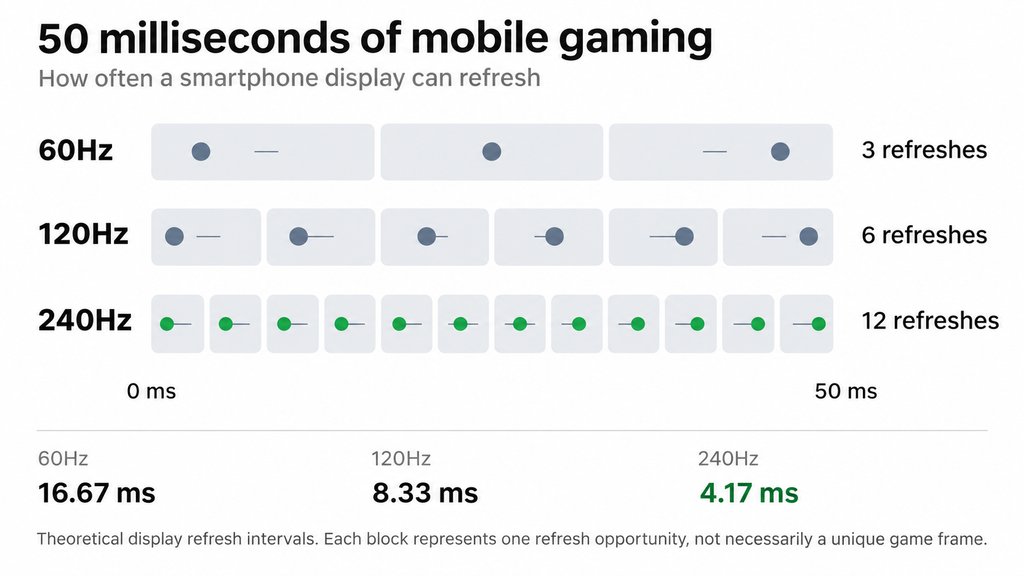
Gamers upgrading from a 60Hz or 120Hz phone could notice smoother motion in fast-paced games. However, moving from 185Hz to 240Hz reduces the refresh interval by just 1.24 milliseconds.
These figures represent theoretical display refresh intervals, not actual gaming latency. Touch responsiveness, graphics performance, and network conditions also affect gameplay.
The games still have to keep up
A game running at 60 frames per second still renders 60 frames each second on a 240Hz display. For a higher refresh rate to show more game frames, the game has to support a higher frame rate and the phone has to sustain it.
Higher refresh rates can increase power use and heat. Android may also override a requested refresh rate based on battery level or device temperature, according to Google’s Android developer guidance. Frame-rate tests across a full match will tell buyers more about how smoothly a game runs than a brief peak.
Mobility must-reads
- Big Apple OS Makeover: Here’s What to Expect & When
- MWC 2025: Nothing Shows Off (3A) Phones With AI Organization Tool
- Bad News for App Developers: Most Apps Fail to Hit $1,000 Monthly Revenue Within Two Years
- Mobile Device Computing Policy
What the OnePlus 16 launch tells APAC buyers
The OnePlus 16 launched in China in October. Earlier reporting suggested the 16R might take its place in India, while a newer report says both models could reach India. OnePlus has yet to confirm which OnePlus 17 models it will sell in individual markets.
For buyers in India, the Philippines, and other markets outside China, the OnePlus 16 import questions are a useful starting point. Check carrier compatibility, local repair coverage, and software support for the exact model a seller lists.
Is 240Hz worth the wait?
The value of the rumored OnePlus 17 depends on your current smartphone and gaming habits.
Before upgrading, look for independent tests covering three areas:
- Game compatibility: Which titles support higher frame rates?
- Sustained performance: Can the phone maintain those frame rates throughout a match?
- Battery endurance: How long can users play at maximum refresh rates?
A 240Hz smartphone could appeal to competitive gamers, but until OnePlus demonstrates consistent performance without excessive heat or battery drain, there’s little reason to delay a necessary smartphone upgrade.
Also read: Shopping for a new phone but don’t want to sacrifice battery life? See how 32 smartphones performed in a recent battery endurance test.