


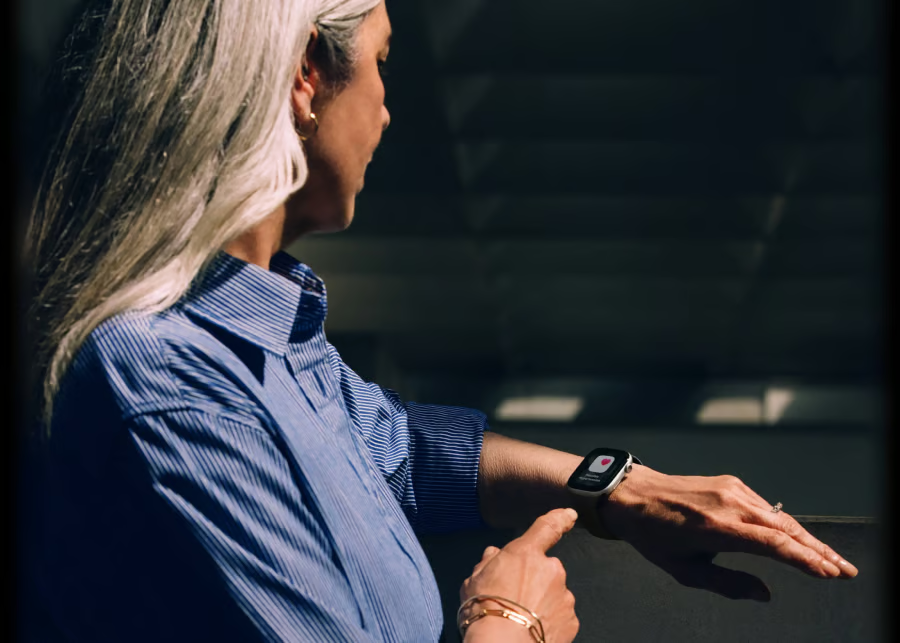
A glucose check is not always convenient. Apple Watch can make the number easier to reach when a compatible CGM is connected, giving users a faster way to see their glucose levels without stopping to find their phone.
The watch becomes more valuable after the quick check, too. Apple Health provides a place for related records to grow over time, while reminders and heart-health alerts can help users notice parts of the day that may be worth reviewing in diabetes care.
CGMs bring glucose readings to Apple Watch
The Apple Watch becomes a more useful smartwatch for diabetes management when paired with a CGM. The CGM supplies the glucose reading, while the watch makes that information easier to check.
Other CGM systems may also offer Apple Watch support through their apps, though the experience varies by device, app, region, and setup. Dexcom G7 gives the watch a rare level of independence for CGM viewing. With Direct to Apple Watch, the sensor sends readings to models over Bluetooth without requiring the iPhone to stay within range.
From the watch, Dexcom users can check:
- Current reading: The latest CGM glucose number.
- Trend: Whether glucose is rising, falling, or holding steady.
- Recent graph: A quick view of glucose movement over time.
- Alerts: High, low, or urgent low notifications when the setup is working properly.
A watch face complication can keep the reading near the main screen. Dexcom G7 readings also appear in Apple Health after a three-hour delay, so the app is better for glucose history than live checks.
Health Sharing connects selected records to providers
Diabetes appointments often cover more than a recent glucose reading. A provider may ask what changed since the last visit, particularly if readings have been harder to explain.
Health Sharing gives Apple Health data a path into that conversation. Someone who has noticed a stretch of rough sleep or a heart notification, for example, can share selected records with a participating healthcare organization instead of trying to recreate the timeline from memory.
Access stays under the user’s control. Users choose the healthcare organization, approve the data categories, and turn sharing off whenever they want. Availability depends on participating US healthcare organizations and supported systems.
Medication reminders keep the schedule visible
For people taking diabetes-related medications, timing can affect glucose levels. A late or missed dose may leave a gap when someone reviews the day.
The Medications feature on Apple Watch shows the daily schedule and sends reminders. Users can also mark a dose as taken, including scheduled or as-needed medications added through Health on iPhone.
A timestamped log gives users a firmer record than a rough guess at the end of the day.
Must-read Apple coverage
- Nearly 7 in 10 iPhone Owners Plan iPhone 17 Upgrade
- Apple Prepares AI-Powered Siri Upgrade With Google Search Integration
- Apple’s Xcode 26 Beta Now Supports GPT-5 and Claude
- Apple’s Vision Pro Adoption Stalled As Content Released ‘Drip by Drip’
Sleep tracking creates a nightly record
Poor sleep may affect glucose regulation. Research links sleep duration and sleep quality with metabolic health, insulin sensitivity, and type 2 diabetes. Sleep problems are also common among people with type 2 diabetes and can affect how they feel day to day.
Apple Watch stores sleep duration and Sleep Score in Apple Health, so users have a way to see whether short nights or frequent waking keep lining up with glucose spikes.
Heart-health tools track a major diabetes risk area
Heart health is a big part of diabetes care.
The CDC says people with diabetes have twice the risk for heart disease. High blood sugar can gradually damage blood vessels and the nerves that control the heart, while high blood pressure, high LDL cholesterol, high triglycerides, smoking, inactivity, and excess weight can further increase the risk.
Apple Watch gives users a few ways to keep an eye on heart-related changes:
- Heart rate: Shows how heart rate changes during rest, daily movement, workouts, and recovery.
- High and low heart rate notifications: Alerts users when heart rate stays outside the limits they selected.
- Irregular rhythm notifications: Checks for signs of an irregular rhythm in supported regions.
- ECG app: Records an ECG on supported models and stores the result in Health, where users may share a PDF with a physician.
- Hypertension notifications: On newer supported models and in supported regions, prompts users to discuss possible signs of hypertension with a healthcare provider and log blood pressure readings from a cuff over seven days.
For people managing diabetes, these records can add heart-health context to a condition that already carries higher cardiovascular risk.
Apple’s glucose ambitions go beyond today’s CGM support
Today’s Apple Watch glucose features still depend on CGMs, but Apple has been working on a much bigger leap: glucose tracking without an external sensor.
Bloomberg reported in 2023 that the company had reached a proof-of-concept stage for non-invasive glucose monitoring using optical absorption spectroscopy. The reported method uses light to estimate glucose concentration in interstitial fluid, the fluid around cells.
Needle-free glucose tracking would be a major change for diabetes care and metabolic health monitoring. Commercial release still appears years away, with accuracy, engineering, miniaturization, and regulatory hurdles still ahead.
Before any needle-free sensor arrives, Apple Watch already has a place in diabetes management by helping users keep important health information from getting lost between appointments. Glucose decisions should still follow clinician guidance and instructions from authorized glucose-monitoring devices.
Find out what Samsung Galaxy Watch can and can’t do for diabetes management in our breakdown of its key health features.