
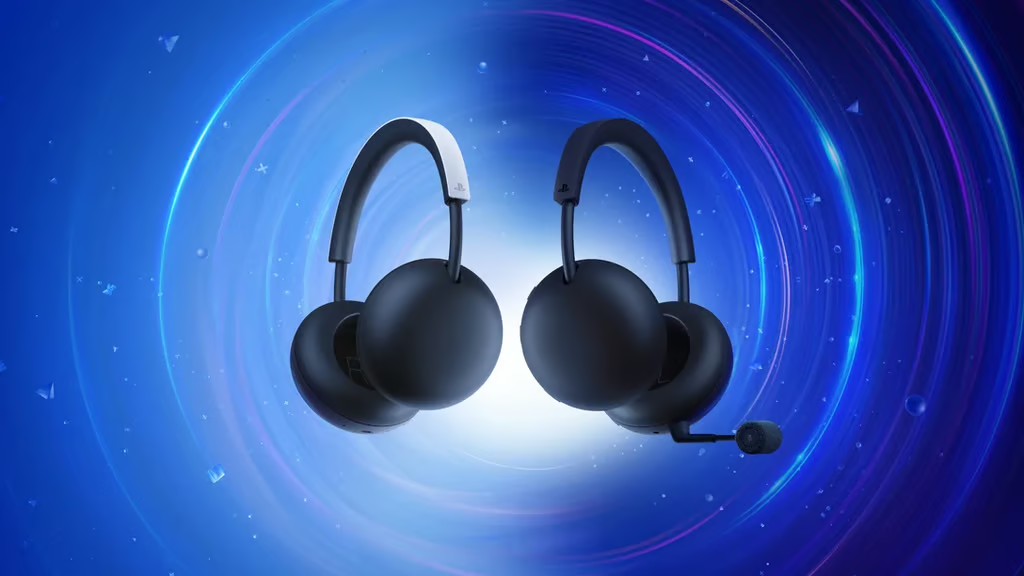


Sony has drawn a clear feature line between its next two PS5 headsets, but some of the details most likely to shape a buying decision are still missing.
The PlayStation Pulse and higher-end Pulse Edge share planar magnetic drivers, PlayStation Link connectivity, and simultaneous Bluetooth support. Pulse Edge adds six differences, including active noise cancellation, a detachable boom microphone, and twice as many magnets per planar driver.
Pulse is scheduled to reach select markets during the 2026 holiday season, while Pulse Edge is due in early 2027. Sony has not announced pricing, preorder dates, exact release dates, or published battery-life figures for either headset.
6 differences between PlayStation Pulse and Pulse Edge
Sony’s Sept. 15 announcement lists six differences between Pulse and Pulse Edge: planar-driver magnet count, microphone design, active noise cancellation, built-in PS5 game/chat balance controls, wired audio support, and an included carrying case.
| Feature | PlayStation Pulse | Pulse Edge |
| Planar-driver magnets | 4 per driver | 8 per driver |
| Microphone | Integrated mic with AI noise rejection | Detachable boom mic plus hidden mic, with AI noise rejection |
| Active noise cancellation | No | Yes |
| Built-in PS5 game/chat balance control | No built-in control listed | Yes |
| Audio/microphone jack | No | Yes |
| Carrying case | No | Yes |
Both use larger custom planar magnetic drivers than Sony previously used in Pulse Elite. Sony says the design delivers fuller bass while retaining sound separation and spatial accuracy, but those performance claims have not yet been independently tested.
Pulse uses four magnets per planar driver, while Edge uses eight. Sony’s Pulse Edge product page attributes fuller, deeper bass to the additional magnets, though hands-on testing will determine how noticeable that difference is.
ANC reduces ambient sound reaching the listener, while the AI-enhanced noise rejection on both models filters background noise from outgoing voice chat. ANC effectiveness can also depend heavily on headset design, as seen in the differences between AirPods 5 and AirPods Pro 3.
Sony lists built-in PS5 game/chat balance controls only for Edge. The standard Pulse product page says users can still adjust audio and chat balance, indicating the distinction is the dedicated onboard control.
Edge also includes an audio/microphone jack and carrying case. Sony has not detailed wired operation or whether wireless features remain available with a cable connected.
Our comparison approach: This comparison is based on Sony’s official specifications for hardware, connectivity, microphones, controls, and accessories. Neither headset has been independently tested by TechRepublic.
Price and battery life remain the big unknowns
The biggest missing number is price. Sony has not announced MSRP or regional pricing, so the premium for Edge’s ANC, boom mic, additional magnets, wired support, controls, and case remains unknown.
Battery life is another gap. Sony’s product pages include battery-testing disclaimers for preproduction hardware, but published runtime figures are absent. Recent AirPods Pro 3 and Galaxy Buds4 Pro comparisons show how battery life can materially affect the value of premium wireless audio.
Sony says Pulse will roll out in select markets during the 2026 holiday season and Pulse Edge in early 2027, with preorder dates and specific launch dates still to come.
Pulse still gets planar magnetic drivers, PlayStation Link, simultaneous Bluetooth, and AI-enhanced microphone noise rejection. Edge offers more features, but price, battery life, and independent testing will determine whether those extras justify waiting until 2027.
Let us teach you How to Talk to AI for free! Try our six-minute course at The Neuron Academy and learn a few simple ways to write better prompts and get more useful results from AI, or browse our other AI course for free for seven days. Check out all the lessons here →