


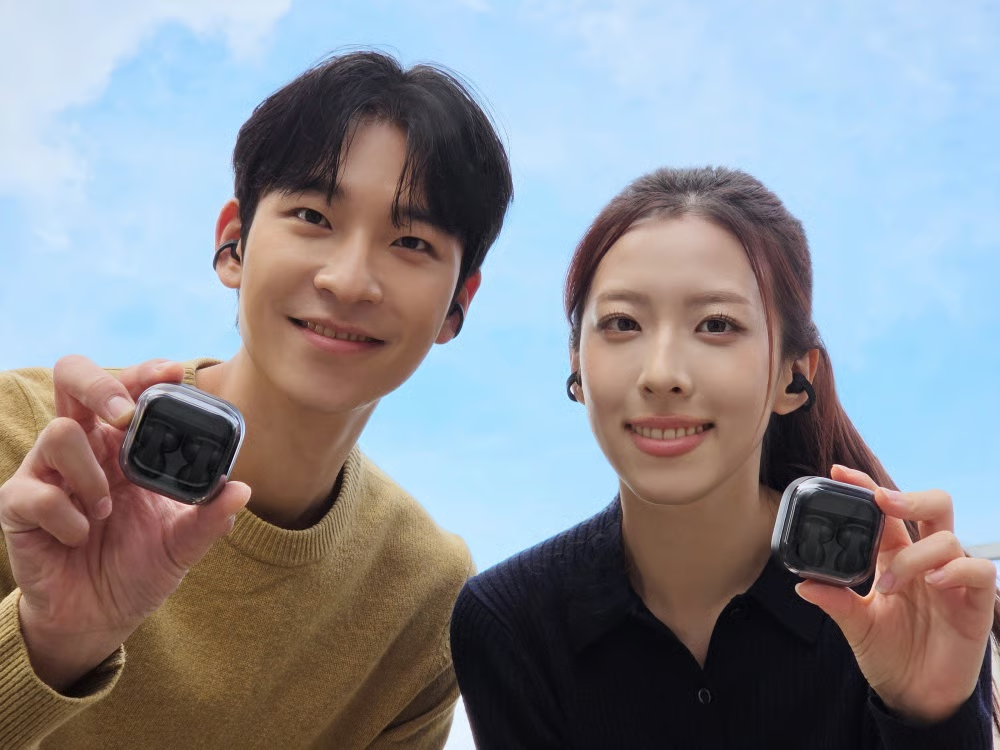
Samsung launched the Galaxy Buds On in South Korea on Oct. 27, 2026, pricing its first clip-on, open-ear earbuds at 299,000 won, or roughly $220, in a single black colorway. Unlike Samsung’s sealed canal-style Galaxy Buds, the Buds On are designed to keep users aware of traffic, coworkers and other sounds around them.
Galaxy smartphone and tablet owners weighing open-ear comfort against noise isolation now have another option. Samsung has confirmed a phased global rollout but hasn’t named additional markets, dates or pricing, leaving international buyers waiting for the details needed to make a purchase decision.
The Buds On combine a clip-on design with enhanced bass, sound leakage reduction, AI-assisted calling and hands-free controls. However, most performance claims come from Samsung’s own announcements and demonstrations rather than independent testing.
- Samsung Galaxy Buds On at a glance
- Samsung Galaxy Buds On release date and price: What’s confirmed
- Samsung’s open-ear clip-on design trades isolation for awareness
- Galaxy Buds On call quality uses three microphones and AI
- Galaxy Buds On AI features require a compatible Galaxy device
- Pairing, voice controls and everyday use
- Should you wait for the Galaxy Buds On?
Samsung Galaxy Buds On at a glance
| Feature | Confirmed details |
|---|---|
| South Korea release date | Oct. 27, 2026 |
| Price | 299,000 won (approximately $220) |
| Global availability | Phased rollout planned; dates and prices unannounced |
| Colors | Black |
| Design | Open-ear, clip-on with shape-memory alloy band |
| Audio | TwinBoost speakers, automatic volume adjustment |
| Processor | Snapdragon S7 Gen 1 Sound Platform |
| Battery life | Up to 9.5 hours of music playback per charge |
| Call features | Intelligent Clear Call, three microphones, Voice Pickup Unit sensor |
| Smart features | Gemini Live, Quick Voice Memo, Head Gestures |
| Still unconfirmed | Total case battery life, charging specifications, water resistance, and full compatibility list |
Specifications and features are based on Samsung’s announcements. Actual performance and feature availability may vary.
Samsung Galaxy Buds On release date and price: What’s confirmed
According to Samsung Newsroom Korea, the Galaxy Buds On went on sale in South Korea on Oct. 27 for 299,000 won. Black is the only announced color, and Samsung plans to expand availability to other markets.
The earbuds use Qualcomm’s Snapdragon S7 Gen 1 Sound Platform and a Class-D amplifier designed for efficient power consumption.
Samsung rates battery life at up to 9.5 hours of continuous music playback on a single charge. That figure applies to the earbuds alone, not combined playback time with the charging case.
The roughly $220 conversion is only a reference for the Korean launch price. It does not establish what Samsung will charge in the US or other markets.
European retail listings have also surfaced, with Swiss sellers showing prices between CHF 179 and CHF 199, according to Android Authority. Samsung has not confirmed those prices or announced a European release date.
Samsung’s launch announcements also leave several questions unanswered, including total battery life with the case, charging speed, wireless charging support, water resistance and the complete list of compatible devices.
For comparison, Samsung’s Galaxy Buds4 Pro offer a sealed in-ear design with active noise cancellation. Buyers considering that approach can compare the earbuds against Apple’s flagship alternative in our AirPods Pro comparison.
The Buds On target a different listening experience, but buyers should wait for the missing specifications before making direct battery-life or durability comparisons.
Samsung’s open-ear clip-on design trades isolation for awareness
The Galaxy Buds On clip around the ear without blocking the ear canal. That allows wearers to hear nearby conversations, traffic and other environmental sounds while listening to music.
Samsung says it analyzed different ear shapes and used simulations to optimize the position of the speakers and battery. The flexible band uses shape-memory alloy and is designed to distribute pressure across a larger contact area while remaining secure during movement.
The company also claims the earbuds remain comfortable during extended use, although independent fit testing is not yet available.
Open-ear designs face a particular challenge with bass because they don’t create the seal used by conventional in-ear earbuds. Samsung addresses that with TwinBoost speakers, which it says produce stronger low-frequency sound than previous Galaxy Buds models.
Automatic volume adjustment responds to changes in surrounding noise, while Audio Leakage Reduction aims to limit how much sound escapes into nearby spaces.
Samsung acknowledges that leakage can still occur depending on playback volume, ear shape and environmental conditions. It may be especially noticeable in quiet rooms.
That limitation matters for office workers. Audio Leakage Reduction should not be treated as a guarantee that nearby colleagues cannot hear music, calls or other audio.
Other manufacturers are making similar trade-offs. Our Bose open-ear comparison examines how two competing designs balance comfort, battery life, audio features and durability.
Galaxy Buds On call quality uses three microphones and AI
Samsung’s Intelligent Clear Call feature combines three microphones, a bone-conduction-based Voice Pickup Unit sensor and machine-learning processing to separate the wearer’s voice from background noise.
The company says this helps maintain call clarity in noisy environments, including crowded subway stations.
However, Samsung’s demonstration is not a substitute for independent microphone testing. Wind, traffic and competing voices can affect call quality differently, and those conditions still need to be evaluated.
For people primarily buying earbuds for meetings, our guide to earbuds for work calls covers alternatives designed around microphone performance and workplace use.
The Buds On may appeal to workers who want to hear nearby conversations without removing their earbuds, but call quality and sound leakage should be tested in the intended workspace before making a larger purchase.
Galaxy Buds On AI features require a compatible Galaxy device
The Galaxy Buds On support Gemini Live, Quick Voice Memo and Head Gestures, adding hands-free controls beyond ordinary music playback.
According to Samsung Global Newsroom, users can launch Gemini Live by saying “Hey Google, let’s talk Live” when the earbuds are paired with a Galaxy AI-enabled smartphone.
That allows users to ask questions and receive spoken responses without taking out their phones. Samsung demonstrates the feature with requests for running routes and information about nearby locations.
Quick Voice Memo uses a different approach. Pressing and holding the back of an earbud starts a voice recording, allowing users to capture reminders or tasks without opening an app.
Later, users can ask Bixby about recorded information and hear the relevant details.
Samsung says Quick Voice Memo requires a Galaxy AI-enabled device, the Samsung Voice Recorder and Bixby apps, and a separately configured press-and-hold gesture.
Head Gestures let users nod or shake their heads to respond to incoming calls, check notifications or dismiss alarms. Samsung includes the feature among those available when the earbuds are connected to a Galaxy AI-compatible smartphone or tablet, although it has not published a complete device compatibility list.
These capabilities should not be mistaken for standalone AI processing inside the earbuds. Gemini Live and Quick Voice Memo depend on a compatible paired Galaxy device.
Pairing, voice controls and everyday use
Samsung says opening the Galaxy Buds On charging case near a compatible Galaxy smartphone or tablet triggers the pairing process.
Users can adjust volume and equalizer settings through the phone’s Settings menu or Quick Panel without separately installing the Galaxy Wearable app.
Samsung also confirmed compatibility with Galaxy Buds4 series accessories, allowing owners to personalize the charging case.
Voice commands provide another way to control playback. Saying “next song” or “previous song” changes tracks, while “volume up” and “volume down” adjust loudness.
Touch controls on the earbuds support everyday actions such as starting playback and activating configured functions.
These controls may be particularly useful while running, commuting or working with both hands occupied.
Should you wait for the Galaxy Buds On?
The Galaxy Buds On make the strongest case for buyers who prioritize situational awareness over noise isolation.
Runners, commuters and office workers may appreciate a design that leaves the ear canal open, especially if they already own a Galaxy AI-enabled device capable of supporting the earbuds’ additional features.
However, several purchase-critical details remain unresolved. Samsung has not announced international prices or release dates, and independent testing has yet to establish how the earbuds perform for comfort, bass, sound leakage and calls.
Buyers who need reliable isolation, documented water resistance or a confirmed total battery-life figure should compare established alternatives before committing.
For shoppers outside South Korea, waiting for regional announcements and independent reviews is the safer choice. The Buds On offer a different approach to everyday listening, but their value will depend on local pricing, device compatibility and real-world performance.
Also read: Sony’s LinkBuds Clip earbuds offer another open-ear design, with published battery specifications and sound leakage controls.