
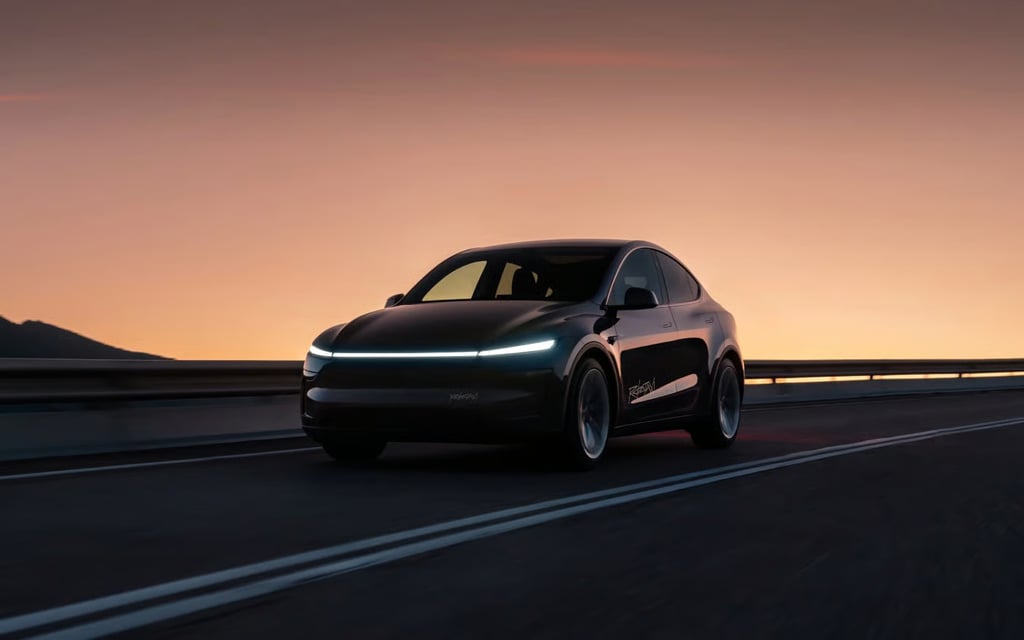


Samsung will produce the AI semiconductors for Tesla self-driving vehicles, Bloomberg revealed on Monday. The $16.5 billion contract is expected to strengthen Samsung’s foundry unit, which has struggled with underutilization in recent quarters. The agreement will last through 2033.
“The strategic importance of this is hard to overstate,” Musk wrote on X on Sunday. He also described the deal as “just the bare minimum. Actual output is likely to be several times higher.”
Chips should improve Tesla’s self-driving mode
The next-generation AI6 chips will serve as the core hardware for Tesla’s self-driving system, which relies on advanced cameras, sensors, and neural network processing. The AI6 could also be used in upcoming humanoid robots and AI data centers.
Vehicles equipped with Full Self-Driving Mode can navigate with minimal human input, although driver supervision remains mandatory. Tesla is also developing a robotaxi service, though early trials have raised concerns after videos showed the vehicles appearing to violate traffic rules.
Samsung will manufacture the AI6 at its upcoming semiconductor facility in Taylor, Texas, which happens to be near Musk’s house.
Tesla has switched to TSMC for the AI5 chip, which is in the design stage, Musk said on X. Samsung currently builds the AI4 chip.
More must-read AI coverage
- SS&C Intralinks DealCentre AI vs. Datasite: Which platform is built for the future of dealmaking?
- SS&C Intralinks FundCentre AI vs. Juniper Square: Which platform better supports modern private markets fund managers?
- Why Data, Not Models, Determines AI Success
- The Rise of the AI-Native Factory: How Physical AI Is Transforming Manufacturing
The deal is a big win for Samsung
Samsung needed a new deal for electronics manufacturing, Bloomberg said, as the electronics company’s chip manufacturing arm was struggling to find enough clients to use its entire foundry capacity. It manufactures both Samsung-branded memory chips and semiconductors for other companies.
In contrast, rival Taiwan Semiconductor Manufacturing Company (TSMC) remains oversubscribed and unable to meet demand. Market Intelligence firm TrendForce reported that TSMC held 67.6% of the global foundry market in the first quarter of 2025 while Samsung held just 7.7%.
The Tesla deal is expected to enhance Samsung’s appeal to future clients and signals confidence in its upcoming 2-nanometer fabrication technology, a key benchmark in next-gen chipmaking.
OpenAI’s GPT-5, a mixture of advanced generative AI models, is expected to be revealed early next month.