


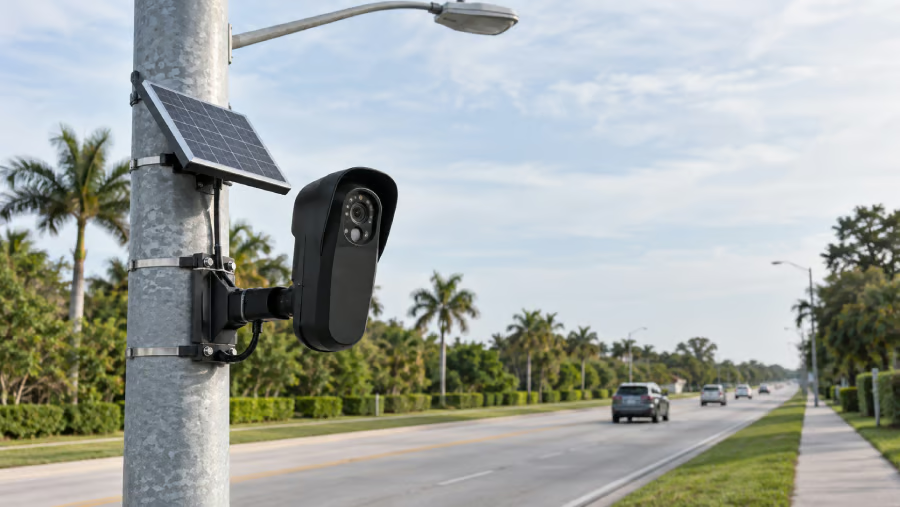
St. Lucie County found a surveillance problem hiding in plain sight: 11 Flock cameras sitting on its roads that nobody could account for.
The cameras were among 14 additional Flock Safety devices discovered when the Florida county began checking its existing cameras for removal. Officials had previously accounted for 52 Flock cameras, making the discovery an unexpected addition to the county’s inventory.
According to a report from The Washington Post, the St. Lucie County Sheriff’s Office claimed three of the 14 cameras, but no local law-enforcement agency has publicly claimed the other 11. County officials are now working to determine who owns the remaining devices and why they were installed without the required permits.
An unexpected privacy discovery
The removal review brought the county’s known total to 66 cameras, including 14 installed without county permits.
The cameras were Flock Safety automated license-plate readers (ALPRs), which can capture information about passing vehicles, including license plates, vehicle characteristics, time, and location. The sheriff’s office identified three as its own but did not explain why they lacked permits. Whether the other 11 were actively collecting data remained unclear.
Officials issued removal notices with deadlines between Oct. 16 and Oct. 20 and planned to cover the cameras. The Post found one camera missing, but who removed it and when remained unclear.
Residents express more concern
Residents became increasingly concerned after learning that the county had discovered cameras it could not account for, particularly because of the kind of data a Flock camera can collect.
The discovery also landed amid growing opposition to Flock’s surveillance network, with critics raising concerns about practices associated with the camera.
That opposition is also what led to the removal effort in the first place. The county’s effort to remove the cameras therefore exposed a second problem: officials found more Flock devices than they knew were there.
Must-read security coverage
- UK Police Convicts Pair in £5.5 Billion Bitcoin Launder Case
- Blackpoint Cyber vs. Arctic Wolf: Which MDR Solution is Right for You?
- How GitHub Is Securing the Software Supply Chain
- 8 Best Enterprise Password Managers
The bigger privacy and security problem
For IT teams, the discovery offers a lesson in device governance: an inventory should identify who owns each device, who approved its installation, and who controls the data it collects.
The reporting does not establish that these cameras were connected to county IT systems or had exploitable vulnerabilities. The practical concern is whether internally managed and vendor-operated devices have documented owners, access rules, and removal procedures.
Takeaways from this incident
For organizations, that means comparing device inventories with installation approvals, procurement records, and vendor contracts. For each camera or connected device, document its responsible owner, approved location, data access, retention rules, and decommissioning process.
And for people living or working around Flock cameras, the immediate question is visibility too: who authorized the camera, who owns it, what it collects, who can access the data, and how long it keeps that information.
These are reasonable questions given that other communities have also found Flock cameras installed without their knowledge, including Cambridge, Massachusetts, and Millcreek, Utah.
Finding a device is only the first step. Organizations also need to know who authorized it, who can access its data, and who is responsible for removing it.
Read more: Questions about who can access camera footage also shape Ring’s new encryption approach, which limits video-key retention while preserving cloud AI features.