


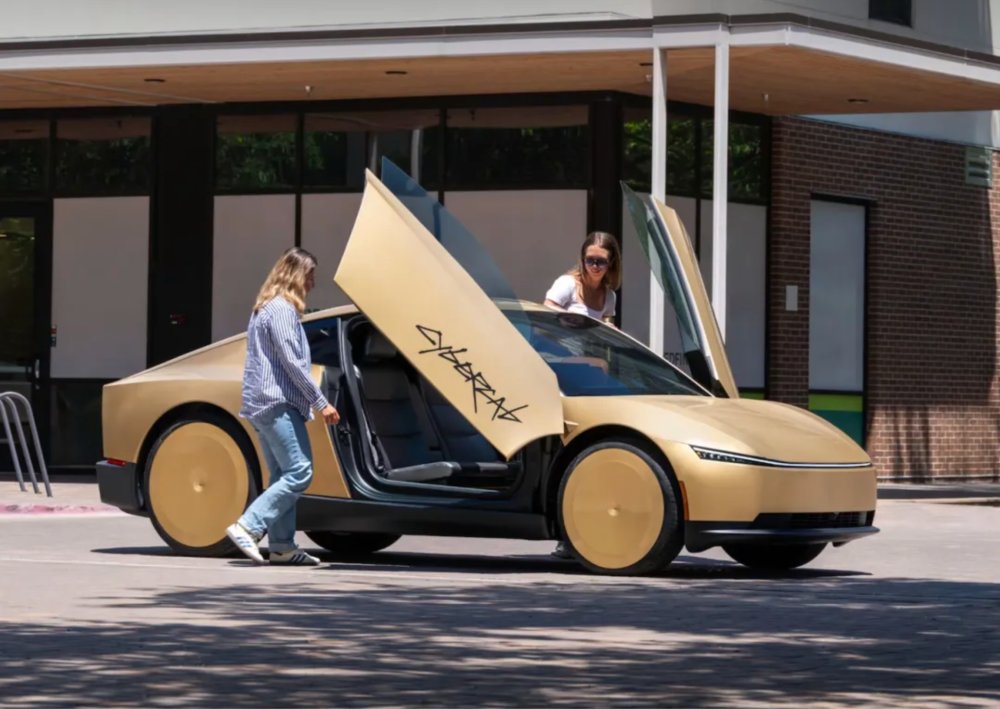
Dallas commuters can now hail a two-seat Tesla cab with butterfly doors, a 21-inch touchscreen, and zero manual controls, not even a steering wheel or pedals.
Tesla officially opened public rides for its purpose-built Cybercab in Dallas last week, announcing on its Robotaxi X account, “Howdy Dallas. Cybercab has arrived in your city.” The expansion makes Dallas the second US market for the dedicated autonomous vehicle following its September debut in Austin.
While Tesla has operated driverless Model Y vehicles in Dallas since April, adding the custom-built Cybercab marks a major shift toward scaling dedicated autonomous fleets. Riders book trips through the Tesla Robotaxi app, joining an existing footprint of Model Y robotaxis across Texas and Florida, InsiderEVs reported.
Inside the hardware and fleet rollout
Built at Gigafactory Texas, the Cybercab ditches traditional driving hardware and relies entirely on eight exterior cameras, a cabin camera, and unsupervised Full Self-Driving software. Key specifications include:
- Capacity & Cargo: Two passenger seats, 20.1 cubic feet of rear storage, and 100-watt USB power delivery.
- Range & Charging: An EPA-estimated 279-mile range, adding up to 123 miles in 15 minutes of Supercharging.
- Fleet Scale: State driverless-vehicle records tracked by Teslarati show 773 registered Cybercabs in Texas, though Tesla has not disclosed exact Dallas fleet sizes, fares, or geofence boundaries.
To accelerate Cybercab manufacturing, Tesla will begin winding down Cybertruck production at its Austin facility around mid-2027, a strategic shift Elon Musk announced via X earlier this month.
Federal scrutiny and safety questions
Scaling a vehicle without manual controls puts Tesla on a collision course with federal regulators as it races to catch up to rival Waymo. Unlike Amazon’s Zoox, Tesla did not request a federal exemption for operating a car without a steering wheel or pedals.
The NHTSA is investigating how Tesla certified the Cybercab under US safety rules, reviewing claims that Tesla robotaxis sped in school zones, and logging eight Cybercab crashes between August and September.
What this means for riders and early buyers
For everyday commuters in Dallas, the launch expands ride-hailing options without changing the booking workflow inside the Robotaxi app, though passengers lose the psychological comfort of a traditional driver’s seat or emergency brake.
For early adopters, the Dallas rollout previews Tesla’s private ownership model, with invite-only deliveries starting in December at $29,990 before taxes, according to The Gadgeteer:
| Ownership element | Details & terms |
|---|---|
| Mandatory fee | $299/month Autonomy Subscription (the car will not operate without it) |
| Included upkeep | Tire replacements, windshield/wiper care, camera cleaning, and autonomous trips to service centers |
| Owner costs | Insurance, registration, charging, and parking |
| Restrictions | Personal use only (no commercial fleet use), geofenced to approved cities, and a strict resale veto |
Without a steering wheel, private buyers are essentially purchasing hardware tethered to a mandatory monthly software ignition, meaning a canceled subscription or a redrawn geofence instantly parks the vehicle.
For Dallas riders, the first question is whether the Cybercab can take them where they need to go. Tesla says rides are available in limited parts of Dallas and Austin. If you’re counting on one for your commute, check both your pickup and destination in the Robotaxi app before making it your regular ride.
For prospective buyers, the map matters even more. Tesla’s subscription terms state that the Cybercab requires an active subscription to operate and that its approved driving area may change. Taking a ride in Dallas lets you see what it’s like to get around without a driver. Deciding whether to buy one means asking whether it can cover the trips you make every week.
Related reading: Tesla is expanding its robotaxi service in Texas, while Waymo’s US freeway pause shows how safety restrictions can change where driverless rides take passengers.