


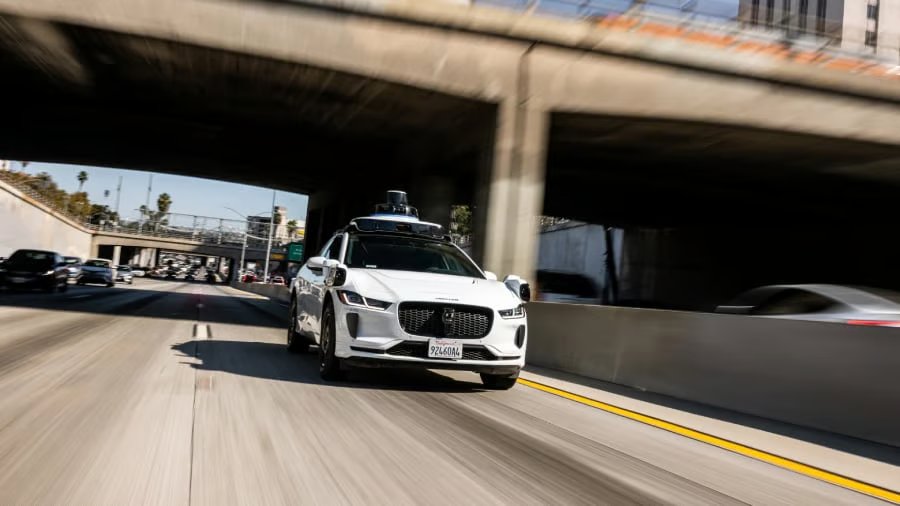
Waymo’s robotaxis just got kicked off the fast lane nationwide after a California regulator labeled their highway driving an “imminent hazard”.
The California Department of Motor Vehicles ordered Alphabet’s autonomous vehicle unit to halt all driverless operations and testing on state freeways starting Nov. 11. In response, Waymo pulled its driverless taxis from highways across every US market where it operates, though surface street rides continue.
What triggered the shutdown
Regulators acted after two high-profile mistakes in early November:
- Construction zone breach: On Nov. 5, three Waymo cars entered an active construction closure along US Route 101 near Burlingame, endangering road crews and equipment.
- Traffic break interference: The next day, viral video showed a Waymo attempting to pass California Highway Patrol cruisers conducting a traffic break on Interstate 280 in San Francisco.
The DMV noted that Waymo’s vehicles pose “an imminent hazard to public safety due to recurring incursions by its vehicles into active construction zones,” The Guardian reported.
A recurring software blind spot
This shutdown exposes a stubborn limitation in autonomous driving: adapting to unpredictable roadwork. While human drivers easily interpret temporary cones, placards, and police hand signals, programming those shifting variables into software at highway speeds remains difficult.
| Date | Milestone |
| Nov. 2025 | Waymo begins offering passenger robotaxi rides on freeways. |
| May–June 2026 | Following May construction-zone incursions, Waymo pauses highway rides and recalls roughly 3,800 vehicles for software updates. |
| Nov. 11, 2026 | California DMV bans driverless freeway operations after new incidents. |
This marks the second time this year Waymo has suspended highway service over roadwork struggles, proving its summer software fix fell short. The setback arrives as federal regulators investigate whether another Waymo recall properly stopped robotaxis from passing school buses, and as rivals like Tesla and Amazon’s Zoox push deeper into the market.
Waymo emphasized that the recent US 101 encounters caused no injuries or collisions. “In alignment with our safety-first principles, we have also temporarily restricted freeway operations across our other operating markets to evaluate our performance,” Waymo spokesperson Chris Pappas said, according to The Guardian.
How this detour affects riders and commuters
For passengers, the highway ban changes the daily math of hailing a driverless ride. Without access to major arteries like US 101 or I-280, Waymo vehicles must stick to local streets.
- Longer commute times: Trips in freeway-enabled markets, including San Francisco, Los Angeles, Phoenix, Miami, and Austin, will take slower surface-street routes.
- Limited airport and suburban access: Riders traveling long distances between city centers and suburbs will likely need to switch to human-driven rideshares until the ban lifts.
- Unknown timeline: The DMV gave no end date, stating restrictions stay active until Waymo proves it has taken “effective corrective actions”.
Before booking a trip that normally relies on a highway or airport connector, plug your exact addresses into the Waymo app to verify pickup zones and updated travel times.
With no timeline for when regulators will lift the restriction, driverless rides remain strictly a neighborhood affair for the foreseeable future.
Other news: South Korea is preparing eyewear checks for its Nov. 19 university entrance exam after separate cases of AI-assisted cheating raised concerns about smart glasses and other discreet devices.