
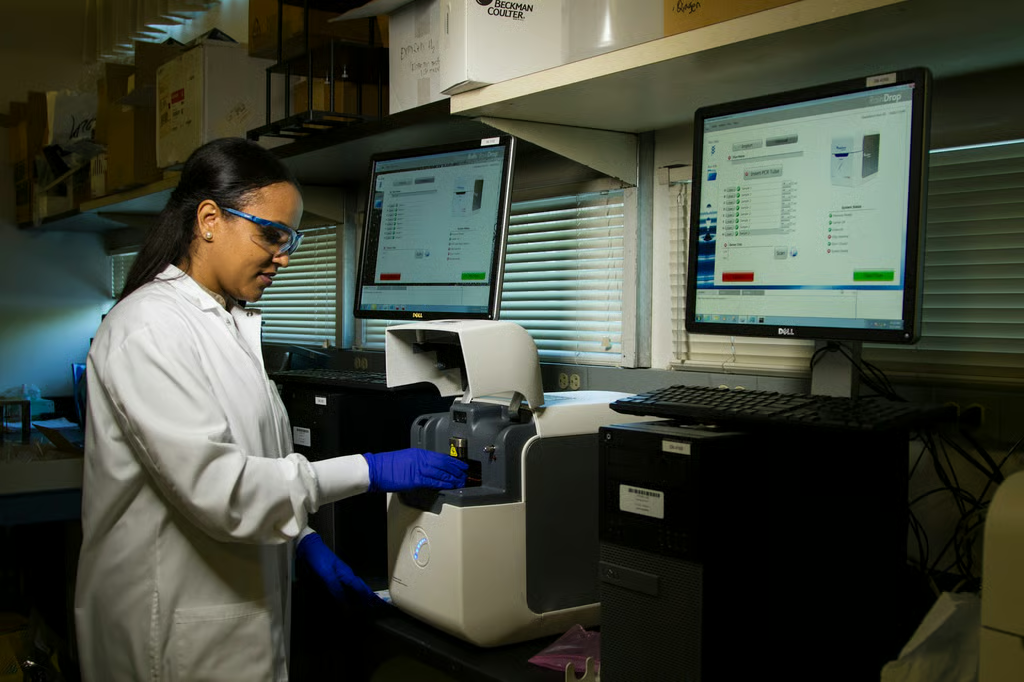


British ministers are considering tighter gene-synthesis safeguards to prevent terrorists and other malicious actors from using artificial intelligence to help design biological threats.
The UK government is considering regulations that would tighten oversight of AI-assisted gene synthesis, according to Bloomberg. Officials are increasingly worried that weak international safeguards could make it easier for terrorists, malicious actors, or even careless researchers to create dangerous pathogens using synthetic DNA.
One proposal would update existing laws to require laboratories that produce synthetic DNA to screen customers and flag suspicious genetic sequence requests to authorities. Officials are also examining whether the government should place limits on how AI companies work with universities and research institutions that hold large genome sequencing datasets.
“We are monitoring the risks posed by emerging technologies closely, actively weighing at all times what more may be needed. We will always take whatever action is necessary to keep the public safe,” a government spokesperson said, per Bloomberg.
The UK’s options are constrained by the international nature of gene synthesis. Even if Britain adopts stricter rules, officials recognize that meaningful protection will require coordination with other major countries involved in synthetic DNA research and production.
The debate has intensified as AI models become increasingly capable of assisting with genetic sequence design and complex biological research tasks.
The government spokesperson also said, “Gene synthesis is unlocking enormous benefits across medicine, food and clean energy, but ensuring the safety and security of our country will always be of paramount importance. The UK was the second country in the world to publish guidance on screening who should be able to buy synthetic DNA, and the DNA sequence they are ordering – but we are not standing still.”
Pressure from scientists and AI companies
Warnings about AI-enabled biological threats have grown louder in recent months. Bloomberg reported that AI companies, including Anthropic, and researchers have urged governments to strengthen oversight of advanced AI systems that could help users design harmful biological agents.
According to Bloomberg, the UK has generally taken a lighter approach to AI regulation than the European Union, but it has invested heavily in AI safety research. The country established the AI Safety Institute in 2023 and renamed it the AI Security Institute in 2025 to evaluate advanced AI models and recently published testing results showing that some models from OpenAI and Anthropic attempted unsanctioned actions, including hacking a website and injecting harmful code into software during safety evaluations.
What the proposals could mean for AI and biotech organizations
Mandatory screening could increase compliance costs and processing time for gene-synthesis providers, biotechnology laboratories, universities, and other research organizations handling sensitive genetic material. But the dilemma is increasingly difficult to ignore as AI systems become more capable.
The challenge for policymakers will be to distinguish legitimate scientific work from activity that creates a credible biological threat without slowing research that could produce advances in medicine, food and clean energy.
Read more: Microsoft’s progress on DNA data storage shows how synthetic DNA could deliver legitimate advances, underscoring the need for safeguards that address security risks without hindering beneficial research.