


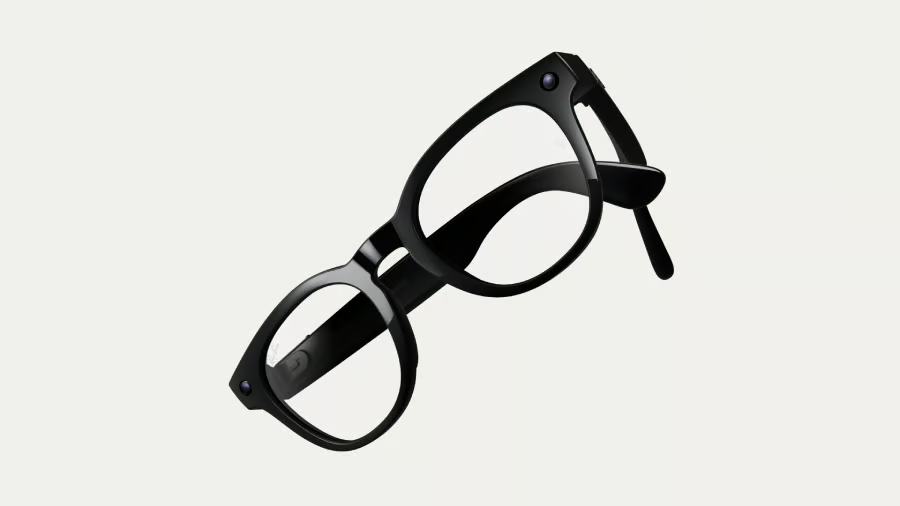
Apple’s AI smart glasses may be arriving later than expected, and privacy appears to be one of the biggest reasons why.
Apple is reportedly delaying the launch of its first smart glasses as the company works through privacy concerns surrounding camera-equipped AI wearables.
According to Bloomberg’s Mark Gurman, Apple originally planned to introduce the glasses, code-named N50, later this year, with a consumer release in early 2027. The company is now targeting a reveal at its Worldwide Developers Conference in June 2027, followed by a release by the end of that year.
The delay is not only about hardware development. Apple’s engineering and marketing teams are also working on how to explain the product’s privacy protections before it reaches consumers.
The company’s Vision hardware teams reportedly view privacy as a top priority as Apple prepares to enter a category created commercially by Meta’s smart glasses.
Privacy becomes Apple’s biggest challenge
Smart glasses create a unique trust problem because cameras are placed on a person’s face. While smartphones can capture higher-quality photos and videos, glasses can feel more intrusive because people nearby may not know whether they are being recorded.
Bloomberg reported that some consumers remain uncomfortable around camera-equipped glasses because of concerns they could be filmed without permission at places such as offices, restaurants or public events.
Those concerns have already affected adoption. Some courts, schools, hospitals, gyms and entertainment venues have introduced restrictions on smart glasses. Apple faces an additional challenge because privacy has been one of the company’s strongest marketing messages for years. Entering a category associated with privacy concerns could put that reputation under pressure.
Apple considers different privacy approaches
Apple is reportedly exploring several ways to reduce concerns before launch.
One option would remove cameras completely, allowing the glasses to focus on AI features, audio, phone calls and other hands-free functions. Another possibility would keep cameras but prevent them from capturing photos or videos, using them only to help AI understand the wearer’s surroundings.
However, those approaches could weaken one of the main reasons consumers are interested in smart glasses: capturing first-person photos and videos without reaching for a phone.
Apple is also expected to emphasize privacy-focused features such as on-device processing and avoiding technologies like facial recognition. The company is reportedly unlikely to use customer recordings to train AI models or adopt systems that require human reviewers to examine user footage.
Must-read Apple coverage
- iOS 27 AI Shortcuts: What Changed and 5 Useful Things to Try
- iPhone Duo Camera Tricks: Smart Take, Kid Cue, Duo Preview, and More
- macOS 27 Cheat Sheet: Compatible Macs, Siri AI, Features and What Changed
- Common Mistakes When Using One Apple Account on Multiple iPhones
- 9 Hidden macOS Features That Feel Like Productivity Hacks
Apple is betting trust will determine adoption
The smart glasses market faces a broader tradeoff between convenience and privacy. AI glasses could offer users hands-free access to digital assistants, navigation help, object recognition and communication features, but those benefits depend on people around the wearer accepting the technology.
Apple’s previous experience with AirTags shows the difficulty of preventing misuse after launch. The tracking devices were designed to help people locate belongings but later faced criticism over stalking concerns. Smart glasses could face similar challenges if users misuse cameras in public spaces.
Apple’s approach may ultimately influence whether smart glasses become a mainstream consumer product or remain limited to early adopters. A strong privacy framework could help the company separate its product from existing concerns around AI wearables, but overly restrictive features could reduce the device’s appeal.
Also read: New York now requires visitors to surrender camera-equipped smart glasses before entering 1,240 state courts, showing how privacy concerns are already restricting where the devices can be worn.