


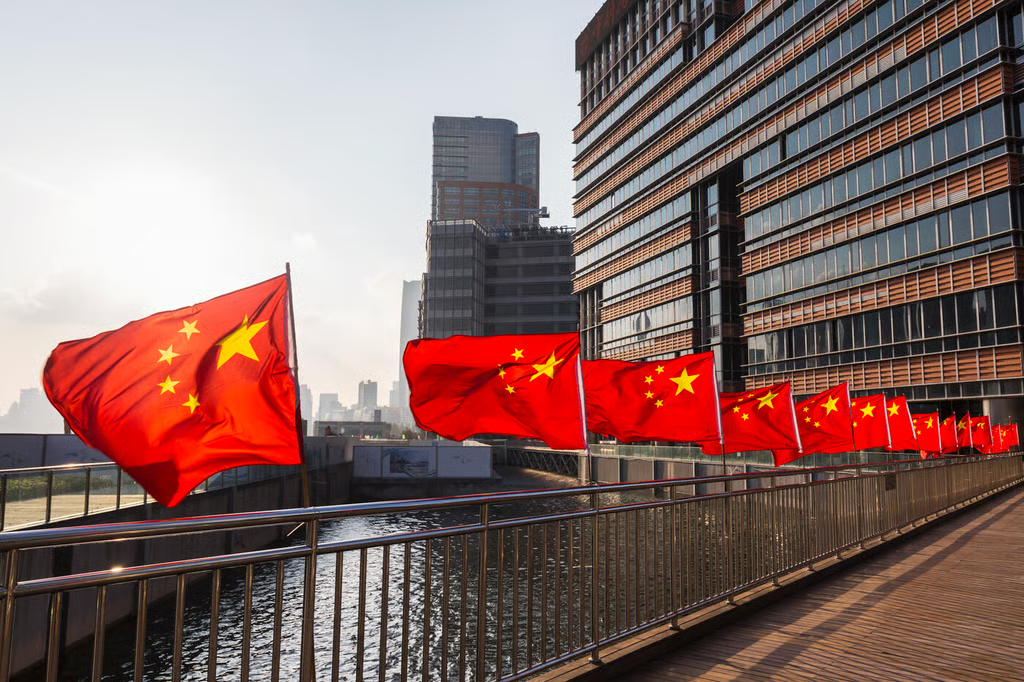
Chinese President Xi Jinping seized the Shanghai Cooperation Organization summit to press for greater artificial intelligence cooperation, and denounced what he described as a “Cold War mentality.”
Addressing more than 20 leaders in Tianjin, Xi championed “true multilateralism” and rolled out a new Global Governance Initiative, framing the SCO as a platform to expand AI projects and strengthen the voice of developing nations.
Xi ties AI drive to governance plan
Xi announced plans to establish an AI cooperation center for SCO members, positioning it as a shared platform to accelerate research and applications across the bloc.
He framed the new AI center as part of a broader governance push, presenting technology as key to building what he described as a fairer and more multipolar world order.
The pledges were delivered alongside commitments to expand the digital economy and green energy cooperation, but Xi emphasized that AI would be the cornerstone of the SCO’s next phase of development.
SCO summit draws more than 20 world leaders
The Tianjin gathering marked the largest SCO summit to date, bringing together more than 20 foreign leaders from Asia, the Middle East, and beyond. Russian President Vladimir Putin, Indian Prime Minister Narendra Modi, and Turkish President Recep Tayyip Erdoğan were among those in attendance, underscoring the bloc’s expanding reach across Eurasia.
Talks ranged from security and economic cooperation to technology and education. Leaders signed a “Tianjin Declaration” and approved a development plan through 2035, alongside roughly two dozen documents on cooperation in areas including energy, the digital economy, and people-to-people exchanges.
Beijing also used the summit to reinforce critical relationships. Xi met with Modi as both sides emphasized they were “partners, not rivals,” while Putin praised the SCO’s “genuine multilateralism” as a basis for a more balanced Eurasian security order.
More must-read AI coverage
- SS&C Intralinks DealCentre AI vs. Datasite: Which platform is built for the future of dealmaking?
- SS&C Intralinks FundCentre AI vs. Juniper Square: Which platform better supports modern private markets fund managers?
- Why Data, Not Models, Determines AI Success
- The Rise of the AI-Native Factory: How Physical AI Is Transforming Manufacturing
Xi’s SCO pitch comes as AI race intensifies
Xi’s call for cooperation comes as Beijing expands its own AI efforts, from national data zones to the construction of an underwater data center for large-scale model training.
Chinese firms are also moving to reduce reliance on U.S. technology. Huawei has unveiled a new AI chip to rival Nvidia, while startups such as DeepSeek have drawn global attention with rapid model advances.
Meanwhile, President Donald Trump has ordered new tariffs, with details still under discussion with Beijing, while tightening export curbs. Reports of US trackers in AI-chip shipments have also raised the stakes, giving Xi fresh incentive to cast the SCO as a venue for advancing AI outside Western pressure.
Trump’s tariff agenda faces its own test at home, after a US appeals court ruled he exceeded presidential powers on import duties.