


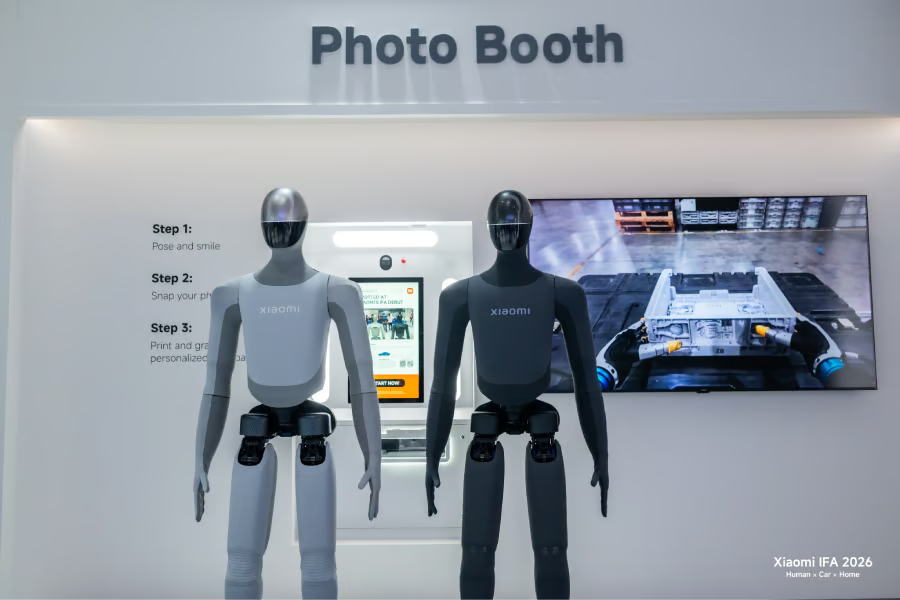
Xiaomi showcased its CyberOne humanoid robot at IFA 2026 in Berlin, but its more important test is taking place away from the trade-show floor.
The company has been testing CyberOne on a nut-fastening task at one of its electric vehicle factories. After approximately four months, Xiaomi said the robot’s success rate on that specific task increased from about 90% to 98%, according to eWeek.
For businesses evaluating humanoid robots, the result shows their potential on repetitive factory work — but not yet their readiness to perform reliably across different tasks. At IFA, CyberOne demonstrated a less industrial role by interacting with visitors through gestures such as finger hearts and thumbs-up.
Xiaomi’s bigger bet
The robot is only one piece of Xiaomi’s push to build an ecosystem around AI and its own technology.
Xiaomi said its IFA display is its largest overseas exhibition to date, covering approximately 3,300 square meters and featuring more than 380 products and technologies. At the center is its “Human × Car × Home” strategy, which aims to connect smartphones, smart home devices and electric vehicles through AI and Xiaomi’s HyperOS operating system.
That strategy was also visible in the company’s automotive lineup. Xiaomi displayed the SU7, SU7 Ultra and Vision Gran Turismo concept and said it plans to enter European markets, including Germany, in 2027. The company also said it has delivered more than 700,000 EVs in mainland China since beginning deliveries in 2024.
More must-read AI coverage
- SS&C Intralinks DealCentre AI vs. Datasite: Which platform is built for the future of dealmaking?
- SS&C Intralinks FundCentre AI vs. Juniper Square: Which platform better supports modern private markets fund managers?
- Why Data, Not Models, Determines AI Success
- The Rise of the AI-Native Factory: How Physical AI Is Transforming Manufacturing
Betting on its own chips and AI
Xiaomi is also using IFA to show how much of its technology stack it wants to control itself.
The company showcased the Xiaomi 18 Fold, which uses its next-generation XRING O3 chip. Xiaomi describes the 3-nanometer processor as part of its effort to develop more of its mobile technology in-house.
Additionally, Xiaomi said it is using AI models — including MiMo-V2.5-Pro, MiLoco and MiClo — to support its robotics and smart manufacturing work.
The real test comes after IFA
The flashy demonstrations at IFA may attract attention, but CyberOne’s factory results are arguably the more significant development.
A jump from 90% to 98% on one manufacturing task suggests progress, but it does not establish that humanoid robots are ready for broad industrial deployment. Xiaomi is testing CyberOne in a controlled environment and on a specific task, so questions around reliability, cost and how well the robot can handle different jobs remain.
Still, Xiaomi’s approach is notable: rather than treating its humanoid as a standalone gadget, it is testing the robot alongside the factories, AI models, chips and operating systems that make up its broader technology business.
Xiaomi said it plans to invest more than 200 billion yuan, or approximately $29.8 billion, in research and development from 2026 through 2030. The investment will cover areas including AI, operating systems, semiconductors, electric vehicles, robotics and smart manufacturing, according to BigGo Finance.