


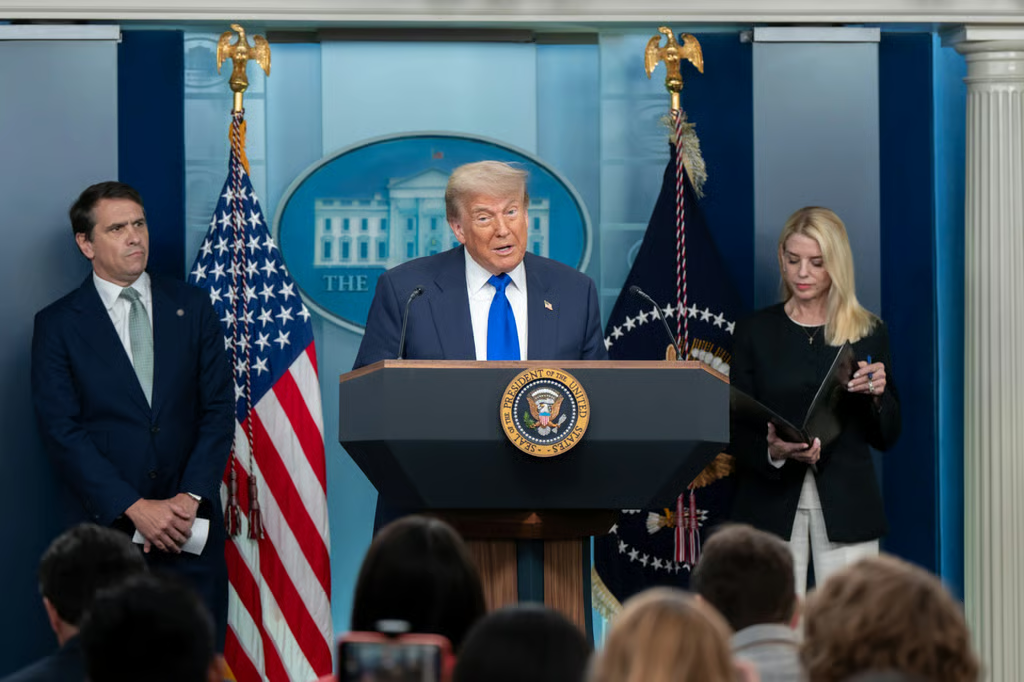
US President Donald Trump’s “Big Beautiful Bill” was signed into law on July 4. While it didn’t impose a moratorium on state-level artificial intelligence laws as anticipated, it did include a substantial 35% tax credit for semiconductor manufacturers.
Companies eligible for the tax advantages must commence construction on new chip fabrication plants in the US before the end of 2026, according to the new legislation. This can benefit companies such as Texas Instruments, Intel, TSMC, and Micron, all of which have recently announced investments in the US, by substantially reducing the cost of constructing new semiconductor manufacturing facilities.
The 35% tax credit, which allows companies to reduce their federal tax liability by that percentage, marks a substantial increase over the existing 25% credit offered under the CHIPS and Science Act. It is also a 5% increase on the proposed percentage in a draft version of the bill.
The ultimate goal of the tax credits is to strengthen the US’s domestic semiconductor supply change and stimulate economic growth. US chip developers face stiff competition from China, particularly as AI has driven up demand for data centres and consumer devices.
Trump wants to strengthen the domestic supply chain of semiconductors
Since being elected for a second term, President Trump has threatened import tariffs, including one specifically targeting semiconductors, to encourage domestic manufacturing. He rescinded Biden’s AI diffusion rule, which had limited chip sales to certain countries deemed adversaries, to boost exports.
The president has also called for the Biden-era CHIPS act to be repealed, which allocated $52 billion in subsidies and tax incentives to support semiconductor research and manufacturing. The legislation was designed to shield the US from the supply chain risks posed by geopolitical tensions, helping to avoid a repeat of the 2020 global chip shortage. However, Trump argues that it funnels billions to foreign companies, such as TSMC, without yielding meaningful returns for the US.
Many of his moves have specifically targeted China, such as imposing license requirements for the exports of advanced chips and chip design tools, and adding Chinese tech firms to trade blacklists to limit their access to US semiconductor technology. While China has referred to this as “bullying,” such aggressive measures are not unique to the Trump administration or the US. The two nations have been engaged in a tit-for-tat exchange of export controls on chips and related technologies since 2022.
The US is keen to maintain its sovereignty in the chip market by blocking China from accessing state-of-the-art hardware, which is important for running advanced AI models. In addition to financial motivations, the country has also raised concerns about China developing AI for military purposes.
What's hot at TechRepublic
- Blackpoint Cyber vs. Arctic Wolf: Which MDR Solution is Right for You?
- Why AWS Sellers Choose Deepgram Over Other Voice AI Tools
- SS&C Intralinks DealCentre AI vs. Datasite: Which platform is built for the future of dealmaking?
- SS&C Intralinks FundCentre AI vs. Juniper Square: Which platform better supports modern private markets fund managers?
- Verito vs. Rightworks: Which IT Provider Is Best for Your Firm?
Chipmakers are committed to the US, despite Trump’s incentives backfiring
Unfortunately for Trump, not all of his attempts to bolster the domestic semiconductor supply chain have been successful.
April’s retaliatory tariffs sent tech stocks tumbling as investors feared supply chain disruptions, rising production costs, and weaker demand for electronics and AI infrastructure. Microsoft reportedly hit the brakes on some of its US data centre plans in response, and NVIDIA has said that tariffs might not even be effective in stopping US chips from reaching China.
Despite this, several chipmakers have announced plans to expand their US footprint in 2025. Texas Instruments announced $60 billion of US investment, while Micron and TSMC increased their planned spending by $200 billion and $160 billion, respectively. NVIDIA plans to build new fabs in Texas, relying on TSMC’s existing US capacity in the interim.
AI law moratorium also intended to support domestic chip market
The moratorium of state-level AI regulation was originally included in the spending bill to bolster the US AI industry, which in turn fuels demand in the domestic chip market. Supporters argued it would prevent a “patchwork” of conflicting regulations that, in their view, could stifle innovation and competitiveness, especially against global rivals like China.
However, it received huge backlash, with state senators, attorneys general, and other organisations writing open letters explaining how it would remove state rights to regulate and leave tech giants unaccountable to lawmakers and the public.
Intel was once the cornerstone of American chipmaking but fell behind as rivals surged ahead. Now, under new CEO Lip-Bu Tan, the company is betting on a bold new manufacturing process to reclaim its edge. Find out how Intel plans to lead again.