


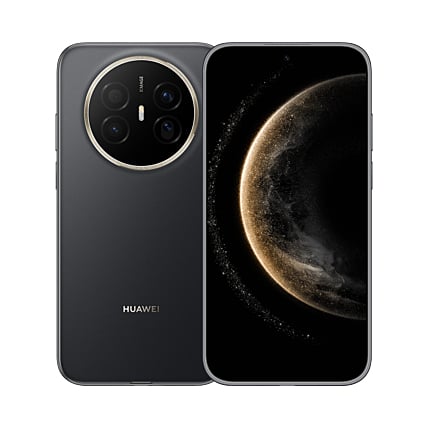
Huawei is taking a confident swipe at Apple’s new iPhone Air. And they’re doing it at nearly half the price.
The Chinese tech giant has launched the Mate 70 Air, its latest addition to the growing line of ultra-thin smartphones. Measuring just 6.6mm thick and weighing 208 grams, the new phone aims to deliver both elegance and endurance, a combination that’s hard to pull off in the thin-phone trend.
Pricing starts at 4,199 yuan (about $590), undercutting Apple’s $999 iPhone Air, which launched this fall alongside the iPhone 17 series. Huawei’s move marks one of the most direct responses yet to Apple’s push into the “Air” branding for smartphones.
The Mate 70 Air features a 7-inch OLED display with FHD+ (2760 × 1320) resolution and support for 1.07 billion colors. It also brings a 2160Hz high-frequency PWM dimming rate and a 300Hz touch sampling rate for smoother interaction, according to Huawei’s official specifications.
But what truly stands out is the battery. While its 6.6mm frame is not the absolute thinnest on the market — Apple’s iPhone Air is noticeably slimmer — Huawei has used the slight extra thickness to pack in a massive 6,500mAh cell. This trade-off means you get a battery larger than those in most flagship phones today, promising all-day power without sacrificing the sleek “Air” aesthetic.
It supports 66W wired fast charging, though wireless charging isn’t included, likely a concession to the compact design.
Must-read Apple coverage
- Nearly 7 in 10 iPhone Owners Plan iPhone 17 Upgrade
- Apple Prepares AI-Powered Siri Upgrade With Google Search Integration
- Apple’s Xcode 26 Beta Now Supports GPT-5 and Claude
- Apple’s Vision Pro Adoption Stalled As Content Released ‘Drip by Drip’
Cameras and performance
The rear camera system features a 50MP main sensor with optical stabilization, a 12MP telephoto lens, an 8MP ultra-wide macro lens, and a 1.5MP color sensor, enabling up to 4K video recording. Up front, there’s a 10.7MP ultra-wide selfie camera, capable of 4K video as well.
Under the hood, the phone runs HarmonyOS 5.1 and uses Huawei’s in-house Kirin 9020 series chips, the 9020B for the 12GB RAM version and the 9020A for the 16GB model. Storage options include 256GB and 512GB, with no microSD expansion.
The phone is available in three color options: gold and silver Brocade, white feather robe, and obsidian black. It also boasts IP68/IP69 water and dust resistance and Kunlun Glass protection for added durability.
Huawei says the Mate 70 Air was built for users who want something lightweight yet reliable, complete with stereo speakers, Bluetooth 5.2, Wi-Fi 7, Beidou satellite communication, and NFC support. Huawei isn’t the only company taking a swing at Apple this year.
As Bloomberg observed, “China’s smartphone makers have shown a greater willingness to confront Apple this year.” Other brands, such as Xiaomi, have also shifted their strategies to compete more directly.
However, Huawei, as China’s longtime leader in premium phones, is making a specific play. Instead of just competing on raw power, the Mate 70 Air is aimed at the style-conscious crowd. The launch positions the Mate 70 Air as Huawei’s most direct and targeted challenge to Apple’s new iPhone Air yet.
The Mate 70 Air is currently available only in China, with pre-orders already open and deliveries beginning Nov. 11.
Want more on Huawei’s latest moves? Check out how the company unveiled a “safe” DeepSeek model and how they’re reshaping AI under new content rules.