


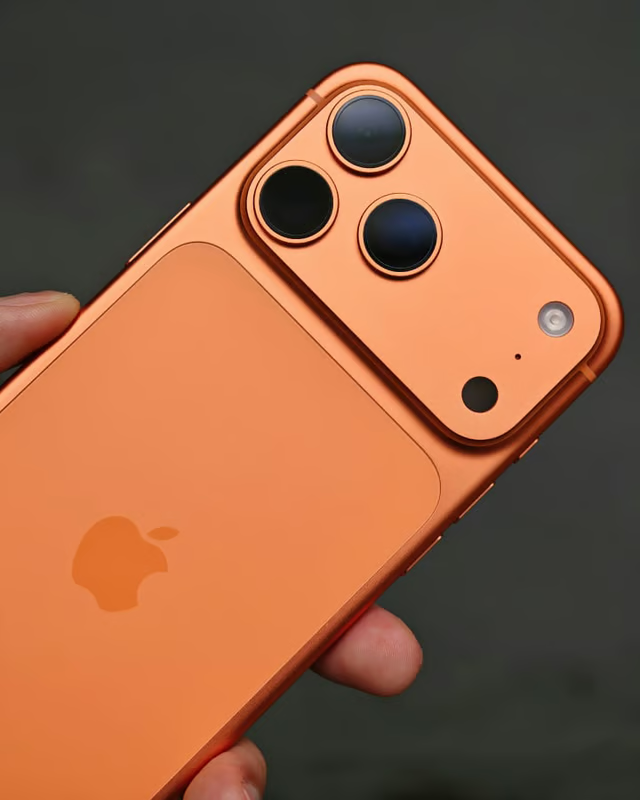
Apple sold more iPhones even as the global smartphone market moved sharply in the opposite direction.
The iPhone 17 was the world’s best-selling smartphone in the second quarter of 2026, accounting for 6% of global smartphone unit sales, according to Counterpoint Research’s Global Handset Model Sales Tracker.
The result marks the second straight quarter in which the standard iPhone 17 has taken the top spot. Apple also grabbed second and third place with the iPhone 17 Pro Max and iPhone 17 Pro, respectively.
For buyers and IT teams, the results show demand concentrating around a smaller group of Apple and Samsung devices as component shortages put pressure on prices and product availability.
Apple and Samsung each placed five models in the global top 10, with the two companies together accounting for 26% of worldwide smartphone unit sales. That was up 2 percentage points from a year earlier and represented the highest top-10 contribution for a June quarter, Counterpoint said.
Counterpoint estimated that the overall smartphone market contracted 11% year over year, while Apple’s unit sales increased 5%.
“iPhone sales increased across India, Japan, and the MEA, and nearly doubled in South Korea in Q2 2026, driven by the iPhone 17 series,” Counterpoint Senior Analyst Karn Chauhan said.
Samsung’s flagship push pays off
Samsung’s Galaxy S26 Ultra ranked fourth and became the quarter’s best-selling Android smartphone. It also accounted for more than half of Galaxy S26 series sales.
The S26 series launched later in the year than its predecessor, placing more of its initial sales period within the second quarter. Counterpoint said the Ultra also benefited from its privacy display and enhanced AI features.
“The Samsung Galaxy S26 Ultra was the best-selling Android smartphone,” Counterpoint Senior Analyst Harshit Rastogi said, noting that it was the first ultra-premium Android phone to lead Android sales in a June quarter.
Samsung also placed the Galaxy A07 4G, Galaxy A17 5G, Galaxy A17 4G and Galaxy S26 5G in the top 10. Counterpoint attributed their performance to factors including affordability, broad availability and long software support, which helped Samsung remain competitive outside the premium segment.
Must-read Apple coverage
- Nearly 7 in 10 iPhone Owners Plan iPhone 17 Upgrade
- Apple Prepares AI-Powered Siri Upgrade With Google Search Integration
- Apple’s Xcode 26 Beta Now Supports GPT-5 and Claude
- Apple’s Vision Pro Adoption Stalled As Content Released ‘Drip by Drip’
The market is getting more concentrated
The rankings point to a broader shift in the smartphone business: the 10 leading models are accounting for a larger share of global sales.
Counterpoint linked the growing concentration partly to the global RAM shortage, which is pushing manufacturers to focus resources on their strongest volume and premium models. Rising smartphone prices are also making premium devices a larger part of the market.
That environment may play to Apple’s strengths, given its relatively concentrated product lineup and presence across both premium and mainstream price categories. The standard iPhone 17’s upgrades also narrowed the feature gap with the Pro models, making the base version more compelling without eliminating demand for the higher-priced devices.
The iPhone 17e added another point of strength, reaching seventh place with MagSafe and higher storage at the same price as its predecessor. Carrier promotions helped support demand in the U.S. and Japan.
What comes next
The biggest question is whether Apple can maintain that momentum as the smartphone market moves into the second half of the year.
The Q2 results show that consumers are still willing to spend on premium phones, but the concentration of sales also highlights a risk for manufacturers: supply constraints and higher component costs could make it harder to offer affordable devices.
For buyers and IT teams planning device purchases, the next two quarters will show whether component shortages translate into higher prices, narrower product choices or longer replacement cycles. Apple and Samsung currently have the advantage, but maintaining it will depend on keeping their most popular devices available as supply pressures increase.
Read more: Apple’s upcoming iPhone 18 Pro could face memory supply pressures as rising component costs reshape smartphone production and pricing.