


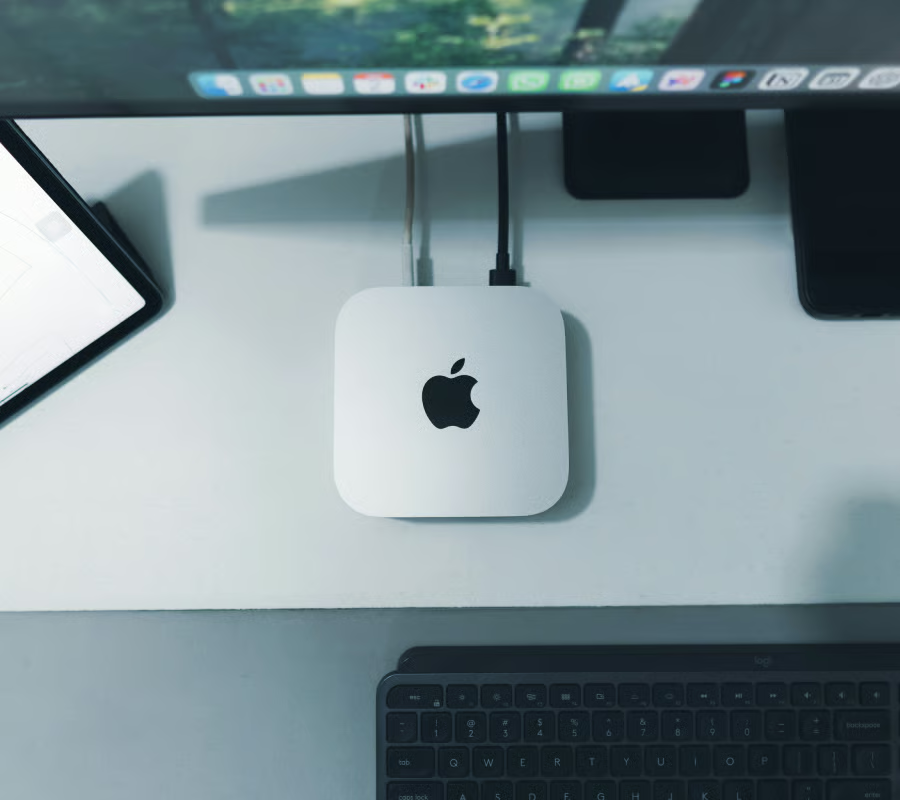
Apple may launch an updated Mac mini in the coming days, ahead of its expected September iPhone event, according to Bloomberg.
It would be the first Mac mini refresh since 2024, following reported shortages as developers increasingly turned to the compact desktop for running AI tools locally.
Bloomberg reports that it will offer M5 Pro and M6 configurations, with the M5 Pro expected to deliver stronger overall performance. The M6 reportedly includes a dual Neural Engine that could give it an advantage in certain AI workloads.
If Apple announces the Mac mini before Sept. 1, it could be one of Tim Cook’s final product launches as CEO before John Ternus replaces him.
Mac mini the AI tinkerer’s tool of choice
Even a modest Mac mini refresh could appeal to developers looking for a compact system capable of running AI tools locally. Due to its price, it is seen as an excellent choice for continuous AI agent deployment, for example as an always-online personal assistant able to answer emails, add meetings to a calendar and clear spam from an inbox.
Perplexity was one of the first to recognize the value of the Mac mini, focusing its Personal Computer AI agent around the device. Other AI developers have also prioritized macOS for early agent releases, although that does not establish how AI agent usage is distributed across operating systems.
Must-read Apple coverage
- Nearly 7 in 10 iPhone Owners Plan iPhone 17 Upgrade
- Apple Prepares AI-Powered Siri Upgrade With Google Search Integration
- Apple’s Xcode 26 Beta Now Supports GPT-5 and Claude
- Apple’s Vision Pro Adoption Stalled As Content Released ‘Drip by Drip’
Memory supply declined as Mac mini demand soared
The Mac mini, which previously started at $599, became difficult to find at major retailers in April, with some buyers reportedly facing delays of several weeks or months.
Mac mini demand has increased as memory-component costs have also risen, with both trends influenced partly by the growth of AI. Apple subsequently raised the Mac mini’s price and removed some higher-memory configurations amid those rising costs.
Apple has reportedly been looking at alternative suppliers to secure more memory and potentially drive down unit costs. It has discussed buying chips from CXMT, the Chinese memory manufacturer, but has been warned against doing so by officials in the US government.
Apple may also move some Mac mini production to the US, although the company has not confirmed that plan. Apple’s broader $600 billion US investment commitment covers manufacturing, suppliers, research, infrastructure and other operations rather than only Mac Pro production.
Until Apple confirms the hardware, buyers should treat the chip choices, launch timing and US production plans as provisional. For IT teams considering the Mac mini for local AI, the most important questions will be whether the new models offer enough memory, performance and availability to justify upgrading.