
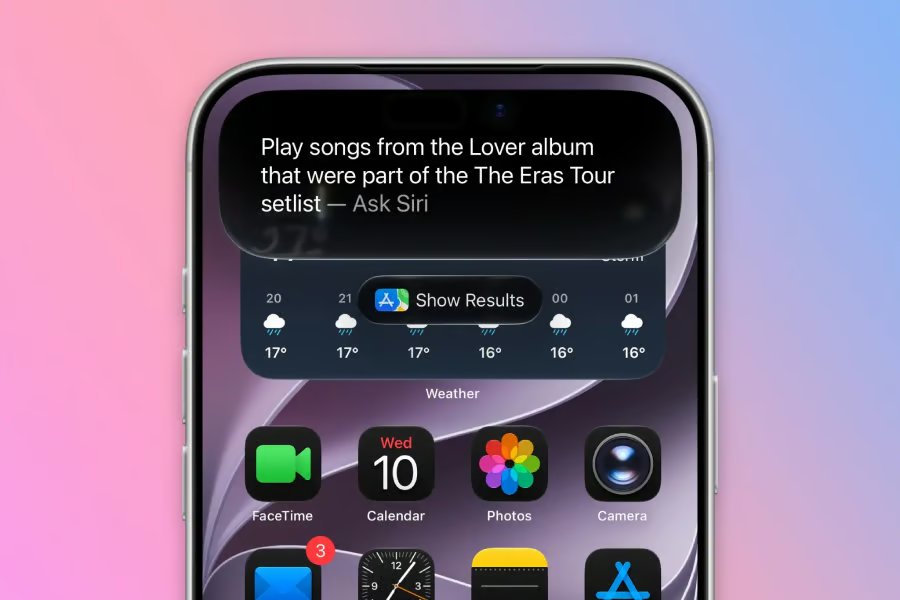

Apple’s biggest Siri upgrade in years is arriving with a catch: many iPhone owners may be left out.
The company is preparing to launch new AI-powered Siri features that can understand personal context, analyze what’s on a user’s screen, and take actions across apps. But the upgrade will only work on newer Apple devices, meaning a large portion of the company’s installed base won’t be able to use the features.
That limitation turns Siri AI into more than a product update. It is also an early test of whether Apple’s AI ambitions can persuade customers to upgrade their devices and embrace a new generation of AI-powered experiences.
Who will get the new Siri?
More than half of iPhones do not support Apple Intelligence, according to estimates from Bloomberg Intelligence analyst Anurag Rana.
The eligible devices are:
iPhone
- iPhone 17 Pro and Pro Max
- iPhone Air
- iPhone 17
- iPhone 17e
- iPhone 16 Pro and Pro Max
- iPhone 16 and 16 Plus
- iPhone 16e
- iPhone 15 Pro and Pro Max
iPad
- iPad Pro (M1 chip and later)
- iPad Air (M1 chip and later)
- iPad mini (A17 Pro)
Mac
- All models with Apple silicon (M1 chip and later, and A18 Pro chip)
Apple Watch (when paired with an AI-supported iPhone)
- Apple Watch Series 9 and later
- Apple Watch Ultra 2 and later
- Apple Watch SE 3
Apple Vision Pro
- All models
Must-read Apple coverage
- Nearly 7 in 10 iPhone Owners Plan iPhone 17 Upgrade
- Apple Prepares AI-Powered Siri Upgrade With Google Search Integration
- Apple’s Xcode 26 Beta Now Supports GPT-5 and Claude
- Apple’s Vision Pro Adoption Stalled As Content Released ‘Drip by Drip’
Focused on everyday tasks
Unlike ChatGPT and Anthropic’s Claude, Siri AI’s role will be geared toward more everyday tasks, rather than business-focused work. It will help operate apps, answer questions by analyzing a user’s iPhone’s screen, and integrate personal context into responses, Apple said.
For example, users can ask Siri to locate a restaurant recommendation that a friend sent, retrieve a hotel confirmation number from an old email, or display photos of friends and family from a recent trip. This personal context understanding also applies to third-party apps when developers connect them with Spotlight.
“With access to broad world knowledge for up-to-date answers on virtually any topic, along with onscreen awareness and personal context understanding, Siri AI can help users take action across apps more naturally than ever,” Craig Federighi, Apple’s senior vice president of software engineering, said in a statement.
Will people pay for AI?
Apple has been something of a laggard in the race to deploy AI and, in the past couple of years, has been under pressure to demonstrate it can catch up. The Siri AI upgrade was also delayed amid a recent agreement by Apple to pay a proposed $250 million class action settlement over claims related to how it has marketed Apple Intelligence and enhanced Siri features.
The company will soon need to demonstrate that its AI assistant can be used to push iPhone upgrades, increase services revenue, and support innovative new products.
However, the key question for investors is whether Apple — renowned for transforming emerging technologies into major successes — can persuade people to pay for AI.
“Updates felt more evolutionary vs revolutionary, and we continue to view (Apple) as a laggard in AI with no killer apps and a questionable monetization strategy,” Barclays analysts wrote in a research note following Apple’s event.
Other major tech companies are facing questions about their AI capabilities. OpenAI and Anthropic have encountered skepticism about whether they generate enough revenue to justify their high valuations and investments.
Apple has been somewhat shielded from these concerns because most of its revenue comes from iPhone sales, which have been strong. The company reported record revenue for the March quarter, largely driven by demand for the iPhone 17.
Whether Apple’s AI ambitions will lead to more iPhone upgrades or iCloud+ subscriptions remains a topic analysts continue to research. In a post-event report, Morgan Stanley analysts observed that “Apple’s announcements provided clearer paths to monetizing AI, though they also described the company’s AI advancements as a marathon, not a sprint.”
Siri AI availability for developers
New Siri AI features for developer testing are now available through the Apple Developer Program at developer.apple.com, across iOS 27, iPadOS 27, macOS 27, and visionOS 27.
Siri AI will be available for developer testing in a future watchOS 27 beta.
Also read: macOS 27 Golden Gate beta features have revived speculation that Apple is preparing its first touchscreen Mac laptop.