


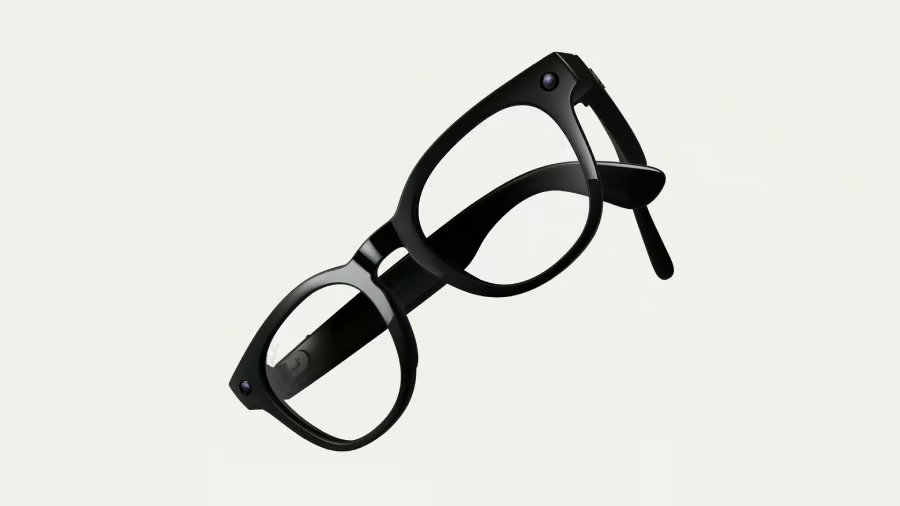
Apple is exploring ways to turn future smart glasses and headsets into health and fitness devices, building on the company’s growing focus on wearables. According to Bloomberg’s Mark Gurman, the company wants its Vision Products Group to develop health experiences that combine spatial computing, sensors and consumer wellness.
The plan does not appear ready for Apple’s first-generation smart glasses, which are expected to focus on core features before gaining more advanced health capabilities in later versions.
Apple previously explored a similar approach with the Vision Pro headset. The company reportedly considered a version of Apple Fitness+ designed for the device, allowing users to follow workouts while the headset tracked body movements and analyzed exercise performance. However, the idea was abandoned because of technical challenges and the headset’s weight, according to Bloomberg.
Smart glasses offer a different opportunity because they are designed to be worn more naturally throughout the day. Apple is reportedly looking at using sensors built into the glasses to collect movement and health data.
A Bloomberg report said Apple’s Vision Products Group is hiring a “strategic product design leader” to “define the future of health, well-being and fitness experiences across vision products.” The role also involves finding opportunities at the intersection of “spatial computing, wearables, consumer health and human behavior.”
The hiring signals that Apple sees health as a long-term part of its glasses strategy rather than just an experimental feature.
How Apple could expand its wearable health ecosystem
Apple already has a health ecosystem spread across products such as the Apple Watch and AirPods. Adding smart glasses could give the company another way to collect health-related information and provide users with hands-free guidance.
Possible future uses could include workout assistance, movement analysis and fitness coaching. Cameras and sensors could allow the glasses to understand a user’s activity and provide feedback, although the exact features remain unclear.
This approach could help Apple compete in a growing smart glasses market where companies are adding artificial intelligence and wearable features. However, Apple will need to balance useful sensing capabilities with privacy concerns surrounding camera-equipped eyewear.
Must-read Apple coverage
- Nearly 7 in 10 iPhone Owners Plan iPhone 17 Upgrade
- Apple Prepares AI-Powered Siri Upgrade With Google Search Integration
- Apple’s Xcode 26 Beta Now Supports GPT-5 and Claude
- Apple’s Vision Pro Adoption Stalled As Content Released ‘Drip by Drip’
Privacy and technical challenges remain
Smart glasses face challenges that traditional wearables do not. Cameras mounted on glasses can raise concerns about when users are recording or collecting information about people nearby.
Apple has reportedly been considering ways to address those concerns, including limiting how cameras are used. But reducing camera functionality could also limit some of the advanced AI and fitness features that make smart glasses attractive.
The company also needs to solve practical issues around battery life, sensor accuracy and comfort. Health tracking requires devices that people are willing to wear regularly, not just occasionally.
Apple’s bigger wearable strategy
Apple’s move into health-focused smart glasses suggests the company sees wearables as more than accessories. The long-term goal appears to be creating a broader ecosystem where devices work together to support communication, fitness and personal health.
The challenge will be proving that smart glasses can offer something users cannot already get from an Apple Watch or AirPods. If Apple succeeds, glasses could become a new category of health technology. If the benefits are unclear, consumers may see them as another expensive device looking for a purpose.
Also read: Discover five ways the Apple Watch uses health and fitness features to help users monitor their well-being.