


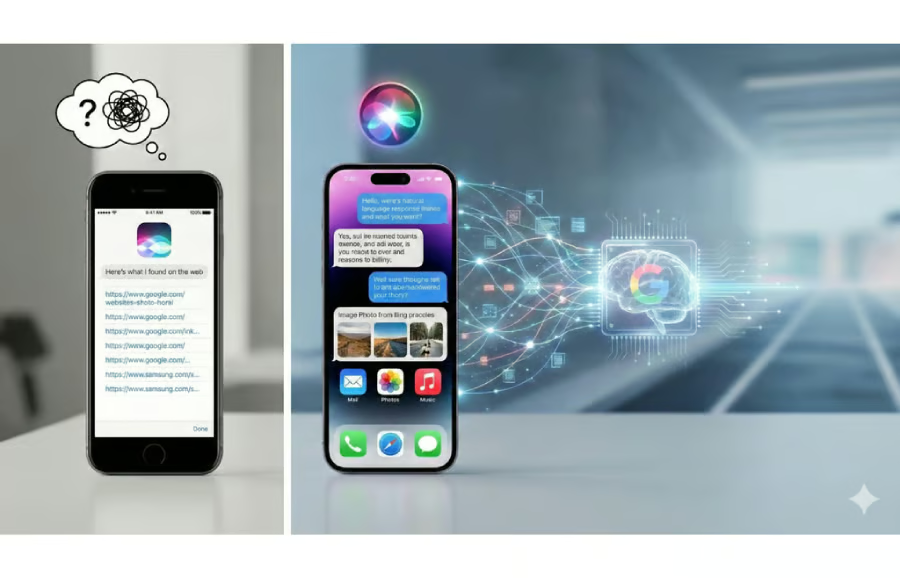
Apple’s delayed Siri overhaul is nearly here.
The tech giant is reportedly set to launch a major overhaul of Siri alongside iOS 27 in Sept. 2026, marking a long-awaited push into modern generative AI features. The updated assistant is expected to combine on-device AI processing with cloud-based systems for more complex requests, creating a hybrid setup that balances speed, capability, and privacy.
The goal? Finally move Siri closer to the capabilities of today’s chatbot-style assistants, including better context handling, multi-step reasoning, and deeper integration across apps and devices.
According to The Information, Apple will rely on Google’s Gemini AI models to handle more demanding Siri requests that cannot be processed directly on-device.
Instead of running these models on Apple’s own infrastructure alone, some Siri queries will reportedly be routed through Google Cloud systems, where Gemini will do the heavy lifting before sending results back to Apple devices, marking a shift for Apple, which typically prefers to control its entire tech stack end-to-end.
Nvidia Blackwell chips power the cloud layer
The cloud infrastructure behind this upgraded Siri is expected to run on Nvidia’s Blackwell B200 data center GPUs, supplied through Google’s infrastructure.
These chips are designed specifically for large-scale AI workloads, offering higher memory bandwidth and faster inference performance compared to previous generations like Hopper. A key part of the setup is Nvidia’s confidential computing technology, which encrypts data while it is being processed, an important feature for Apple, which continues to emphasize privacy even when using third-party systems.
Apple’s approach appears to be a balancing act: keeping simpler Siri tasks on-device while sending more complex queries to the cloud when necessary. Reports also suggest Apple previously explored running Gemini-like models on its own Private Cloud Compute system, but performance limitations led the company to adopt external infrastructure instead.
Even so, Apple is expected to continue to brand parts of its cloud AI system under Private Cloud Compute, alongside its new external partnerships.
Must-read Apple coverage
- Nearly 7 in 10 iPhone Owners Plan iPhone 17 Upgrade
- Apple Prepares AI-Powered Siri Upgrade With Google Search Integration
- Apple’s Xcode 26 Beta Now Supports GPT-5 and Claude
- Apple’s Vision Pro Adoption Stalled As Content Released ‘Drip by Drip’
WWDC 2026 and what comes next
Apple is expected to preview more details of its AI roadmap at WWDC 2026, which begins on June 8. That event is likely to set the stage for how Apple frames its delayed “Apple Intelligence” ambitions.
The original Siri redesign was first teased in 2024 but has faced repeated delays, with Apple now aiming for a full rollout in Sept. 2026 across iOS 27, iPadOS 27, macOS 27, and other platforms. If the new system delivers as expected, Siri could finally shift from a basic voice assistant into a more capable, context-aware AI tool built for modern use cases.
Apple is reshaping more than Siri: macOS 27 will also leave Intel Macs behind as the company enters the final stage of its Apple silicon transition.