


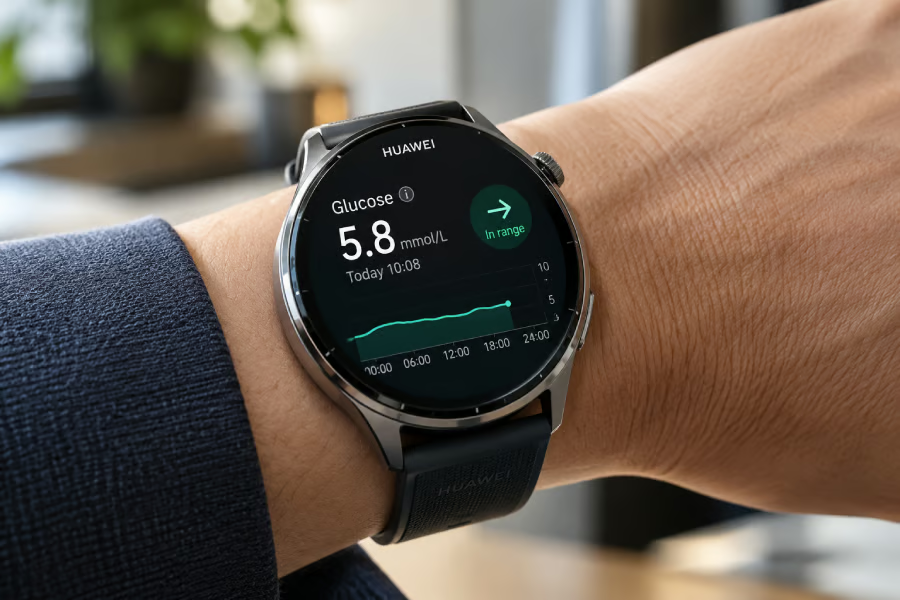
Needle-free blood sugar tracking has remained out of mainstream smartwatches despite years of research across the wearables industry.
Huawei Consumer Business Group CEO He Gang now says four years of blood-sugar research have reached a point where the technology can be industrialized, and he confirmed that a consumer blood-sugar testing device is planned.
He did not say what form that device will take or how it will measure glucose. Huawei patent filings from the same research period, however, show that the company has explored ways to perform noninvasive glucose measurements from the wrist.
Blood-sugar research is moving toward a consumer device
He Gang discussed the project after a recruiting event at Peking University.
He said the consumer business had spent four years researching blood-sugar testing and now considered the latest results acceptable and capable of industrialization. At that stage, work can move toward repeatable manufacturing and commercial production.
The CEO also confirmed that a blood-sugar testing device is planned.
Patent work shows how the wrist could take the reading
One Huawei patent lays out a noninvasive blood-glucose detector that uses mid-infrared light to measure glucose through the skin.
Light enters the skin and returns to a detector carrying information about how glucose absorbed part of it. Software analyzes the reading and calculates a blood-sugar concentration that can appear directly on a wearable display.
Huawei proposes using a graphene detector that can operate at room temperature. Some mid-infrared sensing systems depend on cooling equipment, which can complicate their use inside small electronics. A detector that works without that cooling equipment would be easier to package into wearable hardware.
One version places the sensing components in a wrist-worn device with its own screen. Measurements can occur automatically at set intervals during the day or begin when the wearer starts a test.
The patent comes from the same four-year research period He Gang referenced. Huawei has not confirmed that the method will power the coming product, but the filing confirms that noninvasive glucose measurement from the wrist has been part of its work.
Other Huawei research has explored glucose assessment using optical data already familiar to wearables, including PPG readings. Separate patent work has also examined how glucose data could be connected with activities such as eating, exercise, and sleep.
What's hot at TechRepublic
- Blackpoint Cyber vs. Arctic Wolf: Which MDR Solution is Right for You?
- Why AWS Sellers Choose Deepgram Over Other Voice AI Tools
- SS&C Intralinks DealCentre AI vs. Datasite: Which platform is built for the future of dealmaking?
- SS&C Intralinks FundCentre AI vs. Juniper Square: Which platform better supports modern private markets fund managers?
- Verito vs. Rightworks: Which IT Provider Is Best for Your Firm?
Huawei’s current smartwatches do not take the glucose reading themselves
Several Huawei wearables in supported markets can assess blood-sugar risk, but they do not produce an actual glucose measurement.
The Diabetes Risk Study collects physiological data over several days and uses information such as heart rate and sleep to estimate the risk of elevated blood sugar. Users receive a risk assessment instead of a glucose concentration.
Compatible watches can display measurements from supported third-party continuous glucose monitors (CGMs), including glucose curves and alerts when readings cross preset thresholds. The CGM still provides the actual glucose measurement.
A smartwatch carrying the company’s own glucose sensor would change that setup. Sensing hardware on the wrist could collect the measurement, calculate the glucose concentration, and show the reading on the same device.
Accuracy, regulatory status, and measurement frequency will become important once the device is announced. If the wrist-based research reaches a future smartwatch, Huawei could move from estimating blood-sugar risk or displaying third-party CGM data to generating the glucose reading from its own wearable hardware.
More from APAC: Singapore is expanding its chipmaking capacity with a $7.8 billion VSMC fab targeting 44,000 wafers a month.