When you support small offices, home offices, and remote offices, you often run across older wireless equipment. Equipment that’s likely secured with MAC filtering and perhaps a hidden SSID and WEP encryption.
Most techs would agree that MAC filtering alone isn’t going to secure a wireless network and that even WEP and a hidden SSID aren’t much better. But does MAC filtering at least keep out the lazy hackers? In this IT Dojo video, Bill Detwiler shows you just how easy it is to spoof a MAC address.
Once you’ve watched this IT Dojo video, you can find a link to the original TechRepublic article, print the tip, and get links to additional remote support and administration resources from our IT Dojo Blog.
Apple’s iPhone 3G arrived on Friday with a bevy of new enterprise-ready features, including Exchange support, business-grade security, and third-party applications powered by an SDK. As with the first iPhone, we waited in line, bought our phone, signed an AT&T contract, and promptly began to crack open the case. Come along as we disassemble the Apple iPhone 3G.
Monitoring your users’ Internet activity is an often unwelcome part of an IT professional’s job. Few of us want to be the secret police. However, many companies require some level of Internet monitoring to ensure compliance with usage policies and to track problem users.
If monitoring software is too costly for your IT department’s budget, you may want to consider a technique that uses existing Windows XP and Windows Server 2003 functionality. In this IT Dojo video, Bill Detwiler shows you a simple monitoring solution that uses Windows Server 2003 Group Policy.
Before watching the video, you should realize this tip isn’t right for every situation. This method uses Windows XP and Internet Explorer’s local browsing history. To view the history files, you must physically visit each machine, remotely access the machine, or copy the files to a network location with a script. Furthermore, a sophisticated end-user could easily navigate to and delete the browser history. This monitoring technique is best suited when monitoring a small number of users, or better yet, a single, problem user. If you’re looking for a more robust Internet monitoring solution, I recommend you go with a commercial service or application.
Once you’ve watched this IT Dojo video, you can find a link to the original TechRepublic article, print the tip, and get links to additional remote support and administration resources from our IT Dojo Blog.
Working with Cisco routers and switches is a part of almost every network administrator’s job. Keeping your Cisco equipment configured for optimal performance can be a time-consuming process, but there are a few general rules that will make you a more efficient administrator.
In this IT Dojo video, Bill Detwiler demonstrates the following time-saving tips for the Cisco IOS:
1. Shortening commands to their fewest unique characters
2. Using timestamps to generate better logs
3. Quickly returning an interface to its default configuration with the default interface command
4. Using the begin or include commands to filter command output
5. Running Privileged Mode commands from Global Configuration prompts with the do command
Once you’ve watched this IT Dojo video, you can find a link to the original TechRepublic article, print the tip, and get links to additional remote support and administration resources from our IT Dojo Blog.
This gallery is the photo shoebox for TechRepublic’s TR Dojo blog.
http://TRdojo.techrepublic.com
Windows passwords are a necessary evil. They help protect our systems, but they can also be a real pain in the neck. Employees leave, IT workers quit, IT consultants fail to properly document deployments. Regardless of the cause, you’re left with a locked account and perhaps a locked system.
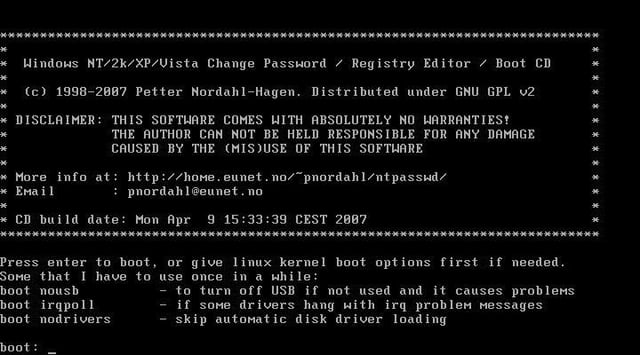
In this IT Dojo video, I demonstrate how quickly and easily reset local account passwords, including Administrator, on most Windows systems. The Offline NT Password and Registry Editor is a Linux-based utility that can reset passwords on Windows-NT based systems that use NTFS, including Windows NT, Windows 2000, Windows XP, Windows Server 2003, and Windows Vista. The tool creates a boot environment through which you can reset passwords via a series of text menus. The Offline NT Password and Registry Editor isn’t the most polished utility, but it is effective.
Hacker tool?
Before anyone starts flaming me in this video’s discussion for sharing “hacking advice”, let me make the following point. First, it is possible for unscrupulous individuals to bypass security measures with tools such as this. But, there are also plenty of legitimate, work-related reasons to reset a Windows password. The Offline NT Password and Registry Editor is just another tool in the IT professional’s arsenal.
Use the tool at your own risk!
There are also risks associated with using this tool. As it is editing the Windows registry, the Offline NT Password and Registry Editor could easily render a system unbootable and even destroy existing data. This is especially true of accounts that use the Encrypting File System (EFS).
Once you’ve watched this IT Dojo video, you can find a link to the original TechRepublic article, print the tip, and get links to additional remote support and administration resources from our IT Dojo Blog.
Active Directory can hold valuable user data, including contact information, their departments, and even office locations. Using this data source for administrative purposes can save you time when performing everyday tasks like auditing user accounts and checking software licenses. In this IT Dojo video, Bill Detwiler shows you an easy way to extract the data stored in Active Directory using the Comma Separated Value Data Exchange (CSVDE) command.
Once you’ve watched this IT Dojo video, you can find a link to the original TechRepublic article, print the tip, and get links to more Active Directory advice from our IT Dojo Blog.
Disabling unnecessary Windows Server 2003 services can strengthen your server security. Unfortunately, there are over 100 services to consider. In this IT Dojo video, Bill Detwiler shows you how to disable Windows Server 2003 services and discusses the following five services that you may want to turn off:
1 .ERSvc – Error Reporting Service
2. HidServ – Human Interface Device Access
3. IsmServ – Intersite Messaging
4. ScardSvr – Smart Card Access
5. LMHosts – TCP/IP NetBIOS Helper
The five services Bill mentions in this video are just the beginning. You can download our complete list of Windows Server 2003 services that can be disabled from the IT Dojo blog. This download contains a complete list of Windows Server 2003 services that can be disabled. The reference sheet lists each service, describes its function, specifies whether you can safely disable the service, and outlines the ramifications of doing so. The spreadsheet also lists each service’s default configuration for specific server roles–domain controller, DHCP server, File server, mail server, and so forth.
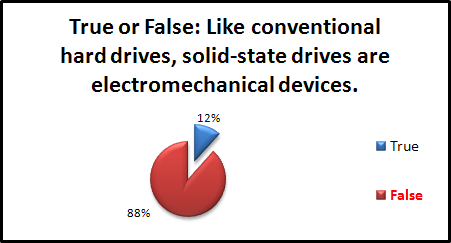
As of grading time, nearly 500 people had taken our solid-state drives quiz. Find out how they did, and if you would have done better.
Mapping drive letters in Windows XP is a common task. It’s not a complicated process, but you can save time with a few easy shortcuts. In this IT Dojo video, Bill Detwiler demonstrates three old DOS commands that making mapping folders and network shares a snap.
First, Bill looks at the SUBST command. SUBST lets you quickly and easily map a local, nested folder to a drive letter. Second, he examines the POPD and PUSHD commands. PUSHD lets you quickly map a network share from a Windows command prompt and POPD disconnects the drive.
Once you’ve watched this IT Dojo video, you can read the original TechRepublic articles, print the tips, and learn more ways to manage files and folders within Windows in the IT Dojo blog.
Unless you’re working in a geographic region with a high rate of counterfeit software, it’s unlikely the Windows XP machines you support will have invalid licenses. However even in the best-run IT shops, unauthorized software can find its way onto the desktop. An end-user may have installed a pirated copy of XP but now wants to go legal. An organization may have installed 100 pirated copies of XP but now has a legitimate volume-licensing key.
When you come across an invalid product key problem, changing Windows XP’s product key is often the most practical solution. In this IT Dojo video, Bill Detwiler, TechRepublic’s Head Technology Editor, demonstrates a quick and easy registry hack that replaces an invalid Windows XP key with a legitimate one.
Once you’ve watched this IT Dojo video, you can read the original TechRepublic article, print the tip, find out where to get a WMI script that automates the process, and learn more ways to resolve Windows product key problems in our IT Dojo Blog.
Hollywood would have IT pros believe that the biggest threat to network security comes from international super hackers or high school kids trying to download games like global thermonuclear war. In reality, we face a more mundane threat–our end users, particularly those wielding USB storage devices.
These pocket-sized devices can store a large amount of data. But even if your users aren’t planning to cart off sensitive company files, USB storage devices (external hard drives, camera, memory stick, MP3 players, etc.) can be a headache in other ways. Employees may use your networks to download music to their USB-based MP3 players. New USB flash drives, such as SanDisk’s U3 smart drives, can even run software directly from the device–a perfect tool for the end-user who wants to run unauthorized software on your network.
If your concerned about USB storage devices on your network and don’t feel a written policy alone will protect your data, disabling the devices is your next step.
In this IT Dojo video, Bill Detwiler, TechRepublic’s Head Technology Editor, shows you how to disable USB storage devices on both Apple OS X and Windows. The United States National Security Agency (NSA) described the process in a March 2008 document from the agency’s Information Assurance Directorate.
Once you’ve watched this IT Dojo video, you can read the original TechRepublic article, download PDF version of this tip, and learn more about mitigating the risks poses by USB storage devices from our IT Dojo blog.