


Amazon’s bid to give homes and businesses another satellite broadband option just lost 40 satellites before they could reach orbit.
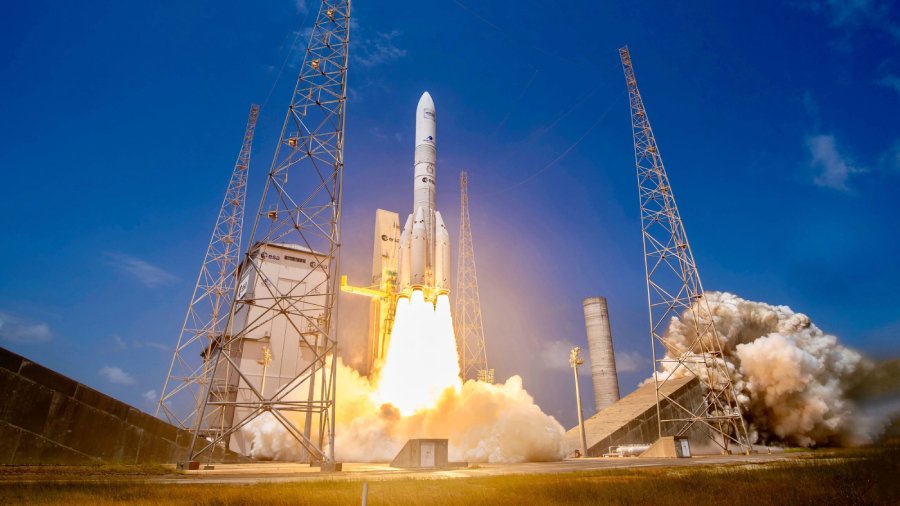
A United Launch Alliance (ULA) Vulcan rocket failed during a Nov. 15 mission carrying satellites for Amazon Leo, its planned Starlink rival. The loss adds uncertainty for businesses considering the service for remote offices or backup connectivity.
It was ULA’s first complete mission failure since the company was formed in 2006.
In a statement posted on X, ULA said: “Based on data received by our Launch Director, we confirm that the Vulcan vehicle launched from Space Launch Complex 41 suffered an anomaly 10 minutes into the flight and failed to deliver the Amazon mission to orbit.”
It was the fifth flight of ULA’s Vulcan rocket, which has suffered technical problems on multiple missions as ULA attempts to modernize its launch capabilities to compete with SpaceX. It was also the first of 38 Vulcan launches Amazon has purchased to get its Leo satellite service operational.
Amazon has previously launched satellites aboard ULA’s Atlas V rockets. Vulcan is intended to replace ULA’s older launch vehicles and support larger Amazon Leo payloads.
Amazon struggling to get its satellite system fully online
The company has faced multiple setbacks in getting its Leo satellite network fully operational. Even before the latest mission failure, the company had experienced delays securing launch windows with ULA due to technical issues with Vulcan.
Amazon’s other launch partners include Blue Origin, Arianespace, and SpaceX. Blue Origin suffered a New Glenn rocket explosion during a prelaunch ground test in May, adding uncertainty to its launch schedule.
Arianespace has successfully deployed 100 Amazon satellites across three missions. Its next Amazon launch, targeting no earlier than Nov. 23, would add another 36.
These setbacks complicate Amazon’s deployment plans. Before the Vulcan failure, the company was still targeting an initial service rollout later in 2026; the failure does not establish a revised launch date.
Amazon also agreed to acquire satellite company Globalstar in an approximately $11.57 billion deal. The transaction remains pending and is expected to close in 2027.
Separately, Amazon plans to begin deploying a direct-to-device satellite system in 2028, working with mobile network operators to extend connectivity beyond terrestrial coverage.
At the same time Amazon is trying to get its satellite network operational, founder and former CEO Jeff Bezos’ rocket company Blue Origin is planning a competing service called TeraWave. TeraWave targets enterprise, data center, and government customers. Blue Origin has announced plans to begin deploying its constellation in the fourth quarter of 2027, which does not establish a commercial service launch date.
What's hot at TechRepublic
- Blackpoint Cyber vs. Arctic Wolf: Which MDR Solution is Right for You?
- Why AWS Sellers Choose Deepgram Over Other Voice AI Tools
- SS&C Intralinks DealCentre AI vs. Datasite: Which platform is built for the future of dealmaking?
- SS&C Intralinks FundCentre AI vs. Juniper Square: Which platform better supports modern private markets fund managers?
- Verito vs. Rightworks: Which IT Provider Is Best for Your Firm?
Starlink leads in commercial adoption
While Amazon struggles to get its satellite operations back on track, Starlink continues to grow its customer base and expand its services. SpaceX reported 13.6 million Starlink consumer subscriptions as of Sept. 30, 2026, up from 7.2 million a year earlier. The metric counts service lines rather than unique customers and excludes managed enterprise and government accounts.
SpaceX is reportedly exploring a consumer mobile service, which would challenge AT&T, Verizon, and T-Mobile by offering connectivity across the United States. However, there are significant challenges ahead, because a competitive nationwide service would require sufficient spectrum and extensive terrestrial infrastructure alongside its satellite network.
What businesses should check before planning around Amazon Leo
The launch failure adds uncertainty for businesses considering Amazon Leo, but it does not establish how long the rollout might be delayed. An initial service launch also would not guarantee availability or sufficient capacity at every business location.
Before including a new satellite service in a connectivity budget, IT teams should ask providers for:
- Site availability: Confirmed coverage, installation dates, and any waiting list.
- Performance: Expected upload and download speeds, latency, and priority-data limits.
- Total cost: Equipment, installation, subscriptions, support, and cancellation charges.
- Business support: Service commitments, fault escalation, and equipment replacement arrangements.
Businesses needing connectivity now should compare services they can order today against their operational requirements. A remote office needing a primary connection may have different performance and support needs from a site seeking an emergency backup.
For Amazon Leo, the next developments to watch are ULA’s investigation findings, its return-to-flight schedule, and any changes Amazon announces to service availability. Those milestones will provide a firmer basis for buying decisions than assuming the failure pushes a launch beyond 2027.
Read more: Starlink’s proposed India rollout highlights why pricing and local availability matter when businesses assess a new satellite broadband option.