


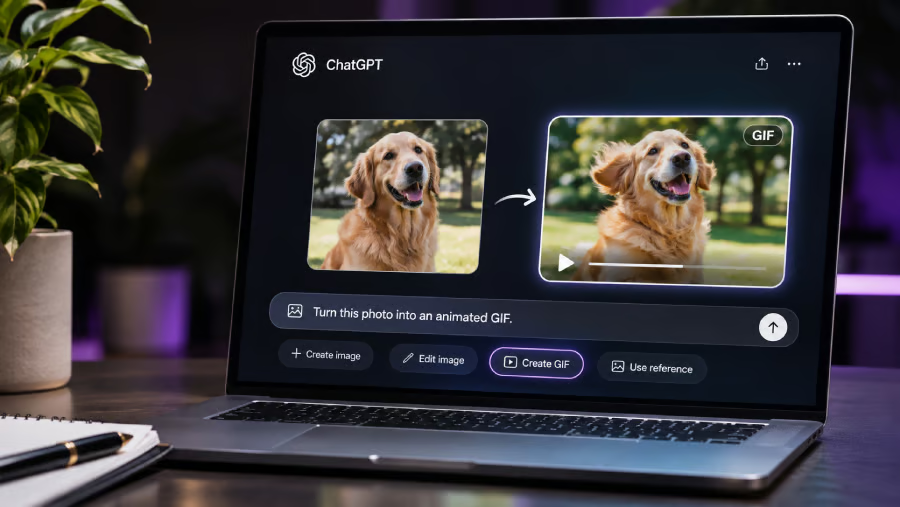
ChatGPT users can now turn photographs into animated GIFs, giving them a way to create moving images without opening separate editing software.
OpenAI introduced Images 2.6 on Nov. 4, bringing GIF creation, faster image generation, and more consistent editing to ChatGPT and its developer tools. The update also adds new options for reusing saved images across conversations.
For individuals and businesses, the changes could make it easier to create and revise visual content. However, some features are still rolling out, and the quality of AI-generated images remains important when producing materials for public use.
Animate images and reuse saved photos
Users can create looping GIFs by describing the animation they want, including which parts of an image should move. They can also upload an existing photograph or illustration and ask ChatGPT to animate it.
Once a GIF is generated, users can refine the animation through follow-up instructions, adjust its playback speed, and save or share the finished file. However, ChatGPT cannot currently edit an animated GIF that a user uploads.
Saved reference photos offer another option for people working with the AI tool’s image-generation features. Users can upload and name a reference image, then retrieve it in future conversations by typing @ followed by its saved name. Someone creating illustrations of the same pet or character, for example, can reuse the original photo without uploading it for every project.
Faster image generation brings more precise editing tools
OpenAI says Images 2.6 generates pictures 50% faster than before. Image creation has also reached considerable scale, with the company reporting 4 billion images generated weekly across ChatGPT, Codex, and its API.
Improved editing consistency is another part of the update. The model reportedly does a better job of preserving characters and product details through successive revisions, including elements important to brand identity.
Developers using the image-generation API can choose between two updated models.
| GPT-Image-2.6 Flare | Prioritizes speed and can generate an image in as little as six seconds at low quality. |
| GPT-Image-2.6 Sunburst | Offers higher-detail output and improved consistency across edits at medium or high quality settings. |
Developers also gain image markup for specifying editing areas, SVG exports for scalable graphics, and a complexity setting that controls how much planning the model performs.
Both API models cost $8 per million image-input tokens and $30 per million image-output tokens, with text billed separately, according to OpenAI’s pricing.
Images 2.6 is available globally across ChatGPT and Codex subscription tiers, but GIF creation is still rolling out.
More must-read AI coverage
- SS&C Intralinks DealCentre AI vs. Datasite: Which platform is built for the future of dealmaking?
- SS&C Intralinks FundCentre AI vs. Juniper Square: Which platform better supports modern private markets fund managers?
- Why Data, Not Models, Determines AI Success
- The Rise of the AI-Native Factory: How Physical AI Is Transforming Manufacturing
SMBs could produce more marketing content with ChatGPT
Small businesses and marketing teams using AI image generators could test Images 2.6 with an existing product photograph before using it for an entire campaign. For instance, a retailer could create promotional graphics from an approved photo and prepare an animated version for social media or email without commissioning a separate animation.
Before publishing, marketing staff should compare each version with the original product to catch changes to packaging, logos, or promotional claims. Businesses using generated GIFs in advertisements should also review the relevant platform’s AI-generated advertising disclosure rules and retain human approval of public-facing material.
A small pilot using an existing campaign could help businesses determine whether the updated tools deliver meaningful time savings. Teams can compare production time, the number of revisions required, and the effort involved in reviewing AI-generated assets against their current workflows.
The value of Images 2.6 will ultimately depend on whether faster generation translates into reliable, usable content rather than additional editing work.
More AI news: OpenAI’s GPT-6 Astra helped two employees design a working hardware prototype in under a week, although manufacturing still called for human corrections.