


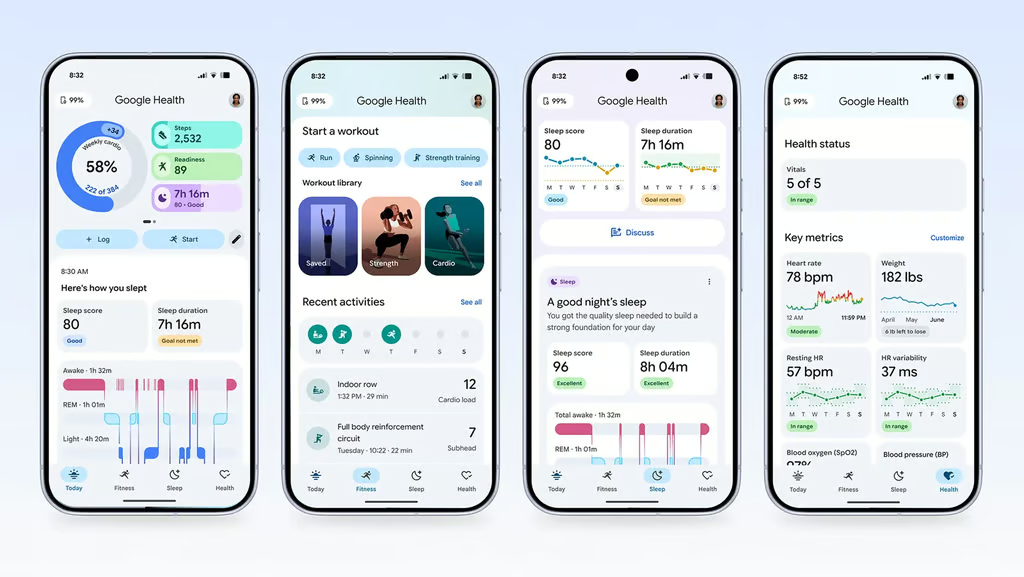
A blood pressure monitor can give you a reading. Knowing how that reading changes over time means keeping track of what came before.
Google is making that easier with version 5.12 of its Health app, which began rolling out Nov. 6. The Android and iOS update adds blood pressure logging and glucose charts that display meals, exercise, and sleep alongside recorded readings.
The additions bring information from home monitors and connected services into one app. Google Health isn’t measuring blood pressure or glucose itself; it’s helping users review readings collected elsewhere.
Blood pressure readings now have a home in Google Health
Users can manually record blood pressure by opening the Today tab, tapping +Log, and selecting Blood pressure. Readings can also sync from compatible apps through Health Connect on Android or Apple Health on iOS, according to Google’s November release notes.
Readings appear in graphs under Heart in the Health tab. Someone who checks their blood pressure regularly can use that history to review measurements across days rather than relying on individual readings.
Google has also made it possible to sync Fitbit data with Apple Health without additional syncing software, helping users keep information from different services together.
Google’s existing Health Guardian feature works differently. It analyzes wearable sensor data to identify blood pressure trends rather than providing actual measurements. Its eligibility documentation lists Pixel Watch 3, 4, and 5 as supported without a subscription, while Fitbit Air and Edge require Google Health Premium. Availability also varies by country.
Manual logging has no stated Premium requirement, although entering readings through Google Health Coach requires a subscription. TechRepublic’s Fitbit Edge cheat sheet details the tracker’s health features and subscription costs.
Glucose charts connect readings with daily activities
The updated glucose graph overlays logged exercise, sleep, and nutrition events with recorded glucose levels. Users can add events directly from the graph under Metabolic Health in the Health tab.
A person using a glucose monitor could compare readings before and after a logged meal or workout, rather than trying to match information from separate screens. Unlike insulin resistance trends on Pixel Watch, which estimate metabolic changes from wearable data, these charts display recorded glucose measurements.
The glucose changes follow Google’s Oct. 23 update, which introduced customizable glucose time-in-range goals and direct integration with Abbott’s Lingo continuous glucose monitor for eligible US users.
Direct Lingo connections typically display readings within 30 minutes, compared with approximately three hours when syncing through Health Connect or Apple Health, as explained in Google’s connection instructions. Eligible US users need a Lingo biosensor, the companion app, and an authorized account connection.
Beyond blood pressure and glucose, the update adds pregnancy tracking, improved nutrition logging, and additional medical-record connections. Google says health data can be exported or deleted and isn’t used for Google Ads, according to its health data announcement.
Google Health’s new features won’t tell users why their blood pressure or glucose levels changed. They can, however, make it easier to see when those changes occurred and what activities were logged around them—information that may be useful to bring to a healthcare appointment. Availability varies by feature and region.
Read more: Google’s partnership with Flo Health is expected to bring menstrual cycle information together with wearable data starting in early 2027.