


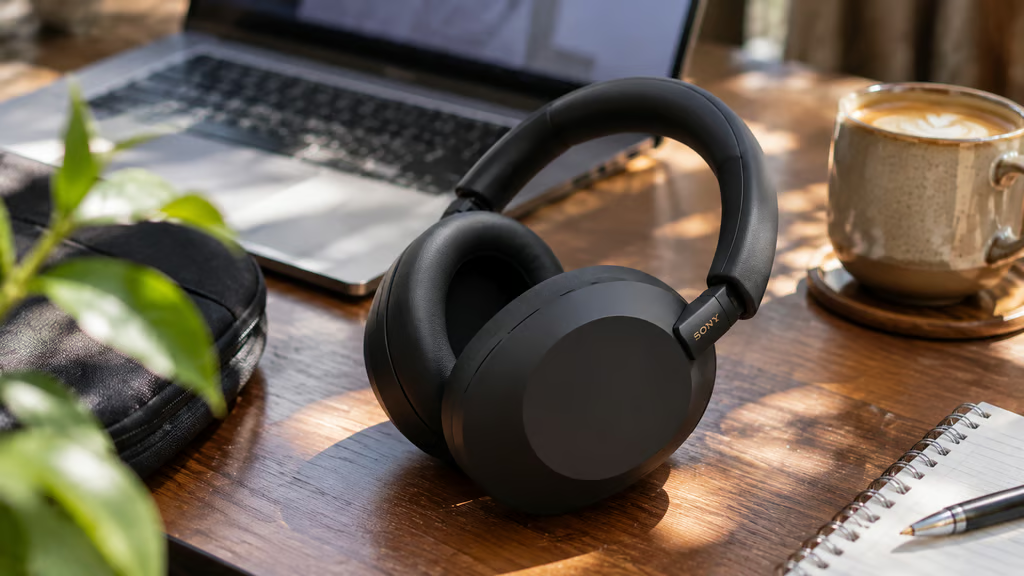
Sony fixed one of the WH-1000XM5’s most annoying design decisions with the WH-1000XM6: the headphones fold again. They’re also better at blocking noise, sound more balanced, and last longer in independent battery testing.
But here’s the catch: Sony’s newer headphones cost $459.99 at their regular US price. That’s a substantial premium for improvements that, while welcome, won’t transform everyone’s listening experience.
If you already own the XM5, upgrading is hard to justify unless its design or sound bothers you. If you’re buying your first premium Sony headphones, the decision comes down to how much you’re willing to spend for better noise cancellation, a more travel-friendly design, and newer wireless features.
- Sony WH-1000XM6 vs WH-1000XM5: At a glance
- Sony WH-1000XM6 vs WH-1000XM5: Specs compared
- How we compared
- Noise cancellation: The XM6 is quieter, but the XM5 isn’t far behind
- Sound quality: The XM6 fixes some of the XM5’s rough edges
- Calls: Reviewers can’t agree on the winner
- Comfort and design: The XM6 finally folds again
- Battery life: Sony’s specifications hide a real difference
- Connectivity: The XM6 adds features the XM5 can’t match
- Price and value: The XM5 is difficult to beat on sale
- Sony WH-1000XM6 vs WH-1000XM5: Which should you buy?
Sony WH-1000XM6 vs WH-1000XM5: At a glance
- Best overall: WH-1000XM6, for stronger tested noise cancellation and more refined sound.
- Best value: WH-1000XM5, particularly when heavily discounted.
- Best for travel: WH-1000XM6, thanks to its folding design and longer tested battery life.
- Best for calls: Too close to call. Independent reviewers disagree.
- Best for connectivity: WH-1000XM6, with Bluetooth 5.3, LE Audio, and LC3 support.
- Best for existing XM5 owners: Keep your current headphones unless you specifically want the upgrades.
Sony WH-1000XM6 vs WH-1000XM5: Specs compared
| Feature | Sony WH-1000XM6 | Sony WH-1000XM5 |
|---|---|---|
| Price | $459.99 | $399.99 |
| Driver | 30mm | 30mm |
| Noise-canceling processor | HD Noise Canceling Processor QN3 | Integrated Processor V1 and HD Noise Canceling Processor QN1 |
| Microphones | 12 | 8 |
| Bluetooth | 5.3 | 5.2 |
| Audio codecs | SBC, AAC, LDAC, LC3 | SBC, AAC, LDAC |
| LE Audio | ✔ | ✖ |
| Auracast | ✔, with compatibility limitations | ✖ |
| Folding design | ✔ | ✖ |
| Weight | Approximately 254g | Approximately 250g |
| Rated battery, ANC on | Up to 30 hours | Up to 30 hours |
| SoundGuys tested battery, ANC on | 37 hours, 14 minutes | 31 hours, 53 minutes |
| 3.5mm wired listening | ✔ | ✔ |
| USB-C digital audio | ✖ | ✖ |
| Listen while charging | ✔ | ✖ |
| Water-resistance rating | None listed | None listed |
Specifications come from Sony’s official product documentation. US prices were checked Nov. 9, 2026; promotions, colors, and stock availability vary. Battery test results come from SoundGuys.
How we compared
We used Sony’s WH-1000XM6 specifications and WH-1000XM5 specifications for hardware, connectivity, and manufacturer battery claims.
Independent testing from SoundGuys informed the noise-cancellation, sound-quality, and battery comparisons. We also considered Tom’s Guide’s monthlong hands-on comparison and Major HiFi’s assessment of the two models.
No original testing was conducted for this article. We distinguish measured results from Sony’s claims and identify disagreements between reviewers rather than presenting subjective findings as settled facts.
The buying decision considers sound, ANC, microphone performance, comfort, portability, connectivity, battery life, and current US pricing.
Noise cancellation: The XM6 is quieter, but the XM5 isn’t far behind
Put either pair on during a flight, and you’ll hear considerably less engine noise. The WH-1000XM6 simply does the job a little better.
Sony equips the newer model with its QN3 processor, which the company says is seven times faster than the QN1 used in the XM5. The XM6 also increases the microphone count from eight to 12.
Those changes translate into measurable improvements.
In SoundGuys’ comparison, the XM6 reduced ambient noise by up to 87% with a good seal, compared with 84% for the XM5.
Some of that improvement came from better passive isolation, not just more powerful electronics. The fit of the earcups still matters.
For frequent flyers or people working in noisy spaces, the XM6 has the edge. But if your XM5 already handles your commute comfortably, the difference alone probably isn’t worth hundreds of dollars.
Winner: WH-1000XM6.
Sound quality: The XM6 fixes some of the XM5’s rough edges
The two models use 30mm drivers, but Sony changed how the newer headphones sound.
The XM5 emphasizes bass and treble, producing a lively presentation that can sometimes make vocals feel recessed or higher frequencies sound sharp.
The XM6 takes a more balanced approach. SoundGuys found smoother treble, better-controlled bass, and a more natural overall presentation.
Its Multi-Dimensional Audio Quality Score (MDAQS) gave the XM6 a 4.8 overall rating, compared with 4.2 for the XM5.
That doesn’t mean everyone will prefer the newer tuning. Some listeners enjoy the XM5’s stronger bass, and both headphones support EQ adjustments through Sony’s Sound Connect app.
Still, the XM6 requires less tinkering to achieve a balanced sound.
Winner: WH-1000XM6.
Calls: Reviewers can’t agree on the winner
Here’s where the comparison gets interesting.
SoundGuys preferred the XM6’s microphone performance, finding that its upgraded beamforming system kept voices clearer in wind and crowded environments.
Tom’s Guide reached the opposite conclusion.
After a month of comparing the headphones, it gave the XM5 a 4-out-of-5 call-quality score, versus 3 out of 5 for the XM6.
Neither result is automatically wrong. Microphone performance can vary with background noise, wind direction, voice characteristics, and connected devices.
If calls are your main reason for buying expensive headphones, neither review provides a decisive answer. Both models are capable, but the XM6 isn’t a guaranteed upgrade for every caller.
Winner: Tie.
Comfort and design: The XM6 finally folds again
Sony’s decision to remove the folding hinge from the XM5 made its carrying case unnecessarily large. The XM6 reverses that choice.
The newer headphones fold inward and feature reinforced metal hinges, making them easier to pack and potentially more reassuring for frequent travelers.
That doesn’t automatically make them more comfortable.
Tom’s Guide preferred the XM6’s wider headband, while SoundGuys criticized its shallow earcups and relatively thin padding. People with larger ears may find the fit cramped.
The XM5 has its own comfort limitations, but its deeper earcup padding may suit some listeners better.
Both weigh approximately 250g, so weight alone won’t decide the issue.
If portability is your priority, the XM6 is the obvious choice. If you wear headphones for eight-hour workdays, trying them on is still worthwhile.
Winner: WH-1000XM6 for portability; comfort depends on fit.
Battery life: Sony’s specifications hide a real difference
On paper, nothing changed.
Sony rates both headphones for up to 30 hours of playback with noise cancellation enabled, or 40 hours with it switched off.
SoundGuys measured something more interesting:
- WH-1000XM6: 37 hours, 14 minutes.
- WH-1000XM5: 31 hours, 53 minutes.
That’s more than five additional hours for the XM6 under SoundGuys’ standardized testing conditions.
Actual battery life will depend on volume, wireless codec, settings, and usage.
The XM6 also allows listening while charging, a convenience the XM5 lacks. Neither model supports digital audio playback through USB-C, though both include a traditional 3.5mm headphone connection.
For long trips or several days between charges, the XM6 offers more flexibility.
Winner: WH-1000XM6.
Connectivity: The XM6 adds features the XM5 can’t match
The WH-1000XM6 supports Bluetooth 5.3, LE Audio, and the LC3 codec. The XM5 uses Bluetooth 5.2 and supports SBC, AAC, and LDAC.
The XM6 also supports Auracast, which allows compatible devices to receive broadcast audio from supported sources.
It’s a promising feature, particularly as shared listening becomes more common. Android has been expanding Auracast support across compatible devices.
However, SoundGuys found Auracast unreliable during its testing, so don’t buy the XM6 assuming every broadcast audio setup will work flawlessly.
Compatibility matters on computers, too. Windows 11’s shared audio feature requires suitable Bluetooth hardware, drivers, and supported headphones.
Both Sony models still support multipoint Bluetooth and LDAC. Neither supports aptX or Snapdragon Sound.
Winner: WH-1000XM6, particularly for buyers interested in LE Audio.
Price and value: The XM5 is difficult to beat on sale
This is where the upgrade argument runs into trouble.
Sony’s regular US price for the WH-1000XM6 is $459.99. The WH-1000XM5 originally cost $399.99, but Sony has recently offered it for around $200 in selected colors.
At that sale price, the XM5 costs less than half as much as the XM6.
You give up the folding design, newer Bluetooth features, and some measurable improvements in sound, ANC, and battery life. But you’re still getting capable premium headphones.
The calculation changes when discounts narrow the gap. If the XM6 falls closer to the XM5’s selling price, its improvements become easier to justify.
Other premium headphones compete in this range, too. Buyers comparing Sony against Apple and Nothing will encounter different trade-offs involving noise cancellation, wired audio, and platform-specific features.
Check Sony’s live US listings for the WH-1000XM6 and WH-1000XM5 before buying. Promotional prices and availability can change quickly.
Winner: WH-1000XM5, especially at a deep discount.
Sony WH-1000XM6 vs WH-1000XM5: Which should you buy?
Buy the WH-1000XM6 if you want:
- Stronger tested noise cancellation.
- More balanced sound without much EQ adjustment.
- A folding design that’s easier to pack.
- Longer tested battery life.
- LE Audio, LC3, and Auracast support.
- The option to listen while charging.
Buy the WH-1000XM5 if you want:
- Premium ANC and sound at a much lower sale price.
- A capable headset for music, travel, and everyday calls.
- Similar manufacturer-rated battery life.
- To avoid paying extra for features you may rarely use.
Final verdict
The WH-1000XM6 is the better pair of headphones, but the WH-1000XM5 is often the smarter purchase.
Sony made meaningful improvements to noise cancellation, sound tuning, portability, and connectivity. SoundGuys’ measurements back up several of those gains, even if the differences aren’t dramatic.
For someone buying their first premium headphones, the XM6 is worth considering when the price gap is modest.
For existing XM5 owners, there’s little reason to replace a perfectly good pair unless the folding design, newer wireless features, or improved sound directly addresses something you dislike.
And if the XM5 is selling for around $200 while the XM6 remains near $460, save the money. The newer model is better, but not twice as good.
Also read: If you prefer headphones that leave your ears uncovered, the Shokz OpenFit Air 2 and OpenRun Air 2 offer two different approaches to open-ear listening at the same $129.95 price.