


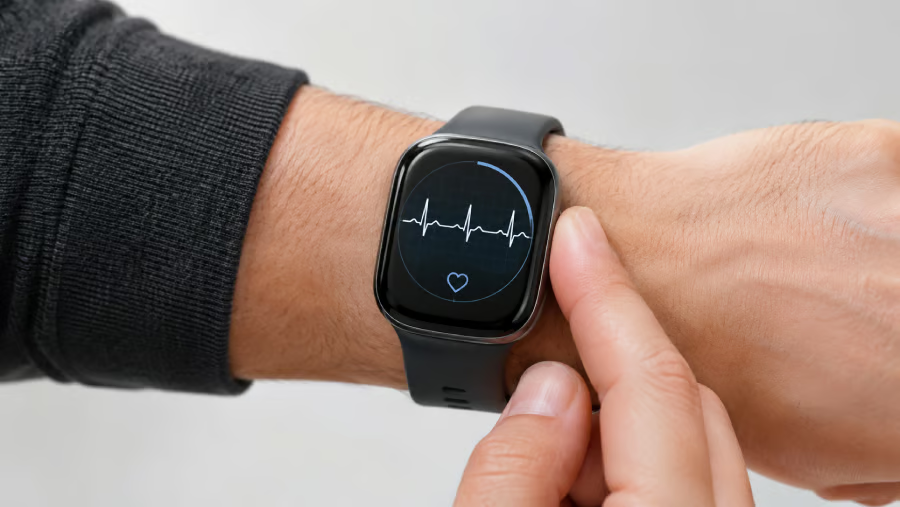
An irregular heartbeat doesn’t always show up during a doctor’s appointment. Garmin is giving smartwatch owners in India another way to check, with an ECG app that can capture a 30-second heart-rhythm recording right from their wrist.
Announced Nov. 3, the rollout brings Garmin’s existing ECG feature to compatible smartwatches in India, including the fēnix 9, Venu 4, and Forerunner 970. The app checks for signs of atrial fibrillation (AFib), an irregular heart rhythm, and lets users save recordings through Garmin Connect to share with their doctors. However, compatibility depends on the watch model, software, and regional availability.
Garmin names three watch models for India’s ECG rollout
Garmin’s announcement confirmed ECG availability in India on compatible devices, explicitly naming three models:
- Garmin fēnix 9: A multisport smartwatch designed for outdoor activities, endurance training, and health monitoring.
- Garmin Venu 4: A health-focused smartwatch with fitness tracking and everyday wellness features.
- Garmin Forerunner 970: A premium running and triathlon watch with advanced training and health metrics.
Garmin Vice President of Consumer Sales and Marketing Susan Lyman explained why recording heart rhythms outside a clinical setting may be useful.
“During the early stages of AFib, it’s common for symptoms to be infrequent, making it difficult to detect in a clinical setting,” Lyman said, according to the announcement.
Garmin also confirmed that additional compatible devices are supported but did not provide an exhaustive India-specific list.
Its broader compatibility documentation identifies other supported models globally, including the Venu 3, fēnix 8, and epix Pro (Gen 2).
However, appearing on that list does not automatically establish ECG availability in India. Compatibility depends on the watch model, minimum software version, and regional eligibility.
Existing Garmin owners should check their watch’s compatibility before expecting ECG to appear after a software update. For those considering an upgrade, the fēnix 9 and fēnix 9 Pro offer different hardware, connectivity, and pricing options, although ECG availability still depends on the model and regional support.
What Garmin’s 30-second ECG results actually mean
An ECG measures the electrical signals responsible for each heartbeat. Garmin uses sensors built into compatible watches to capture a recording similar to a single-lead ECG and analyze it for signs of AFib.
Unlike ordinary heart-rate monitoring, which measures how quickly the heart beats, ECG provides information about its electrical rhythm.
AFib occurs when the heart beats irregularly and can increase the risk of complications, including stroke. Some people experience palpitations, dizziness, or fatigue, while others have no noticeable symptoms.
Garmin’s ECG feature is intended for adults aged 22 and older.
The company’s ECG guide explains the classifications users may encounter.
| Sinus rhythm | The recording indicates a regular heartbeat pattern without signs of AFib. | A normal result applies only to that recording and does not rule out other heart conditions. |
| Atrial fibrillation (AFib) | The recording shows an irregular rhythm consistent with AFib. | Share the result with a healthcare professional for assessment. |
| Heart rate too high or too low | The app cannot classify AFib when the heart rate exceeds 120 or falls below 50 beats per minute. | Repeated results or concerning symptoms warrant medical advice. |
| Inconclusive | The app cannot reliably classify the recording, potentially because of movement, poor skin contact, or other factors. | Rest the arm, check the watch’s fit, and retry. Speak with a healthcare professional if results remain inconclusive or you feel unwell. |
A key limitation is that Garmin’s ECG app does not continuously record the heart’s electrical activity. Users must initiate each measurement.
Someone experiencing occasional palpitations may find it useful to take a recording when symptoms occur. However, an episode that happens at another time could go undetected.
The app checks for signs of AFib; it cannot detect a heart attack or stroke, and it does not rule out other arrhythmias or cardiovascular conditions.
Garmin owners in India can activate ECG through Garmin Connect
The India rollout requires compatible hardware, updated watch software, and a supported version of Garmin Connect.
According to Garmin’s setup instructions, owners must first activate the feature through the smartphone app.
After opening Garmin Connect, users should select their connected watch, navigate to Finish Setup, and choose Set Up ECG App when the option appears.
Once activated, the ECG app becomes accessible on the smartwatch. To record an ECG, users should sit comfortably, rest their arm on a stable surface, and keep the watch securely fitted above the wrist bone.
The recording begins when the user places their thumb and index finger on the metal ring around the watch face. Both fingers must remain in position for the full 30 seconds while the user stays still.
After the measurement, the watch displays the result.
Users who choose to upload their health data can also review previous recordings in Garmin Connect and export PDF reports for their healthcare providers. If the ECG setup option does not appear, owners should check the watch’s firmware, Garmin Connect version, location permissions, and regional eligibility.
A missing feature does not necessarily mean the device is defective. Some Garmin watches may support ECG in one market but not another, and minimum firmware requirements can also differ.
What's hot at TechRepublic
- Blackpoint Cyber vs. Arctic Wolf: Which MDR Solution is Right for You?
- Why AWS Sellers Choose Deepgram Over Other Voice AI Tools
- SS&C Intralinks DealCentre AI vs. Datasite: Which platform is built for the future of dealmaking?
- SS&C Intralinks FundCentre AI vs. Juniper Square: Which platform better supports modern private markets fund managers?
- Verito vs. Rightworks: Which IT Provider Is Best for Your Firm?
India’s AFib screening challenge gives the feature wider relevance
Garmin’s expansion comes as healthcare researchers across Asia-Pacific examine how wearable devices could support earlier detection of irregular heart rhythms.
India faces challenges because some people with AFib do not experience noticeable symptoms and may remain undiagnosed until serious complications develop.
In a January letter to the Indian Journal of Clinical Cardiology, Prachi Jain Rai and Subhash Chandra argued for improved AFib detection and stroke prevention in India.
Summarizing earlier evidence, they cited community-study prevalence estimates ranging from approximately 0.1% to 1.6%. They identified limited routine pulse checks, inadequate use of handheld or ambulatory ECG devices, and low public awareness of arrhythmia symptoms as barriers to detection.
Wearable devices could help people document irregular rhythms outside healthcare facilities, particularly when symptoms occur intermittently.
However, access to a smartwatch does not guarantee earlier diagnosis. Patients still need appropriate clinical evaluation and follow-up when an abnormal rhythm is detected.
The Asia Pacific Heart Rhythm Society guidelines provide additional regional context. The guidelines cite studies involving different age groups and populations, so their prevalence figures should not be treated as directly comparable national estimates. They recognized validated wearable devices, including ECG-equipped smartwatches, as potentially useful tools for AFib screening.
However, the society recommended targeted screening for people aged 75 and older, along with adults aged 65 and older who have additional risk factors.
The guidelines note that screening can detect more AFib, but evidence that screening reduces stroke remains mixed. Abnormal findings still require clinical assessment and appropriate treatment.
For Indian consumers, ECG availability adds another feature to check alongside Garmin’s other smartwatch software updates. Its practical value depends on having a compatible watch, understanding the results, and accessing medical advice when necessary.
Regional availability also matters when comparing health features. Huawei’s Watch D3 brought wrist-based blood pressure monitoring to Europe, illustrating why buyers should check which capabilities are available in their own market.
What Garmin owners in India should check before relying on ECG
For existing owners, the first step is checking eligibility rather than assuming a software update will add ECG. Confirm the exact watch model, install the latest watch software and Garmin Connect app, and complete the ECG setup when it becomes available. Buyers considering an upgrade should verify India availability for their chosen model before making ECG a deciding factor.
The feature’s practical advantage is capturing a short recording outside a clinic. A recording taken during intermittent symptoms may give a doctor information that is unavailable by the time an appointment takes place. However, users must start each measurement themselves, so an episode outside that recording window may go undetected.
Understanding the result matters as much as obtaining it. A sinus-rhythm result describes that recording and does not rule out other heart conditions. A possible AFib result needs clinical assessment, while repeated inconclusive results or feeling unwell warrant medical advice. Users should not change medication or treatment based on the watch alone.
Garmin Connect also gives users a way to review recordings and create reports for a healthcare provider. That makes the feature useful as part of a conversation about symptoms and further assessment; it does not replace prescribed monitoring or a clinical examination.
Anyone experiencing chest pain, fainting, severe shortness of breath, or possible stroke symptoms should seek urgent medical care regardless of the smartwatch result.
Also read: Garmin’s ECG expansion is part of a growing push to bring more health-monitoring features to smartwatches. See how Apple, Samsung, Garmin, and Oura compare in the smartwatch blood sugar race and why today’s wearables still rely on continuous glucose monitors (CGMs) for blood sugar readings.