


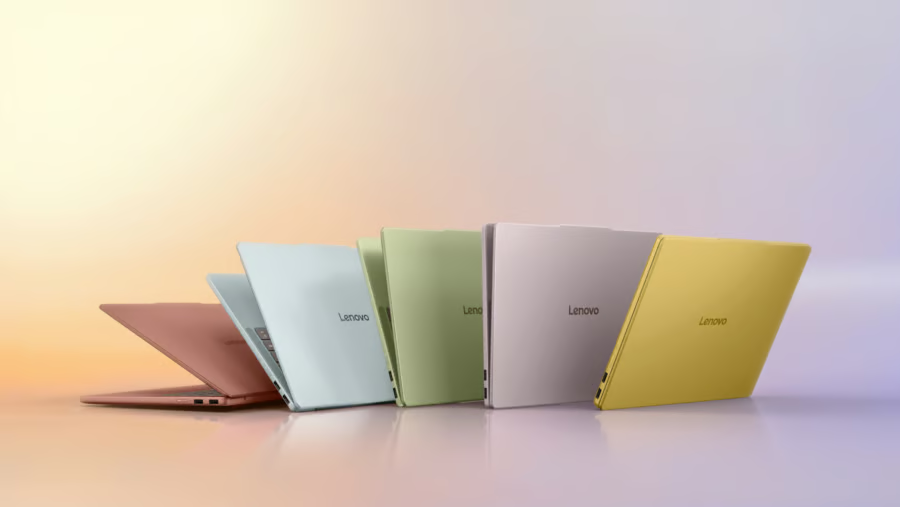
At $700, Lenovo is not just matching Apple’s MacBook Neo on price. The new IdeaPad Vibe gives buyers more ways to spend that budget, with two screen sizes, several processor choices, extra ports, and seven colors.
The Vibe is aimed at people who want an affordable productivity laptop without being locked into one hardware configuration. AMD and Snapdragon models arrive first, with Intel versions planned later, while higher-end configurations add more memory, display options, and upgradeable components. The catch is that the $700 base model comes with only 8GB of RAM.
For buyers, the advertised price is only the starting point for comparison.
The $700 model may not be the best configuration
The Verge reported that the IdeaPad Vibe starts at about $700 in the US, matching the MacBook Neo’s entry price. Buyers can choose between 14-inch and 15-inch models, with AMD versions expected in October and Snapdragon models following in November. Intel configurations are planned for later.
The base Vibe comes with 8GB of RAM, according to Engadget, which called that amount less than ideal for a Windows laptop. Buyers who regularly juggle multiple applications or plan to keep the laptop for several years may want to budget for at least 16GB.
Pricing also varies by market. Lenovo lists an expected €799 starting price in Europe, so the $700 MacBook Neo comparison is specific to the US.
AMD and Snapdragon models offer different advantages
Processor choice is one of the Vibe’s biggest differences from Apple’s more fixed hardware approach.
Snapdragon X configurations support up to 24GB of RAM and may appeal to buyers who prioritize power efficiency. AMD Ryzen AI 400 models support up to 32GB of user-upgradeable memory, while Engadget expects the AMD versions to offer wider software compatibility.
Storage reaches 1TB, while user-accessible SSD slots give buyers room to expand later rather than replacing the entire laptop when they need more capacity.
For someone buying a work or school laptop expected to last several years, those upgrade options also leave room to add memory or storage later, rather than paying for everything at purchase.
What's hot at TechRepublic
- Blackpoint Cyber vs. Arctic Wolf: Which MDR Solution is Right for You?
- Why AWS Sellers Choose Deepgram Over Other Voice AI Tools
- SS&C Intralinks DealCentre AI vs. Datasite: Which platform is built for the future of dealmaking?
- SS&C Intralinks FundCentre AI vs. Juniper Square: Which platform better supports modern private markets fund managers?
- Verito vs. Rightworks: Which IT Provider Is Best for Your Firm?
Extra ports could save buyers from carrying a hub
The Vibe includes two USB-C ports, two USB-A ports, HDMI, microSD, and a headphone jack. That selection should cover many common peripherals without requiring an external adapter.
The Verge notes that the USB ports are limited to 5 Gbps. However, photographers, video editors, and others who regularly transfer large files should factor this limitation into their decision.
Mashable also lists Wi-Fi 7, Bluetooth 5.4, a 5MP webcam with a privacy shutter, and optional keyboard backlighting.
Who should consider the IdeaPad Vibe?
The Vibe makes the most sense for buyers who care about hardware choice. Someone who regularly connects USB-A accessories, an external monitor, or a microSD card may get more everyday convenience from Lenovo’s port selection.
The $700 model could work for basic productivity, but 8GB of RAM is the specification worth checking before buying. For heavier multitasking or longer-term use, a 16GB configuration is likely the more practical starting point. AMD models also make more sense for buyers who value upgradeable RAM and broad Windows software compatibility, while Snapdragon is worth considering when efficiency is the priority.
Buyers should look beyond the $700 price and compare the Vibe configuration they actually need with the MacBook Neo, including the memory, storage, display, and processor options they want to pay for.
For a closer look at Apple’s $700 alternative, check out our MacBook Neo cheat sheet for the key specs, features, and buying details.