


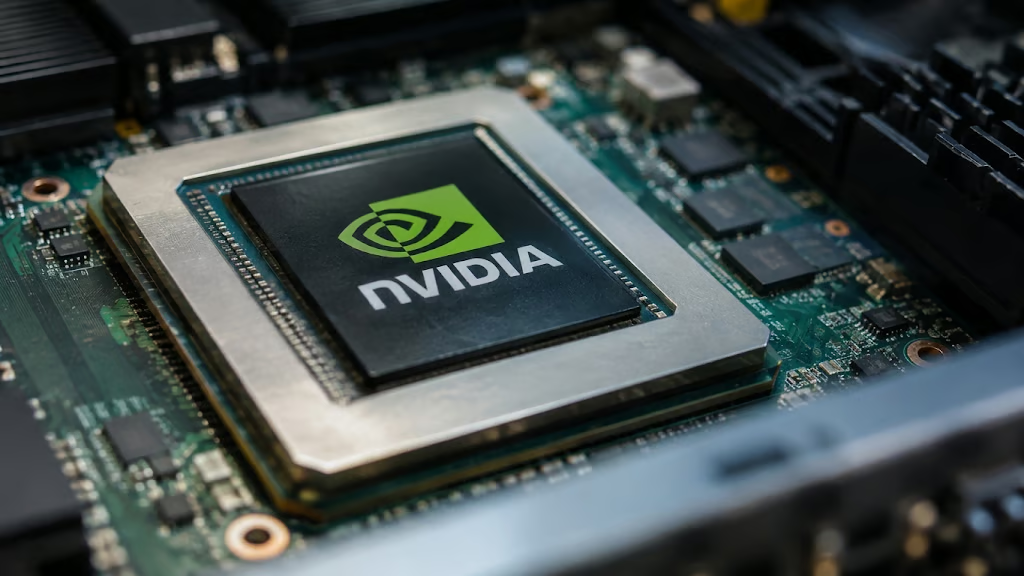
Nvidia’s AI chips are some of the hottest hardware on the planet. Now, the company wants a clearer idea of where they’re headed.
The chipmaker is reportedly tightening oversight of its powerful GPUs in Southeast Asia. According to people familiar with the policy who spoke to Bloomberg, companies seeking official Nvidia Cloud Partner status in the region must now enroll in its Fleet Intelligence monitoring system. The November 6 report comes as US authorities investigate allegations that restricted AI processors are reaching China through overseas intermediaries.
For cloud providers, the message is becoming clearer: Keeping track of expensive AI hardware could soon be just as important as getting their hands on it. And for businesses buying AI computing power, the crackdown raises questions about where their infrastructure comes from, who controls it, and whether their providers can keep the chips flowing.
- Nvidia wants cloud partners to keep better tabs on their GPUs
- How does Nvidia’s GPU tracking system actually work?
- Why Southeast Asia has become a hotspot for AI chip scrutiny
- Nvidia is tightening the rules beyond GPU tracking
- What this means for businesses buying AI computing power
- What’s next for Nvidia’s AI chip crackdown?
Nvidia wants cloud partners to keep better tabs on their GPUs
The reported requirement applies to companies in Southeast Asia seeking Nvidia Cloud Partner (NCP) status, a designation that can provide significant advantages in the competitive AI cloud market.
The designation comes with valuable perks, including Nvidia’s public endorsement and preferred access to AI hardware. In a market where demand for computing power remains intense, those advantages can give cloud providers a competitive edge.
But there’s a new condition attached.
Companies seeking that partner status must reportedly sign up for Nvidia’s monitoring program, giving the chipmaker another way to encourage closer oversight of its hardware.
That doesn’t mean every Nvidia customer is suddenly being tracked. The reported policy has some important boundaries:
- New partner applicants: Southeast Asian providers seeking NCP status must reportedly enroll in Fleet Intelligence.
- Existing partners: Nvidia hasn’t clarified whether current NCPs will need to join to keep their designation.
- Other customers: Bloomberg describes the wider monitoring program as voluntary outside the reported partner requirement.
- Other regions: Nvidia hasn’t confirmed whether the requirement will expand beyond Southeast Asia.
- Data sharing: Enrollment doesn’t automatically require customers to disclose GPU-location information to Nvidia or US regulators, although the service does collect operational telemetry.
Nvidia declined to answer Bloomberg’s questions about whether the requirement would extend to existing partners or other markets.
For now, the policy appears targeted rather than universal. But it signals that Nvidia is taking a closer interest in what happens to its hardware after the sale.
How does Nvidia’s GPU tracking system actually work?
Think of Fleet Intelligence as an inventory and management system for some of the world’s most valuable computer chips.
Nvidia’s Fleet Intelligence service helps data center operators monitor GPU inventory, performance, hardware health, and configuration across their infrastructure.
According to Nvidia’s May 2026 technical documentation, the service uses an installed software agent to collect operational data and provide monitoring dashboards.
The agent streams telemetry to Nvidia’s Fleet Intelligence cloud service, providing operators with information on GPU utilization, hardware health, and other operational conditions. Nvidia says the agent performs read-only monitoring and does not modify host configurations.
Bloomberg reports that Fleet Intelligence also collects geolocation data on individual components, which could help operators investigate whether restricted chips have been diverted.
Tracking hardware isn’t an entirely new idea. As TechRepublic previously reported, US authorities have reportedly placed location-tracking devices in select shipments of AI servers to investigate possible diversions to China.
There is, however, an important catch. Fleet Intelligence collects operational telemetry from participating GPU systems, but enrollment does not automatically require customers to disclose their GPUs’ location information to Nvidia or US regulators. Nvidia previously told Bloomberg that US regulators seeking location information would communicate directly with customers.
In other words, a cloud provider’s ability to monitor its own hardware is different from Nvidia having unrestricted access to that hardware’s location information.
The reported requirement also doesn’t establish that Nvidia can independently locate every GPU it has sold.
Broader adoption could make GPU deployments easier to document, although whether that translates into more effective smuggling detection remains to be seen.
Why Southeast Asia has become a hotspot for AI chip scrutiny
The global AI boom has created enormous demand for Nvidia’s processors. It has also created a complicated problem for US regulators: How do you keep restricted technology from reaching China when buyers, intermediaries, and cloud providers operate across multiple countries?
Southeast Asia has become an important part of that puzzle.
The US restricts exports of certain advanced AI accelerators to China without authorization. Investigators, however, have uncovered alleged schemes involving overseas purchases, intermediaries, and shipments routed through other countries.
As TechRepublic previously examined, intermediaries and shell companies have allegedly helped restricted Nvidia chips reach China despite US export controls.
The concern is straightforward. A processor may be sold to an approved customer, but authorities still want to know whether it ultimately ends up somewhere it shouldn’t.
The Megaspeed investigation puts the spotlight on Singapore
One case drawing attention involves Singapore-based Megaspeed International, a cloud computing company whose hardware purchases and deployments have attracted scrutiny from US and Singaporean authorities.
Megaspeed has denied wrongdoing.
Bloomberg reported that Nvidia CEO Jensen Huang defended the company’s dealings with Megaspeed, saying Nvidia had examined its GPU deployments and accounted for every processor. However, Nvidia’s ability to account for individual processors does not, by itself, establish that every deployment complied with applicable export restrictions.
The investigation illustrates the difficulty of tracking expensive AI hardware across international supply chains.
Selling a GPU to an approved customer is one thing. Establishing where that GPU ultimately operates and who ultimately benefits from its computing power can be considerably more complicated.
A separate $2.5 billion case raises the stakes
The scrutiny isn’t limited to cloud providers.
In March 2026, US prosecutors charged two Super Micro Computer executives and a third-party broker in an alleged scheme involving approximately $2.5 billion in server purchases between 2024 and 2025.
According to the US Department of Justice, prosecutors alleged that at least $510 million worth of servers were illegally diverted to China during a period spanning late April through mid-May 2025.
The alleged operation involved false documentation, intermediaries, and dummy servers staged to mislead inspectors.
Prosecutors said nonworking replicas were placed in warehouses to create the appearance that legitimate hardware remained at approved locations, even though the actual servers had allegedly been shipped to China.
The charges remain allegations, and the defendants are presumed innocent unless proven guilty. Super Micro Computer itself was not charged in the indictment.
And the allegations haven’t stopped there. In October, TechRepublic covered another case involving a California technology executive accused of helping route more than $300 million in export-controlled servers to China through Malaysia and Singapore.
Together, the investigations help explain why Nvidia is under pressure to keep a closer watch on the global movement of its AI hardware.
Nvidia is tightening the rules beyond GPU tracking
Fleet Intelligence is only one piece of Nvidia’s broader effort to address concerns about AI chip diversion.
Bloomberg previously reported that the company removed approximately half of the Asian companies on its preapproved buyer list following scrutiny of suspected smuggling.
Nvidia has also reportedly instructed cloud and data center partners to ensure that at least 51% of their services go to non-Chinese customers, according to the Financial Times.
The reported guidance is separate from the Fleet Intelligence enrollment requirement. The Financial Times said it applies to future contracts rather than existing leases, while The Information reported that it has not been enforced as a mandatory rule.
That last measure introduces an interesting wrinkle. There’s a meaningful difference between shipping restricted AI processors into China and allowing a Chinese company to rent computing power from a cloud provider located elsewhere.
Whether overseas cloud access is subject to US restrictions depends on the technology, transaction, parties involved, and applicable regulations. Physical chip exports and remote access to computing services can raise different compliance questions.
Nvidia’s reported customer-mix guidance therefore appears to be intended to address regulatory and commercial risks beyond the mere physical movement of restricted processors.
The guidance could also complicate expansion plans for providers heavily dependent on Chinese customers. Finding enough new customers outside China may prove difficult, particularly for operators that have built their businesses around demand from Chinese AI developers.
For cloud providers seeking Nvidia’s official partner status in Southeast Asia, tracking where their AI hardware operates is becoming an increasingly important part of doing business.
What this means for businesses buying AI computing power
Most businesses using Nvidia-powered cloud services are unlikely to experience immediate disruptions. But for companies investing heavily in AI infrastructure, the reported monitoring requirements introduce another factor to consider when choosing cloud providers.
Organizations relying on Southeast Asian providers, or planning major investments in AI infrastructure, may want to take a closer look at how their vendors manage hardware and regulatory compliance.
Here’s what IT teams should keep on their radar:
| Area | What IT buyers should know |
|---|---|
| Cloud provider eligibility | Southeast Asian providers seeking Nvidia Cloud Partner status reportedly face a new monitoring enrollment requirement. |
| GPU availability | Nvidia's reported policy has not been shown to disrupt GPU supplies, although changes to partner eligibility could affect future purchasing arrangements. |
| Supply chain transparency | Providers should be able to explain where their GPUs come from and where they're deployed. |
| Data governance | Customers should understand what operational telemetry and location data are collected, where the information is transmitted, and who can access it. |
| Regulatory compliance | Monitoring tools can support oversight, but they don't automatically establish compliance with export controls. |
For IT decision-makers, the takeaway is practical: Ask your AI infrastructure providers how they manage hardware provenance, deployment locations, monitoring data, and export compliance.
Companies making major AI investments should also consider whether their cloud providers depend on Nvidia partner benefits and whether changes to those arrangements could affect future capacity.
None of this means businesses should assume that a provider without Fleet Intelligence is operating improperly.
It does mean that transparency around AI hardware is becoming another factor to consider when evaluating cloud vendors.
What’s next for Nvidia’s AI chip crackdown?
Nvidia still has some important questions to answer.
Will existing Southeast Asian Cloud Partners eventually have to enroll in Fleet Intelligence? Could similar requirements expand to Europe, the Middle East, or other markets? And might additional reporting or data-sharing expectations follow? For now, those possibilities remain unconfirmed.
The company also has to navigate a delicate balancing act. Nvidia wants to sell as many AI processors as possible to legitimate customers, but it also faces pressure to prevent restricted hardware from reaching unauthorized buyers.
For cloud providers, the challenge is maintaining access to valuable GPUs while demonstrating that their operations meet increasingly complex expectations. And for businesses building their AI strategies around Nvidia hardware, there’s a bigger lesson emerging.
Knowing how powerful your AI chips are is no longer the only question worth asking. Knowing where they are, who controls them, and whether they can legally be used may matter just as much.
For more on Nvidia’s growing export-control challenges, read TechRepublic’s report on the alleged $300 million AI server smuggling scheme, which details how prosecutors say restricted hardware was routed through Southeast Asia to China.