



Python regained ground in October’s TIOBE Index, while Java narrowed its gap with C++ and Julia returned to the top 20 for the first time in three years.
The October 2026 rankings kept the top five programming languages in the same order, with Python maintaining a substantial lead. R overtook SQL in the only ranking change within the top 10.
However, this month’s results come with an important caveat. TIOBE has expanded its methodology to include Mandarin Chinese search terms, meaning some rating changes may reflect broader data coverage rather than shifts in developer interest.
The TIOBE Programming Community Index tracks programming language popularity using search activity related to skilled engineers, courses, and third-party vendors.
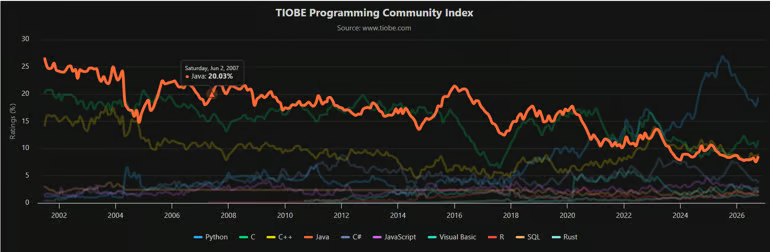
Python and C recover rating share
Python climbs from 17.76% to 19.23%, reversing September’s decline. Even after the gain, its rating remains 5.23 percentage points below October 2025.
C rises from 10.28% to 11.33% and is 2.04 points above its rating a year ago. That gives second place more distance from C++, while the tighter contest now sits one rung lower.
The movements reinforce Python’s position at the top of the index, although the methodology change makes it difficult to attribute the gains entirely to changes in programming language interest.
Java cuts the distance to C++
C++ improves to 8.87%, while Java reaches 8.41%. Their gap has moved from 0.37 percentage points in August to 1.13 in September and back to 0.46 this month, keeping third place unsettled despite another month without a ranking change.
C# drops to 3.79% in fifth. It now trails Java by 4.62 points but stands only 1.02 points above JavaScript, putting it farther from the C++-Java contest than its fifth-place ranking alone might suggest.
JavaScript remains sixth at 2.77%, while Visual Basic holds seventh at 2.20%. R’s rise to 2.06% puts additional pressure on that part of the table, with only 0.14 points between seventh and eighth.
R takes eighth as Rust faces pressure at No. 10
R rises to 2.06%, moving ahead of SQL at 1.97%. The year-over-year comparison adds context: R ranked No. 13 in October 2025 and now sits eighth, while SQL has advanced from tenth to ninth.
Rust holds No. 10 for a fourth consecutive month at 1.44%, with Go immediately behind at 1.39%. Rust ranked No. 16 a year ago, so its longer-term rise remains notable even though a 0.05-point margin means another ranking change would not take much.
The small differences between several languages near the bottom of the top 10 mean their positions could change in future editions, although monthly ranking movements do not necessarily indicate broader adoption trends.
Julia returns after a three-year absence
Julia reaches No. 18 at 0.88%, advancing from No. 21 last month and No. 30 last year. Its 12-place rise over the year gives more context to TIOBE CEO Paul Jansen’s suggestion that the latest appearance may prove more durable than its previous top-20 run.
Jansen attributes the language’s appeal to a combination of performance and accessibility. Python offers an approachable route into numerical computing but can run into speed limits, while C++ delivers stronger performance with a steeper learning curve. Julia is designed to occupy the territory between them.
His explanation suggests Julia could build a lasting specialist audience without needing to challenge Python on overall popularity.
The next test is whether Julia can maintain its position. At 0.88%, it sits only 0.06 percentage points above No. 21 Ada, leaving little room for movement near the top-20 boundary.
More broadly, October’s results illustrate how language rankings can shift even when the leading technologies remain unchanged. For developers and technology leaders, the index offers a useful snapshot of programming language visibility, but project requirements, ecosystem support, and developer expertise remain more meaningful considerations when choosing a language.
Programming languages keep evolving, and so do the AI tools developers use alongside them. Take our free six-minute How to Talk to AI course to learn how better prompts can produce more useful results, then explore other AI courses free for seven days. Check out all the lessons here →