
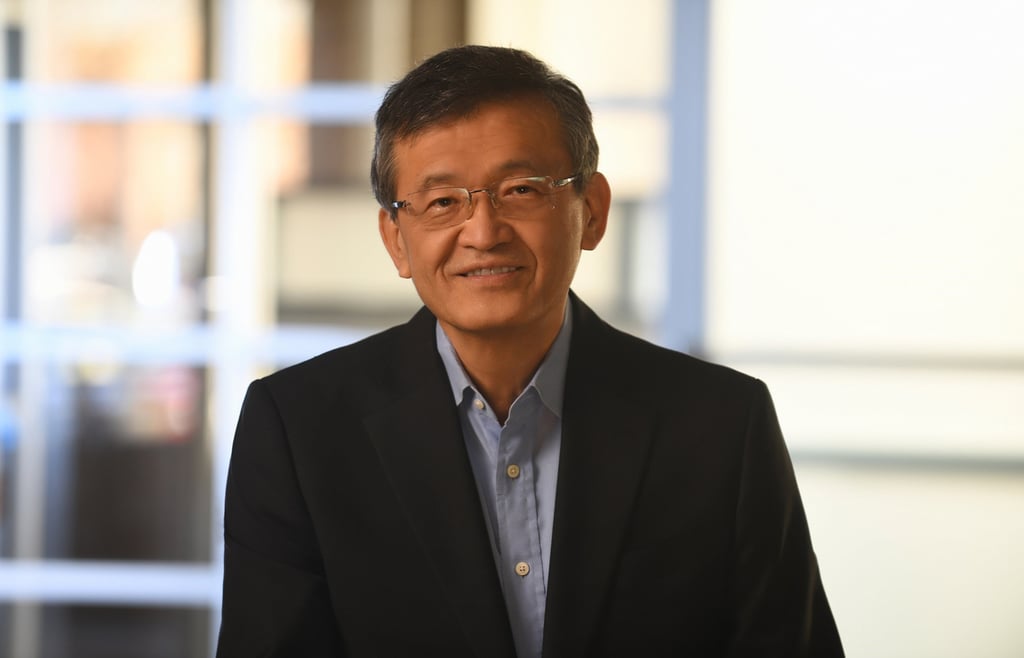


President Donald Trump has urged Intel CEO Lip-Bu Tan to resign, echoing a call from Sen. Tom Cotton (R., Ark.) that questions Tan’s past business ties to China.
Intel, once a dominant force in the semiconductor industry, has struggled to compete in recent years as competitors like NVIDIA and AMD expand their market share.
Trump and Cotton question Tan’s business history
“The CEO of INTEL is highly CONFLICTED and must resign immediately. There is no other solution to this problem,” Trump posted on Truth Social on Aug. 7.
Cotton’s letter, posted on X, alleges Tan “has deep ties to the Chinese Communists.”
Tan, a US citizen born in Malaysia, became Intel’s CEO in March. Prior to this role, he was a venture capitalist and CEO of Cadence Design Systems, a Silicon Valley-based software company that in July pleaded guilty to an export violation. The plea agreement included a $140.6 million settlement after a Cadence subsidiary sold products to China’s National University of Defense Technology, in violation of US export restrictions.
Cotton further alleged Tan “controls dozens of Chinese companies and has a stake in hundreds of Chinese advanced-manufacturing and chip firms.” Tan’s venture capital work included investments in several Chinese tech companies.
At stake is Intel’s nearly $8 billion in federal funding under the CHIPS and Science Act. Cotton framed Tan’s resume as a national security issue and asked Intel’s board to disclose any measures that might have been taken to address potential conflicts or require Tan to divest from foreign companies.
In a statement to Reuters, an Intel representative said the company and Tan are “deeply committed to the national security of the US.”
Tan’s response to the allegations
On Thursday, Tan penned an open letter to Intel staff.
“Over 40+ years in the industry, I’ve built relationships around the world and across our diverse ecosystem – and I have always operated within the highest legal and ethical standards,” he wrote.
Intel is “engaging with the [U.S.] Administration to address the matters that have been raised and ensure they have the facts,” he said.
Intel is struggling to take advantage of the AI computing wave
Tan took over Intel’s leadership in 2025, inheriting a company that had once been a leading semiconductor manufacturer but has since struggled to keep pace with the generative AI boom. In late July, Intel announced a 15% cut to its global workforce and canceled factory construction projects in Germany and Poland. Construction on another factory, in Ohio, has been slowed down. Meanwhile, Intel is caught in a catch-22 of working on projects only after reaching a certain threshold of customer demand.
Tech companies court Trump’s favor with commitments like Apple’s $100 billion in US manufacturing.